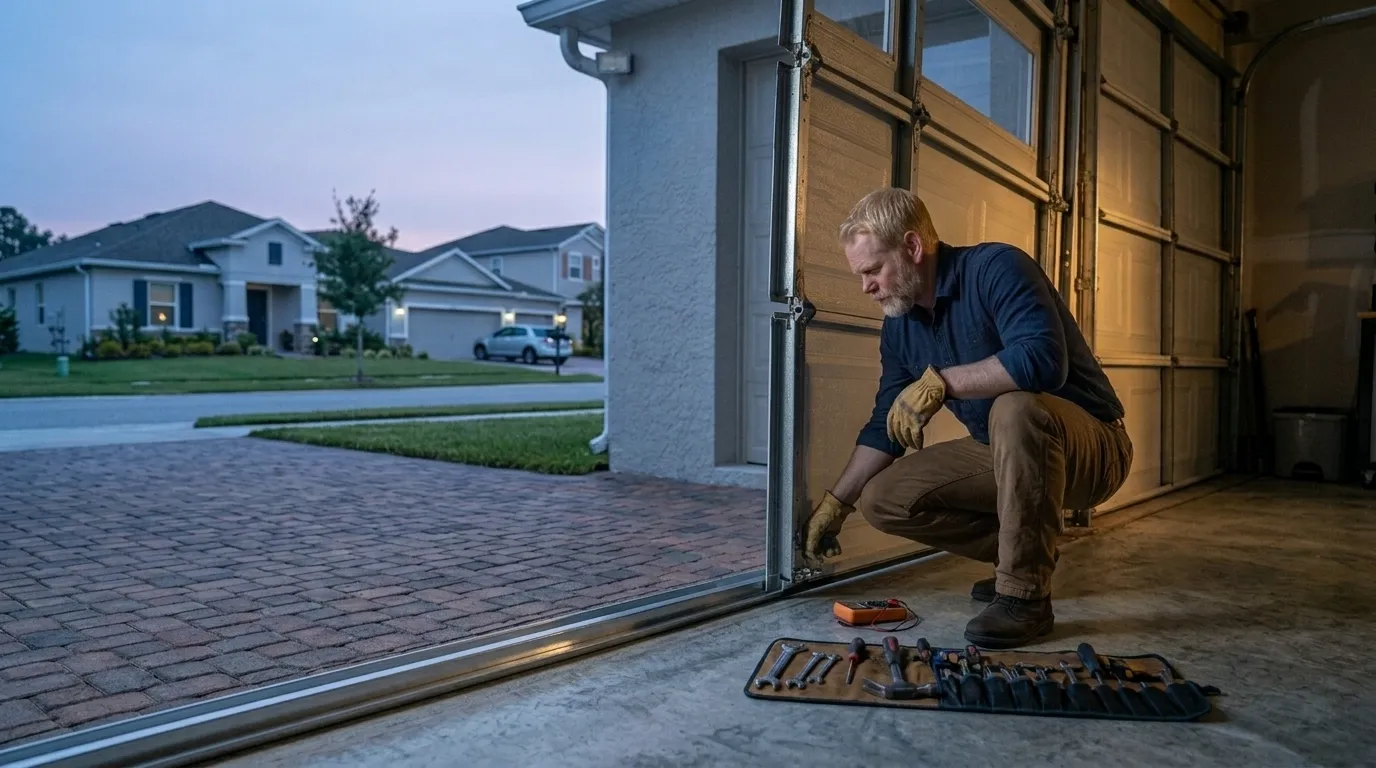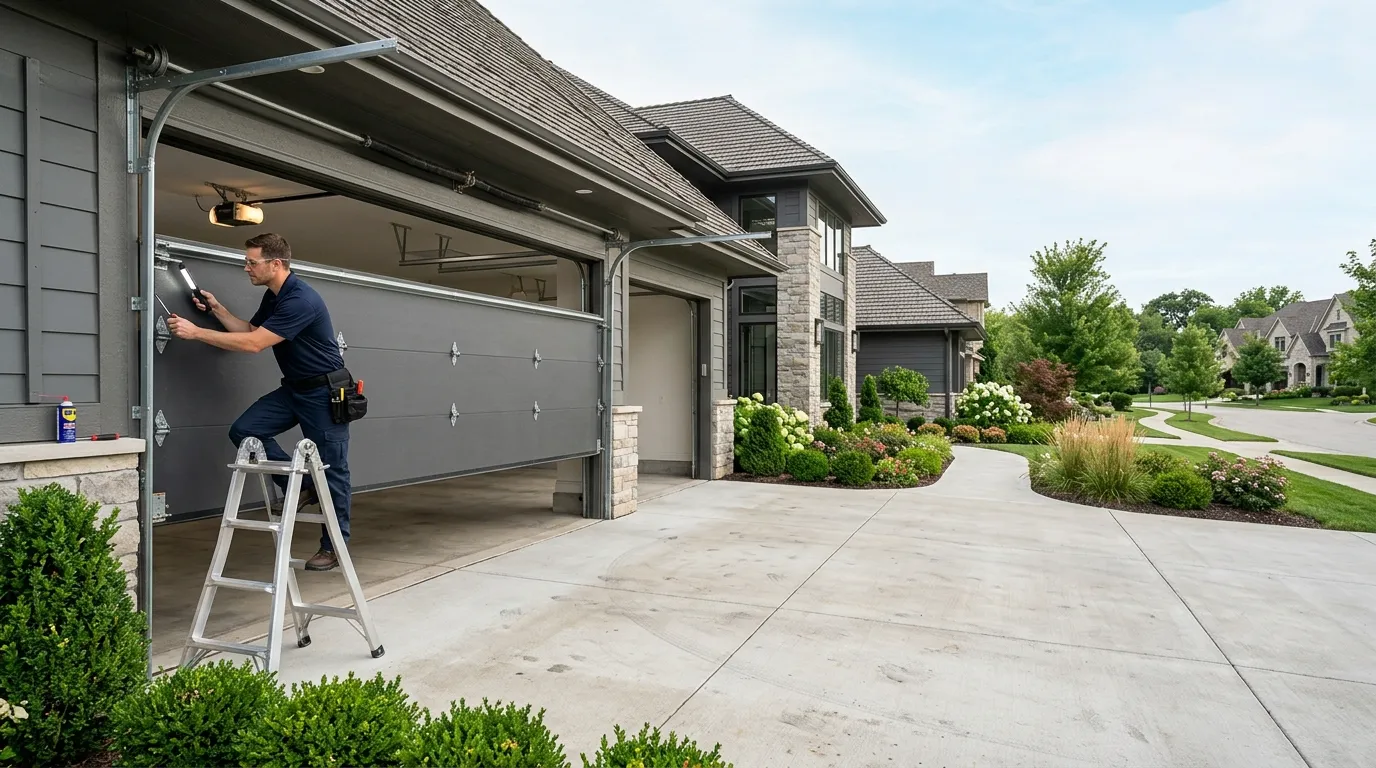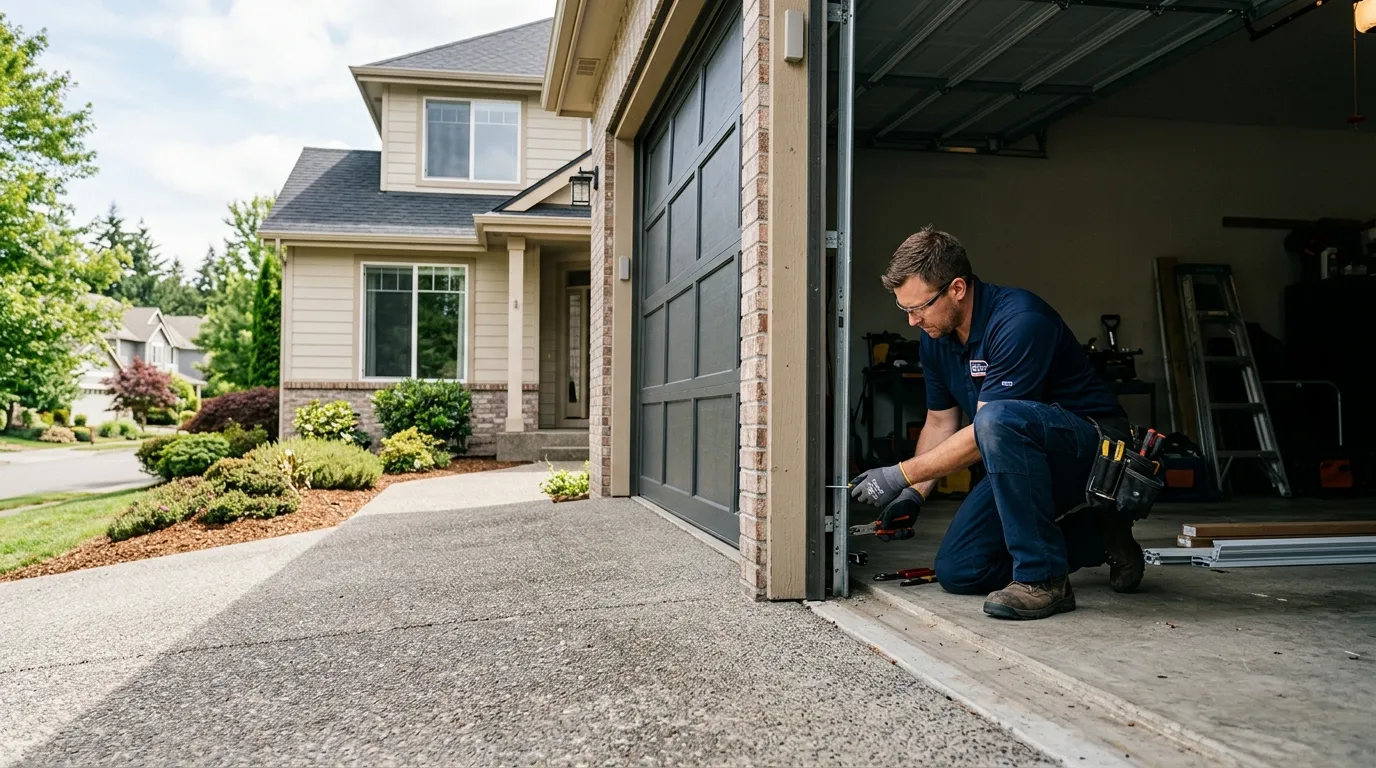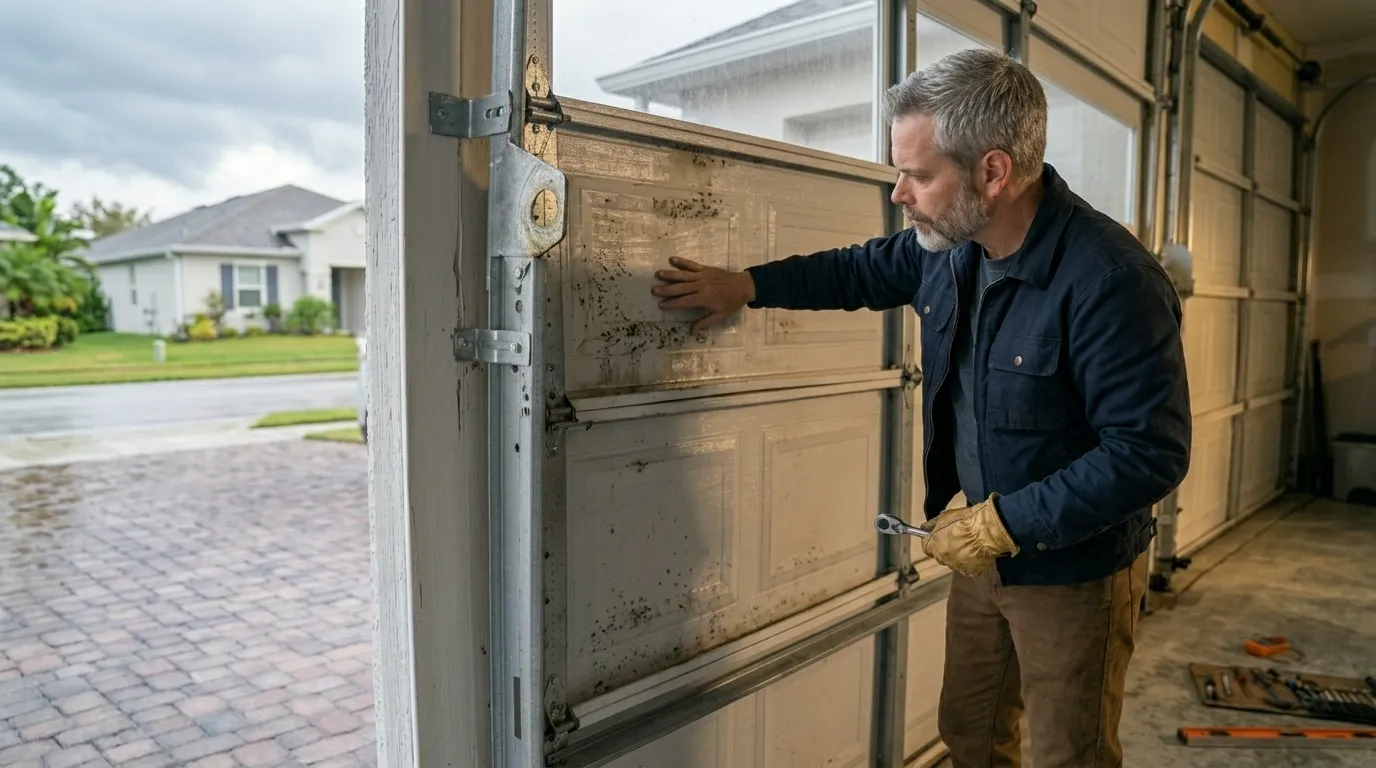
The Complications
A spring that's original to a 1990-built door has had three decades of cycles on it, and the failure isn't always a clean snap. Sometimes one spring on a double-torsion setup goes while the other holds, which puts the door badly out of balance rather than stuck shut - the opener strains, the door leans on the track, and rollers wear unevenly on one side faster than the other.
The region's cold-moderate climate plays a role here too. Coastal-adjacent cold doesn't mean brutal winters, but it means steady damp and temperature swings on steel hardware that isn't stainless. Cable and spring coating on a thirty-year-old door has usually had the galvanizing worked off it at the coil ends long before the spring itself gives out, which is often your first sign something's wrong before the actual break.
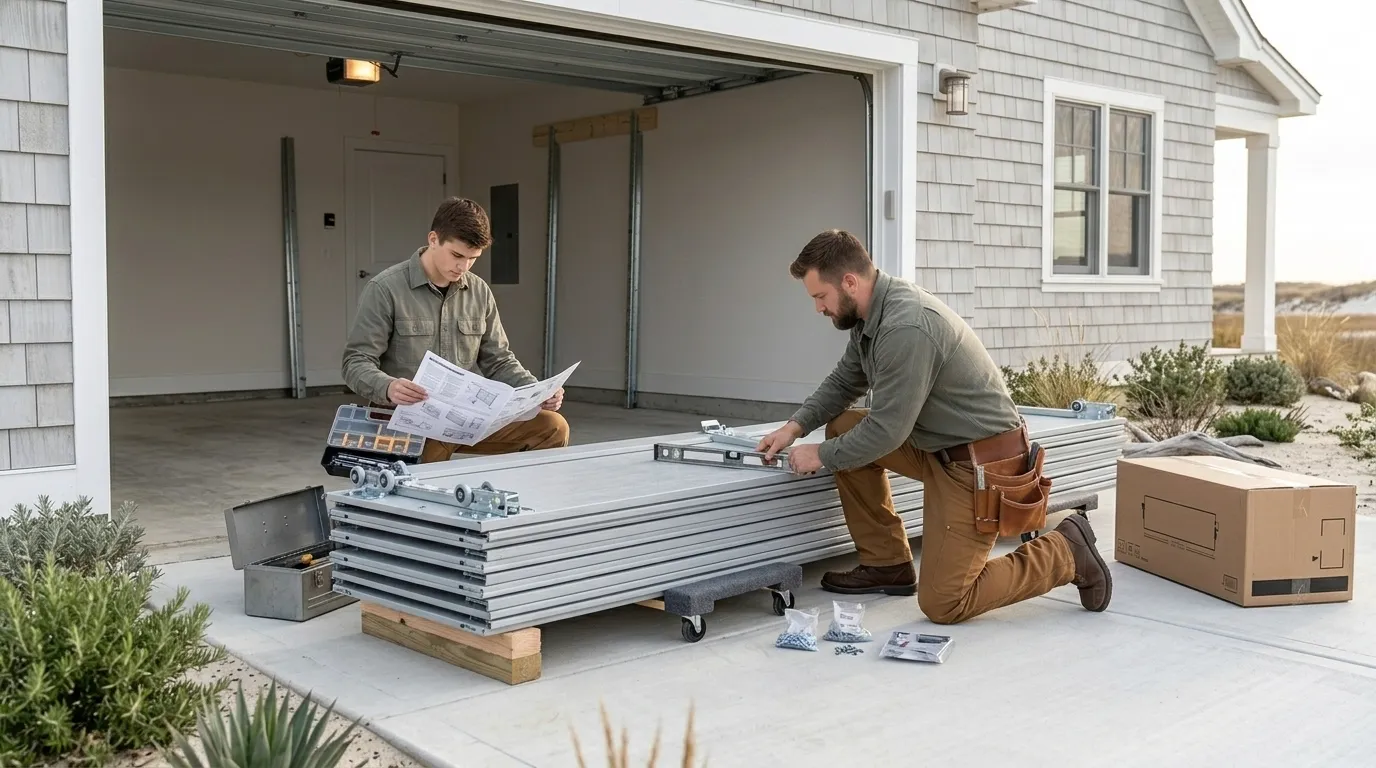
We don't stock every spring size on the truck for every visit. Wide doubles from this era sometimes take a spring wind size that isn't the same as what we're carrying for a standard single door, so if the door's unusual - a custom width, a heavier insulated panel added later - there's a real chance we're back out on a second trip once we've got the right part. That's the honest limitation: we'd rather order the correct spring than force one that's close.
Can You Do This Yourself
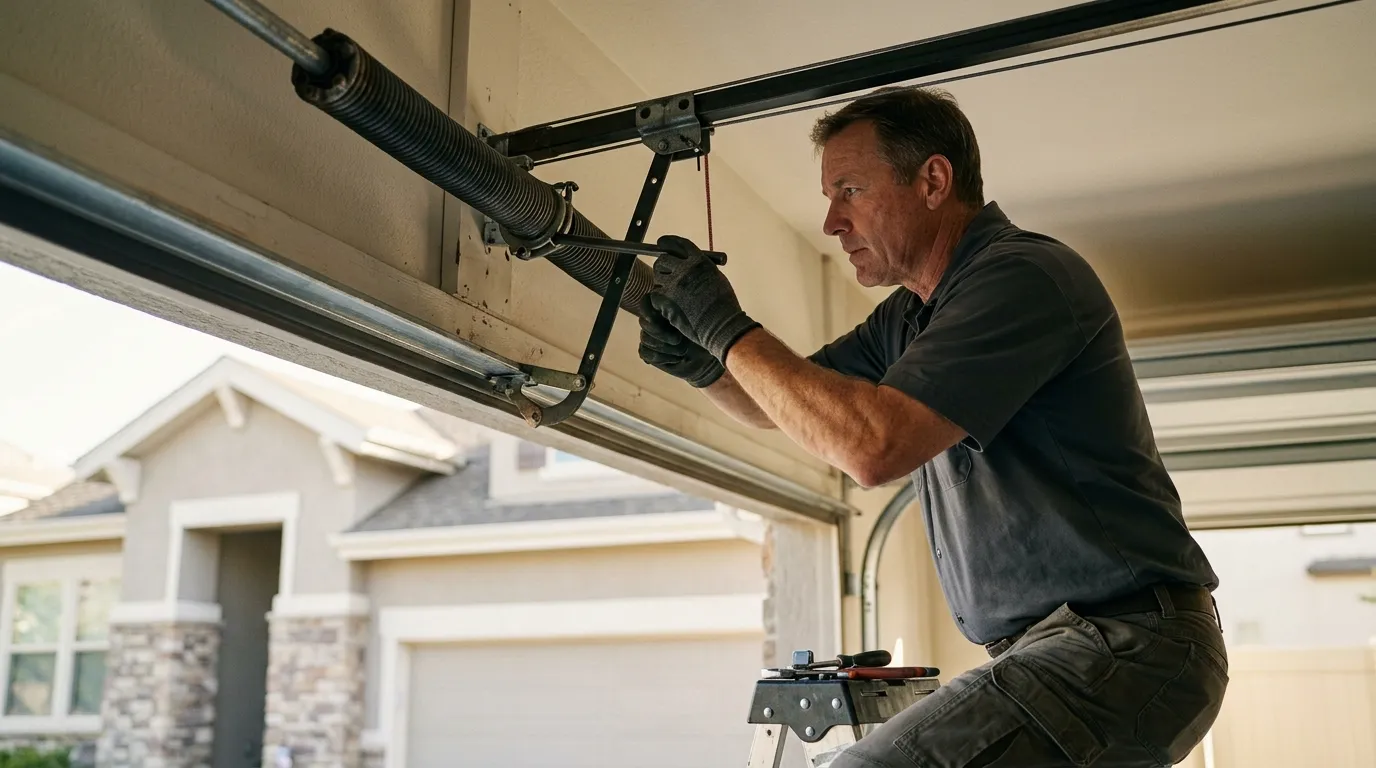
Don't. A torsion spring on a door this wide is wound under enough tension to break a bone or worse if the winding bars slip, and the wider the door, the heavier the spring load, full stop. Extension springs on older or lighter doors are a bit more forgiving to look at, but a 1990-era double garage door in this area is almost always torsion, mounted on a shaft over the header, and that's not a spring you loosen with a screwdriver and confidence.
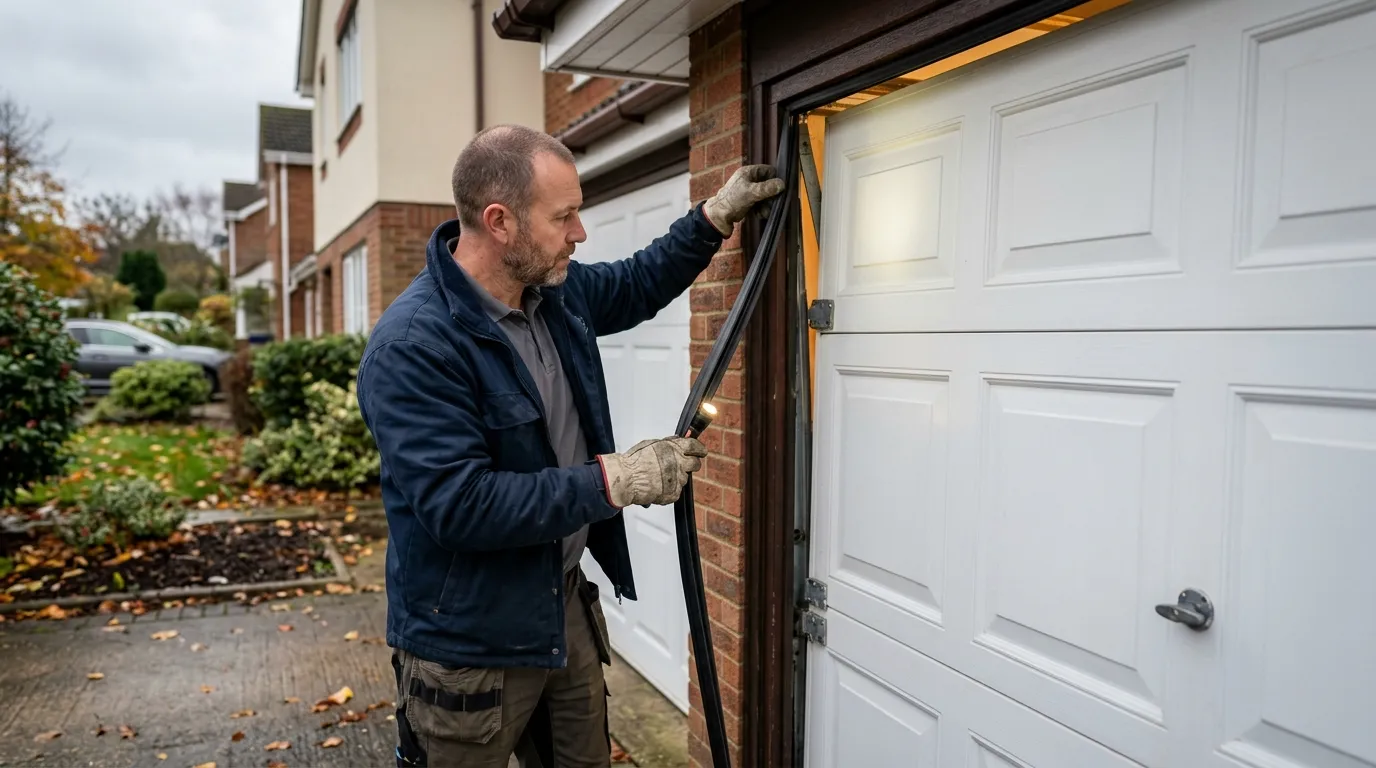
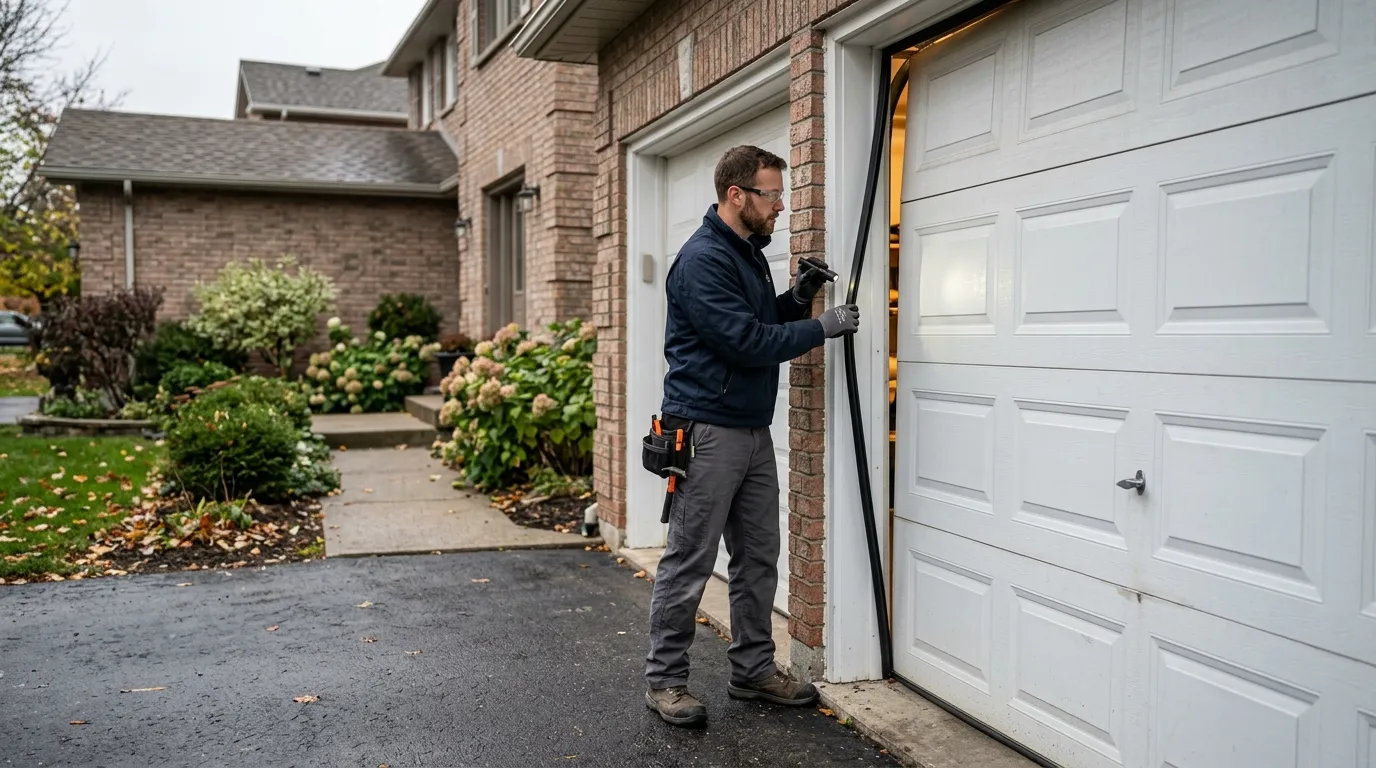
What you can safely check yourself: whether the door is visibly crooked in the opening, whether one cable looks slack or frayed at the drum, and whether the opener is straining or reversing on its own. None of that requires touching the spring. Write down what you see and tell us when you call - it saves diagnostic time on-site.
If you're set on DIY, at minimum unplug the opener first so nothing tries to lift the door while you're near it, and never remove the fasteners holding the bottom bracket while the cable is under tension. Past that, this is a call-a-pro job, not because we're protecting the work, but because the physics doesn't care how careful you are with a hand tool.