
Stocked Parts
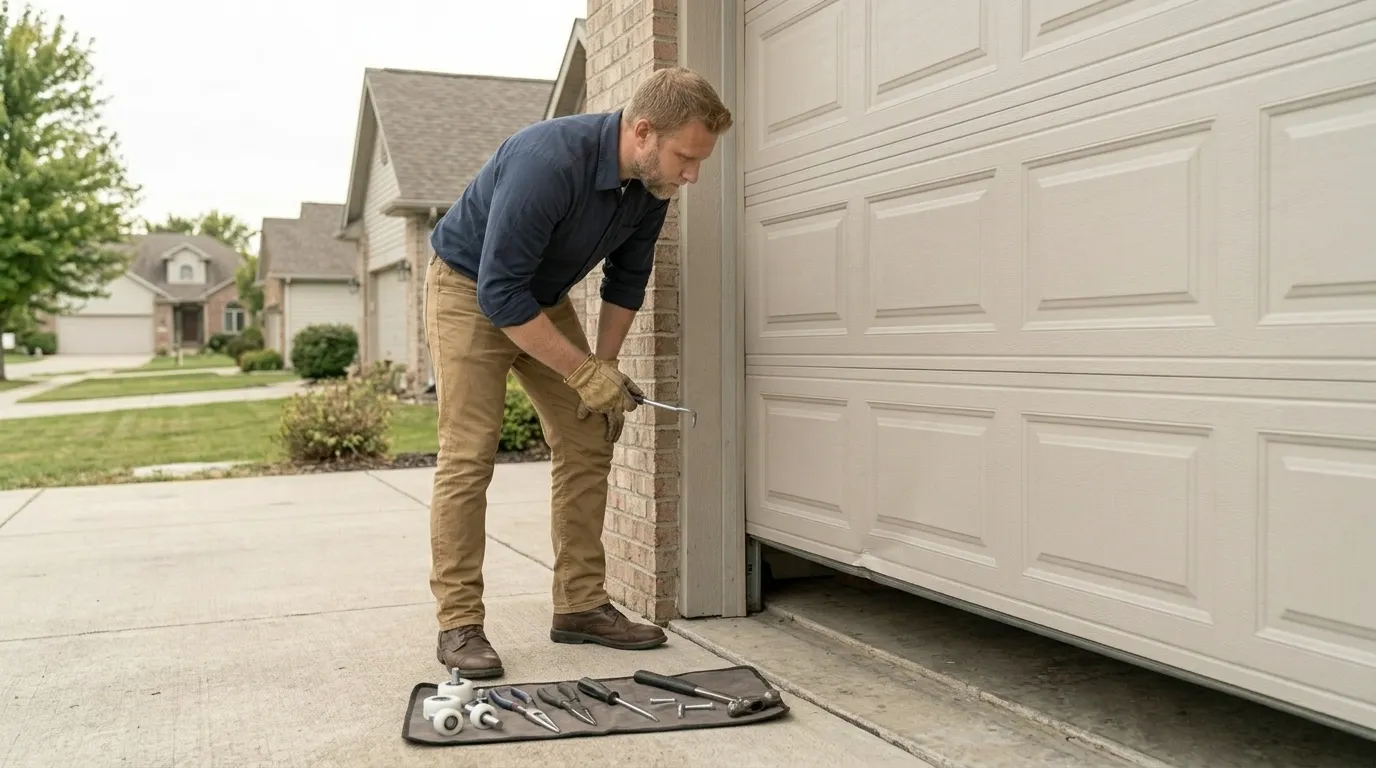
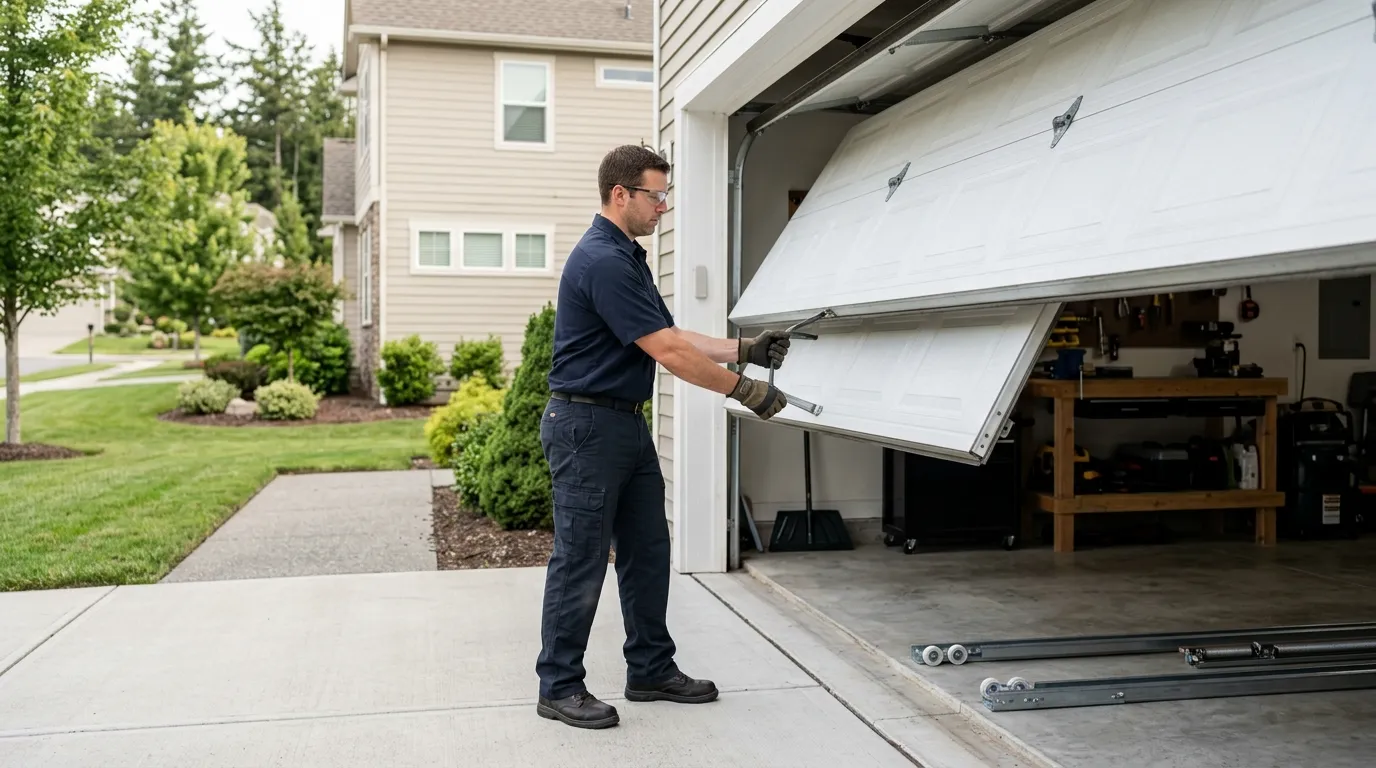
We carry 7-ball nylon rollers and sealed-bearing rollers on the truck, which covers most doors from the 1990s build era without a special order. What we don't stock is anything custom - odd-length stems for a non-standard track gauge, or rollers sized for a heavier commercial-grade door. That's rare on a residential door from this period, but if your track was widened or the door itself was swapped at some point and the rollers don't match standard stock, we'll need to order the part and come back for a second visit. We'd rather tell you that up front than pretend every job wraps in one trip.
The Complications
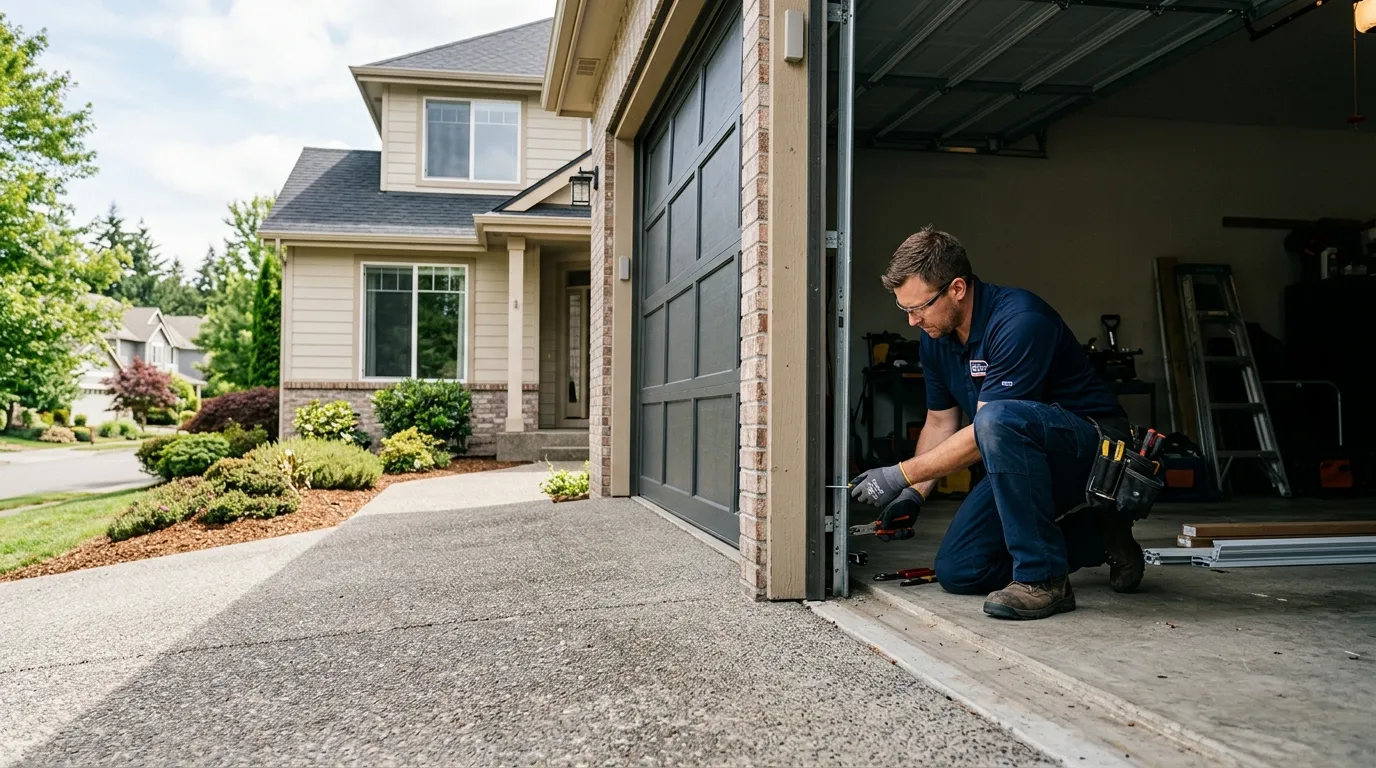
A straightforward roller swap on a door from the 1995 era usually stays straightforward, but there are a few things that turn it into a bigger job. If the track itself has worn a groove or bent where the old rollers dragged, new rollers won't run true until the track's straightened or replaced - you can't fix a roller problem by ignoring a bad track. On some doors from this build window, the bottom bracket holding the roller has also corroded or cracked from the same thirty years of exposure, and that bracket has to come off with the roller, which means working near a loaded cable. And if the door is original top to bottom, the springs are the same age as the rollers - we'll flag it if a spring looks like it's on its last stretch, because doing rollers now and springs in six months costs you two trip charges instead of one.
Booking a Visit
Tell us the door's rough age and whether it's making noise going up, down, or both - that alone tells us a lot before we even see the track. If you know roughly when the house was built, mention it; on a 1990s Arlington house we're already expecting original hardware and we'll bring what that calls for. We schedule the visit from Marysville, so there's a short drive built into the timing, but the work itself doesn't take longer because of it.
What You Are Seeing
If your door's original to a house built anywhere close to 1995, worn rollers are one of the more predictable failures - up there with springs, but usually cheaper to fix and less urgent to act on immediately. The tell is noise and rough travel rather than a door that won't move at all. If your door is jumping the track, catching, or grinding on the way up and the house is from that mid-90s wave of building, that's almost certainly what you're looking at, not a spring or opener problem.