Stocked Parts
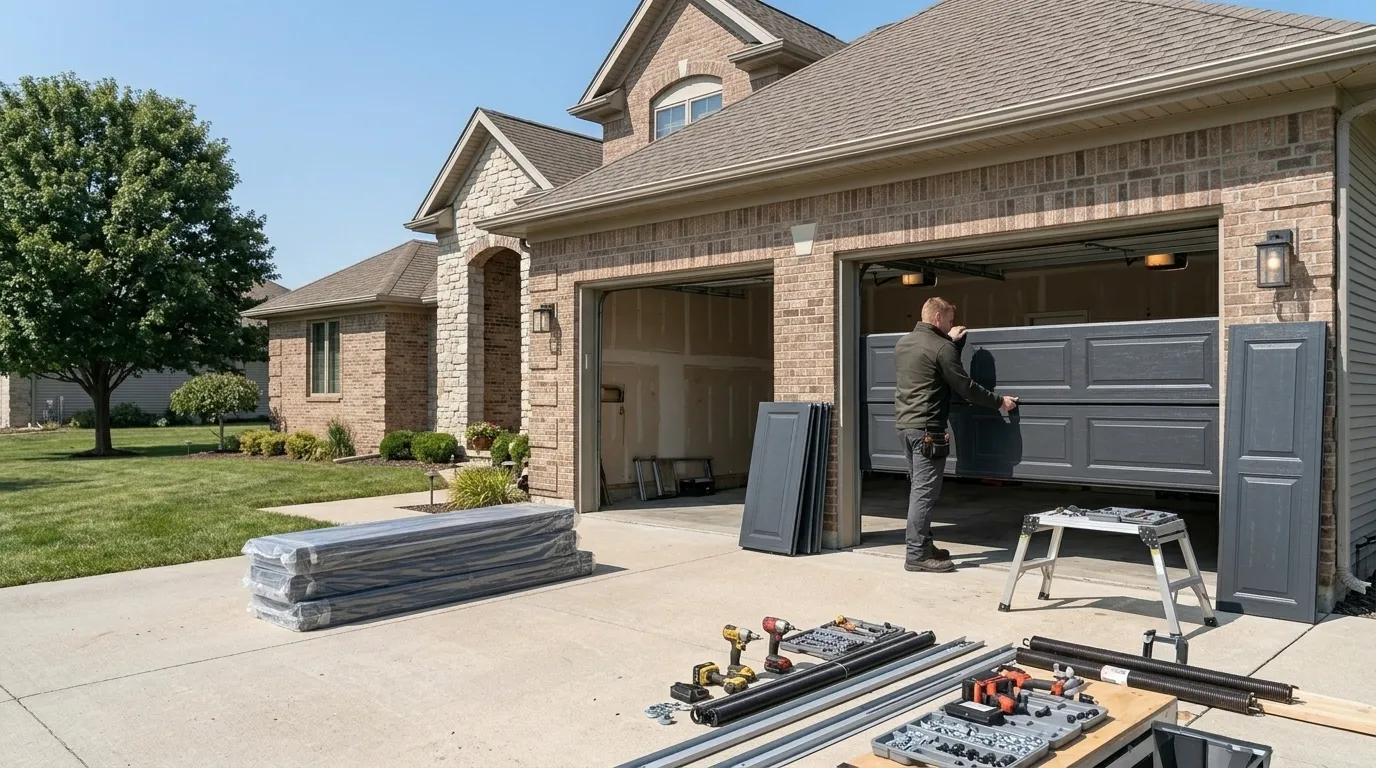
We carry torsion springs sized for the standard 16-foot double door that's common on Arlington's mid-90s builds, along with the matching end bearings and cable drums that usually go with a spring failure on hardware that age. What we don't carry on the truck is anything for a door outside that window - a much older single-car opening with side-mount hardware, or a newer high-cycle spring on a recent build, needs a part we order rather than one we're carrying that day. If your door doesn't match the common Arlington profile, we'll tell you that on the first visit rather than guess and make a second trip.
The Complications
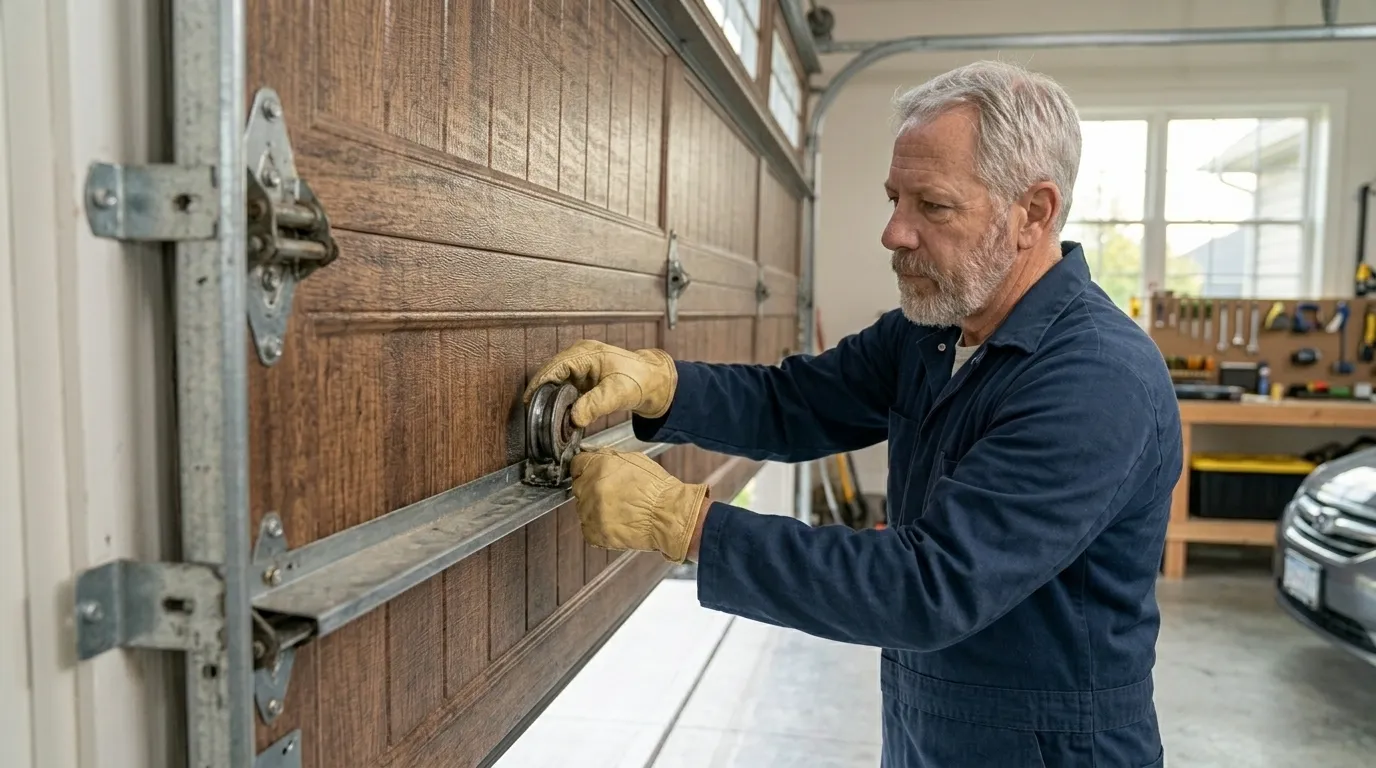
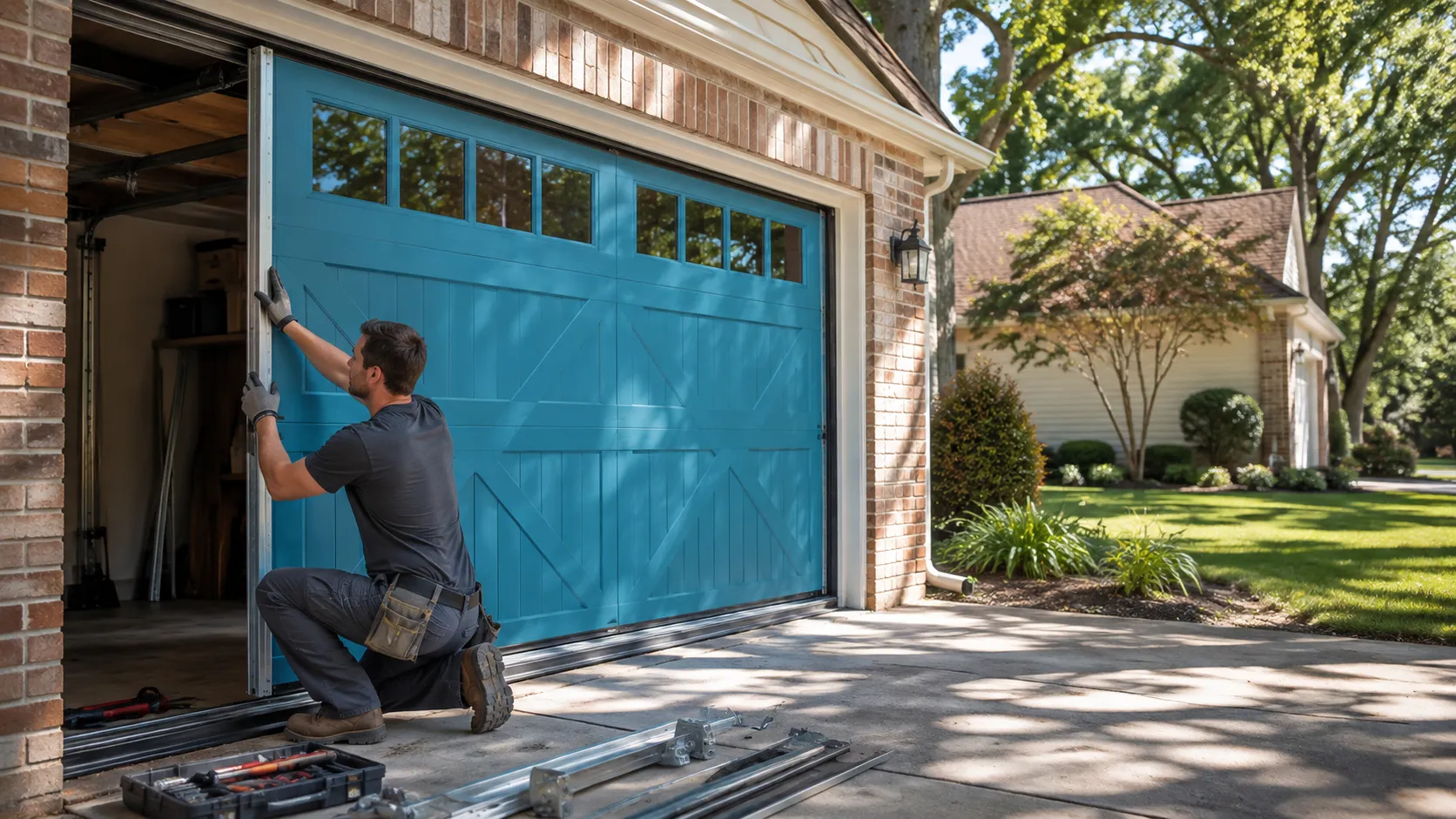
A straightforward torsion spring swap on a standard double door is a same-visit job. The complication comes from a door built in the 1990s: at close to thirty years old now, other parts have usually worn alongside the spring - the cable, the rollers, sometimes the bottom bracket. If the tech finds a cable frayed at the drum or a roller worn oval, replacing the spring alone just moves the next failure a few months down the road, and we'll say so before we close the job up. The other complication is access. We're coming from Marysville, about 6 miles out, so anything that turns into a return trip for a part not on the truck adds a day, not an hour.
Booking a Visit
Tell us the door is a standard two-car steel sectional and roughly how old the house is when you call - that's usually enough to know which spring size is already on the truck before anyone drives out. We travel to Arlington from our Marysville base, so there's no separate branch here, but the trip is short and doesn't change what the job costs to do. If you're not sure which category your door falls into, describe the width and we'll sort it out on the phone rather than guessing on your driveway.
What You Are Seeing
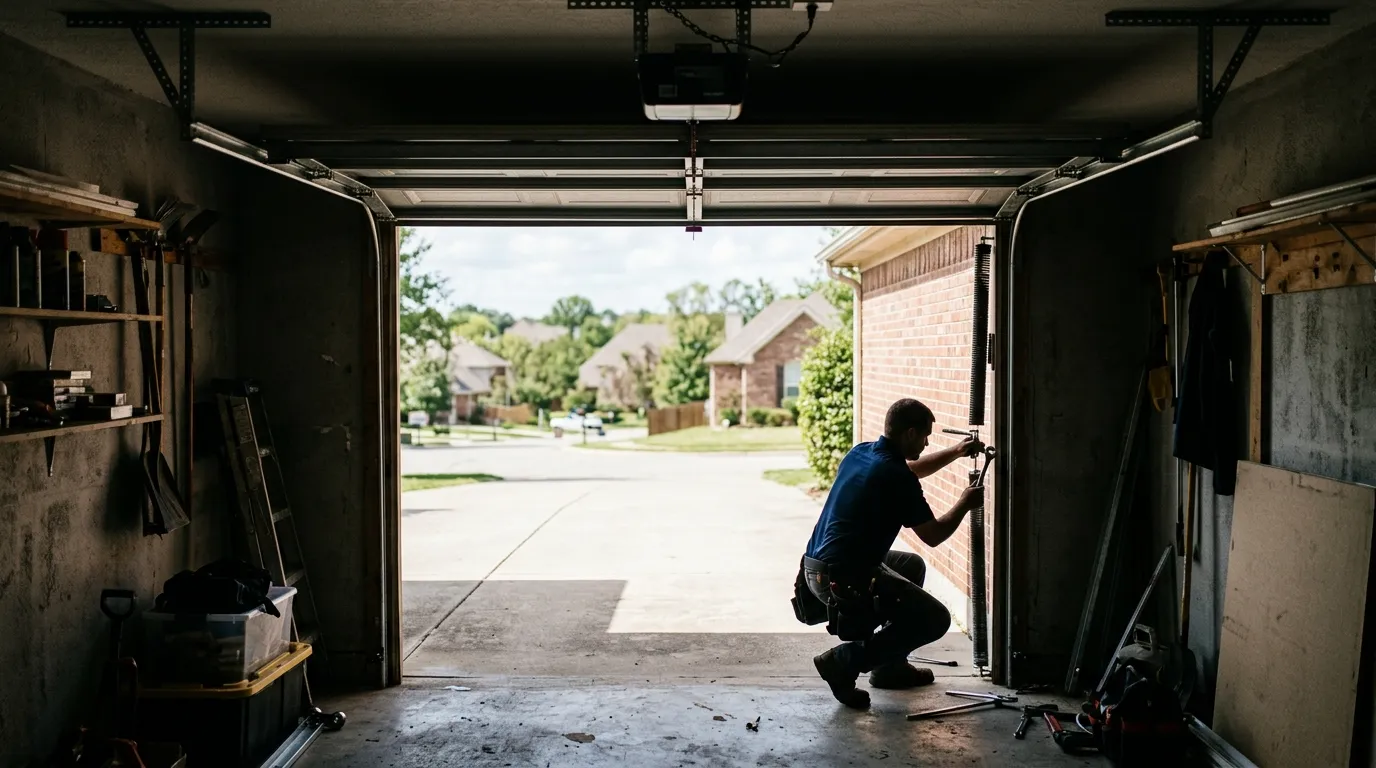
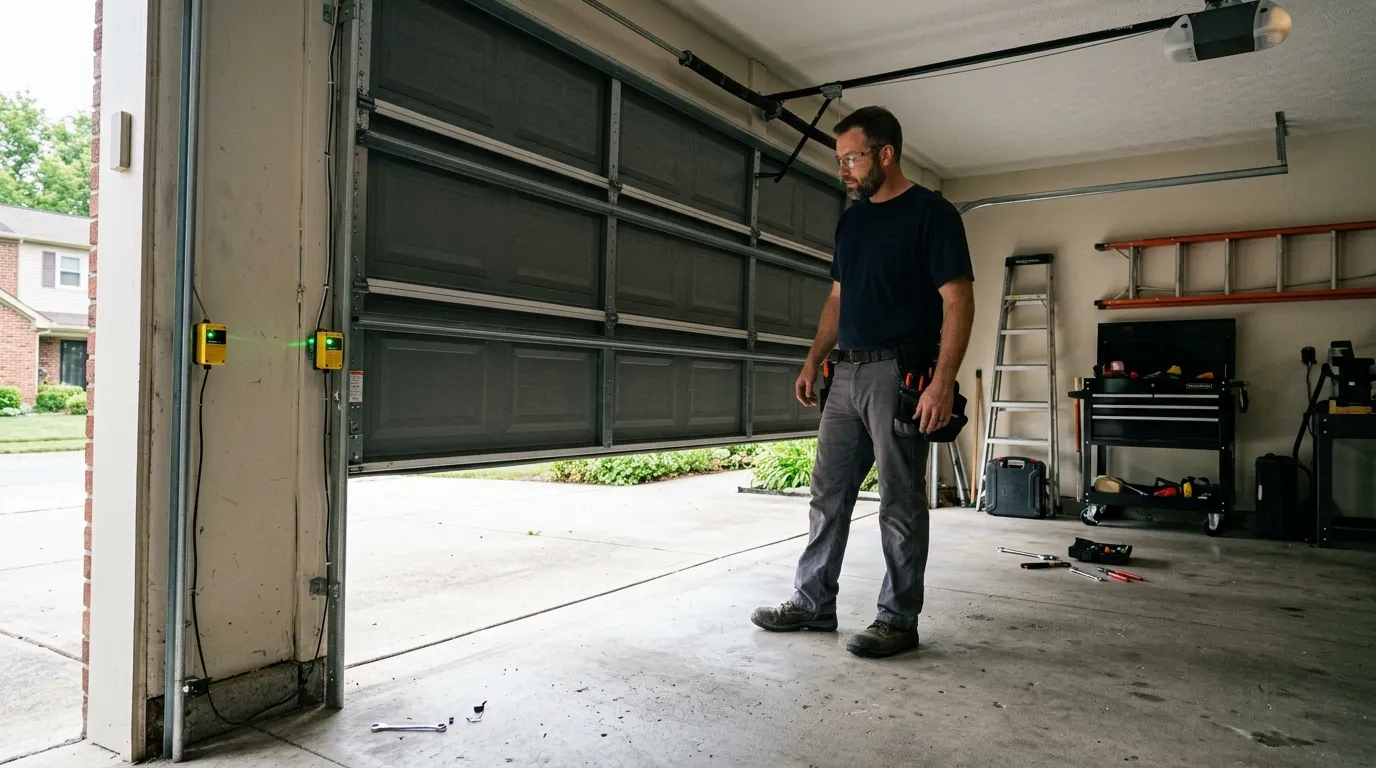
A door that won't budge, or slams down instead of lowering evenly, on a house from Arlington's main building era almost always means one side of a torsion spring has given out. You'll often hear it before you see it - a bang from the garage, sometimes loud enough to notice from inside the house. The opener will still hum and try to lift, but the chain or belt won't move the door, because the spring - not the opener motor - carries almost all the door's weight. Don't try to force it up by hand or run the opener repeatedly; that's how a cable snaps too. One honest limitation: if the door has been forced while broken, or the cable's already frayed, what looked like a spring-only job can turn into a bigger repair once we're on site.