What You Are Seeing
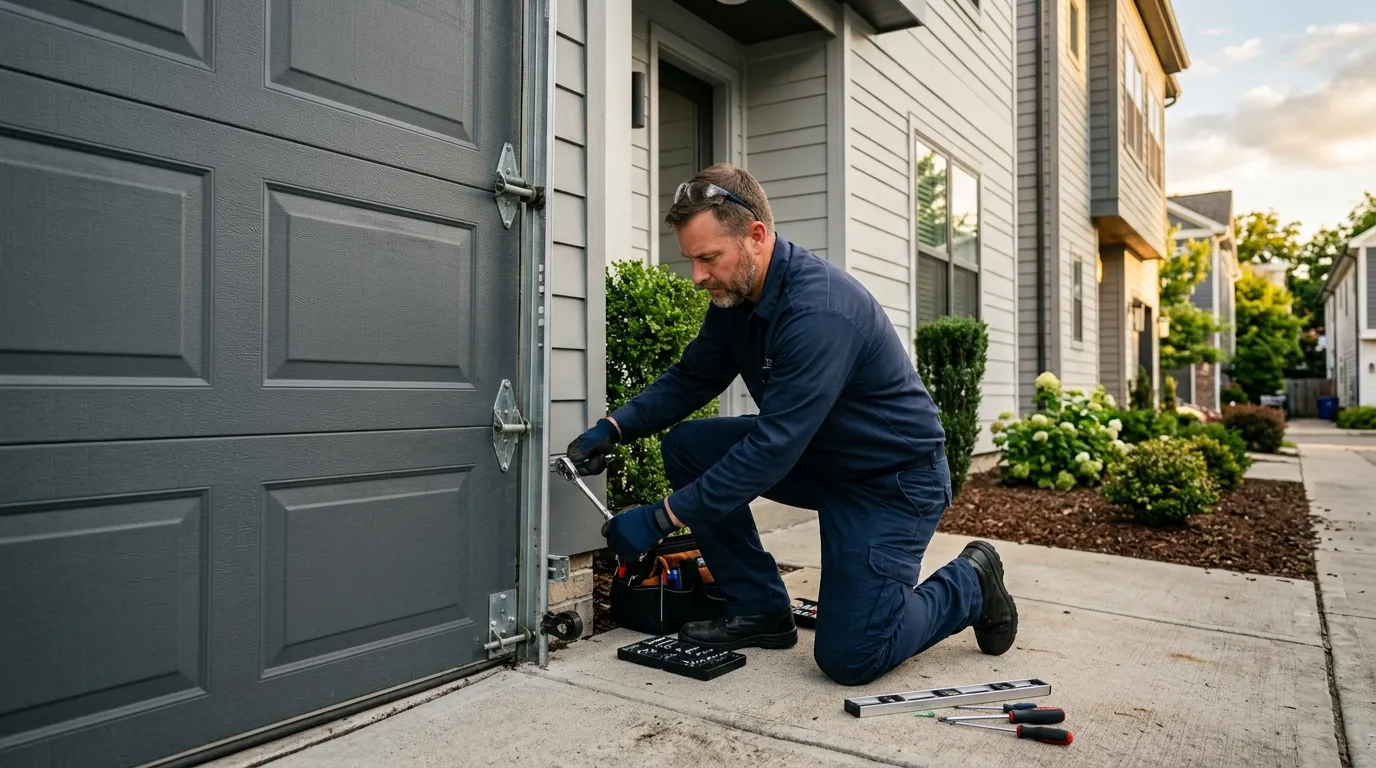
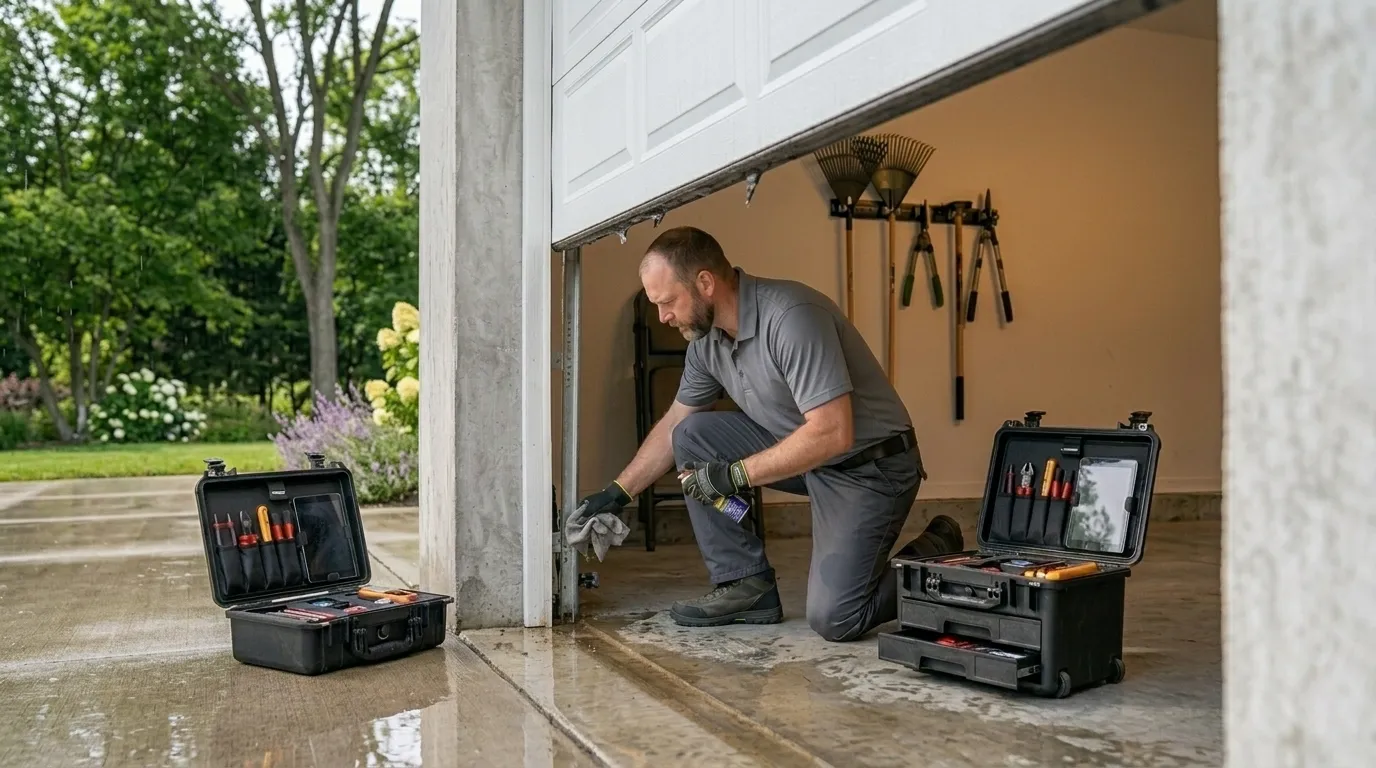
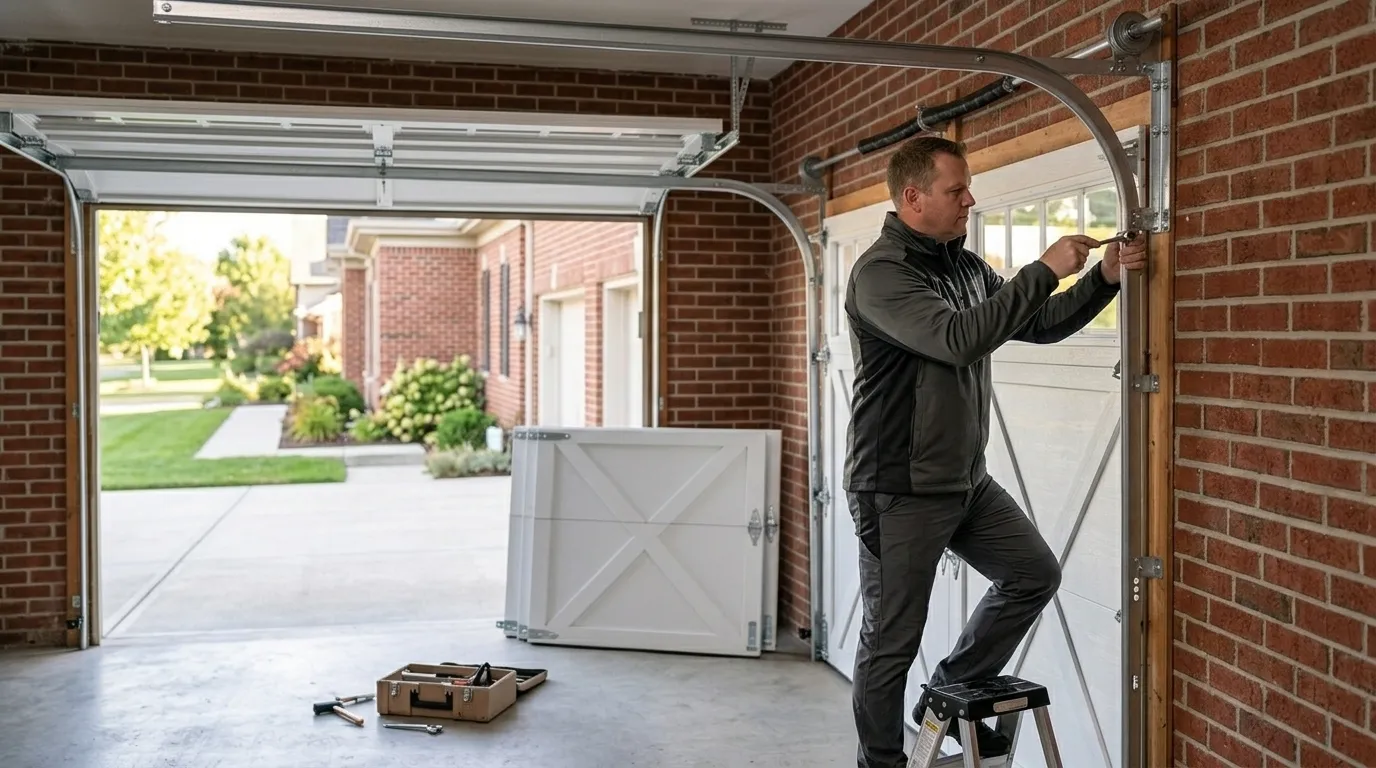
On a 1980s-90s door, a cable failure usually shows up one of two ways: the door drops unevenly on one side and jams a few inches off the track, or it comes down hard and fast because both cables let go near the same time. You'll often hear a snap or a loud clunk right before it happens. Fraying is the warning sign that gets missed - a few strands peeling off the cable near the bottom bracket, visible if you look closely with the door up. On these older systems the cables are usually galvanized aircraft cable on a standard torsion drum, not the newer nylon-coated kind, so they wear from rust and friction more than from age alone. Cold, damp stretches in this climate band speed that up, since moisture works into the strands at the drum end where the cable wraps.
Can You Do This Yourself
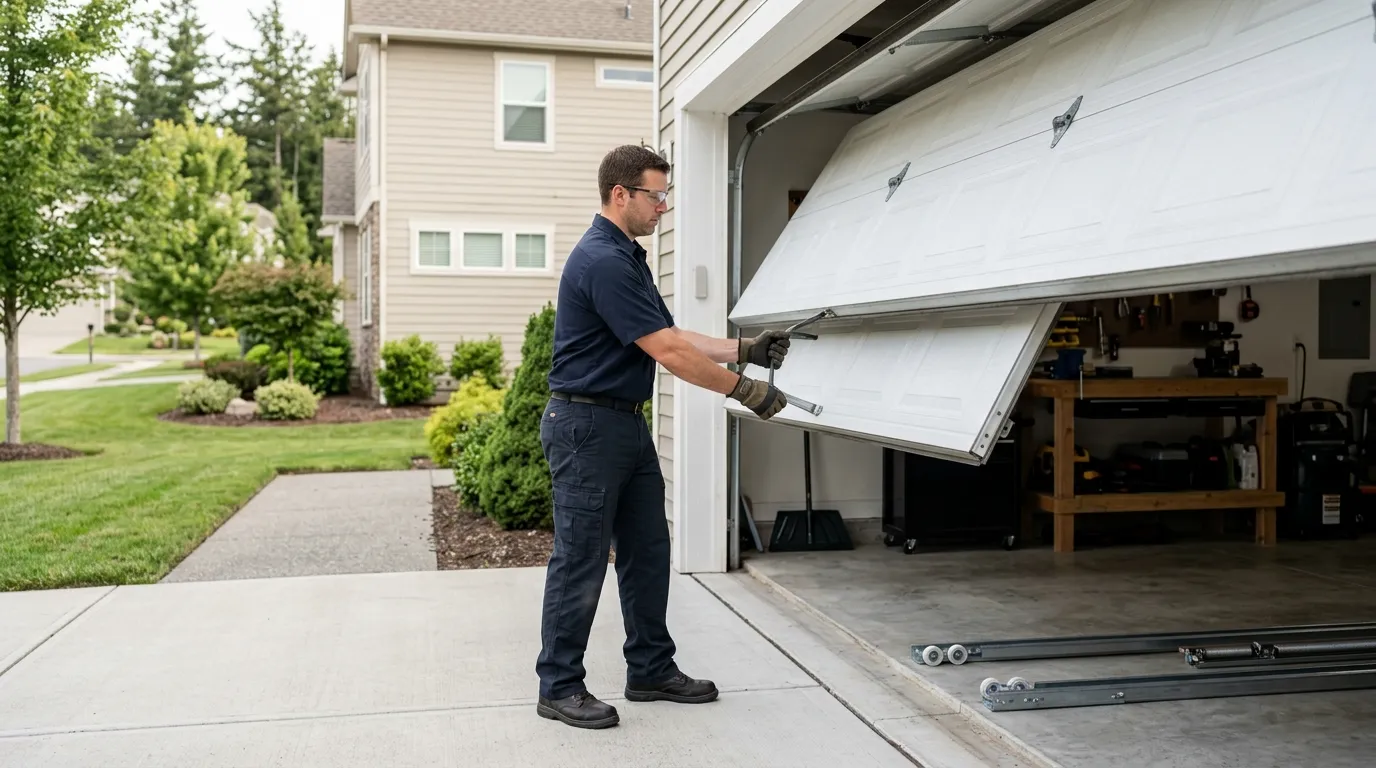
Don't. A garage door under tension can put close to 200 pounds of force through those cables and the spring system behind them, and a cable that's already frayed can finish snapping while you're standing under the door. If one cable has broken and the door is stuck, leave it stuck - don't crank the opener, don't try to pull it up by hand, and don't cut the second cable to "even things out." That second cable is holding the door's full weight alone at that point. This is one of the jobs where the honest answer is to call it in rather than watch a tutorial: the spring tension involved is the same reason we don't sell DIY cable kits for anything mounted on a torsion drum.
What the Repair Takes
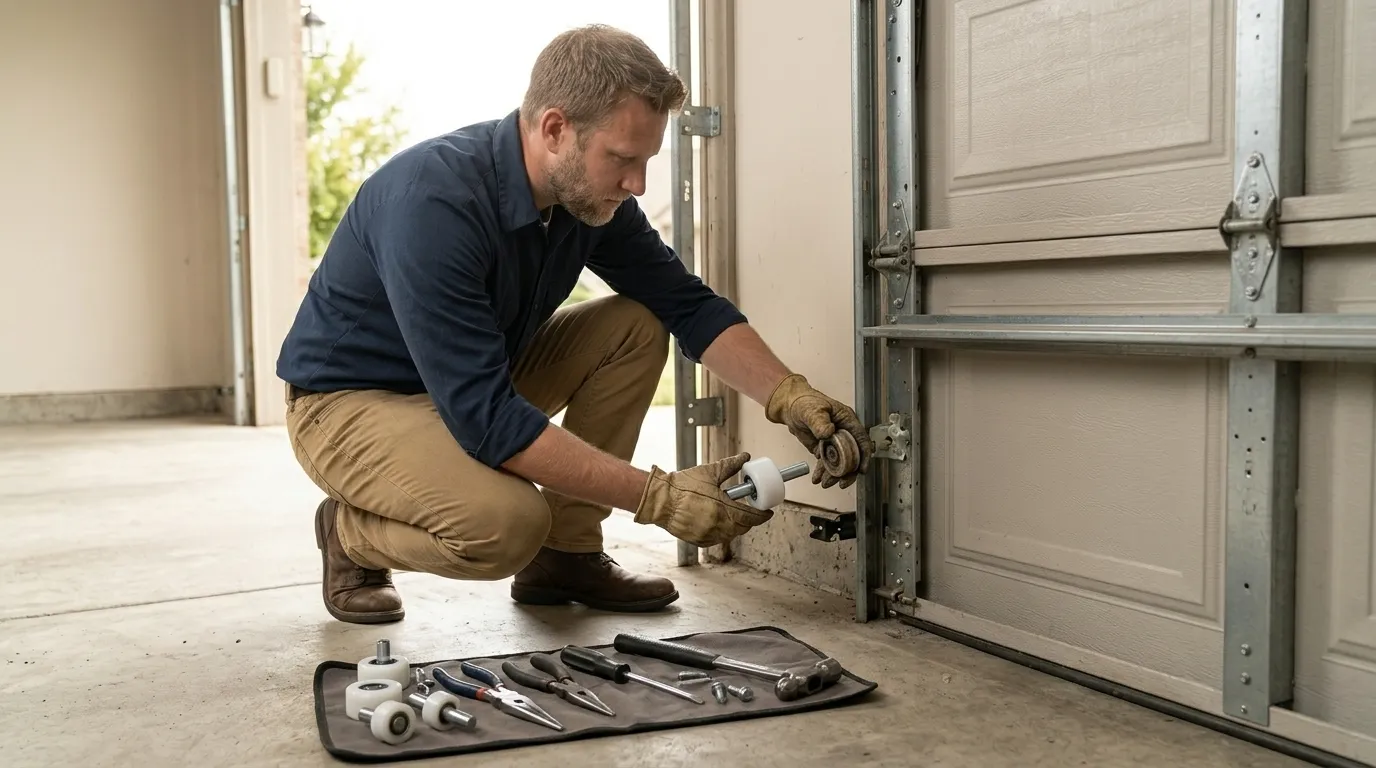
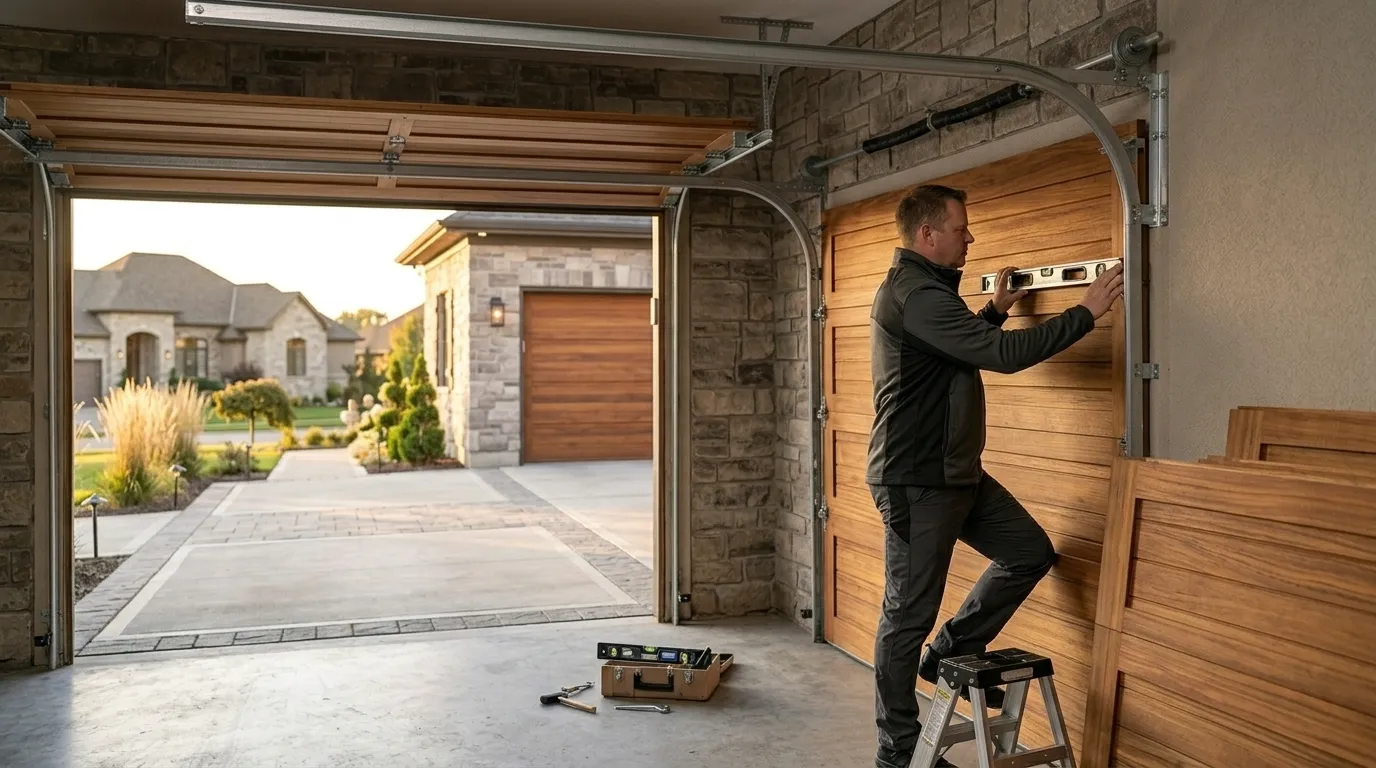
A straightforward two-cable replacement on a standard torsion door is a same-visit job: release tension on the spring, pull the old cables, run new ones, reset the drums evenly, and test the balance before we leave. If the door's out of balance afterward - one side lifts easier than the other - that gets corrected on the spot, since an unbalanced door just chews through the next set of cables faster. Where it takes longer is if the drum or bottom bracket is damaged, which happens when a cable's been frayed for a while before it finally lets go. That's a parts-dependent repair rather than a quick swap, and we'll say so plainly rather than push through a fix that won't hold.