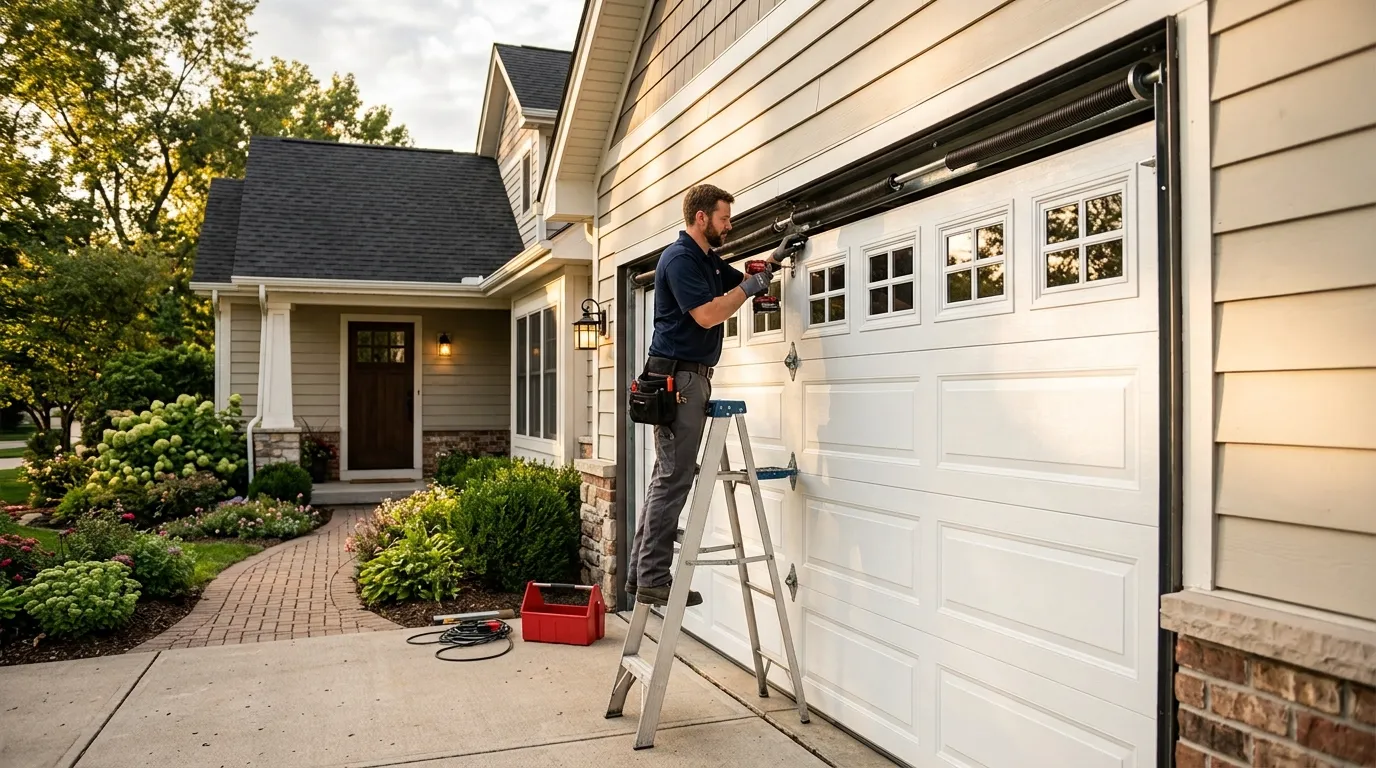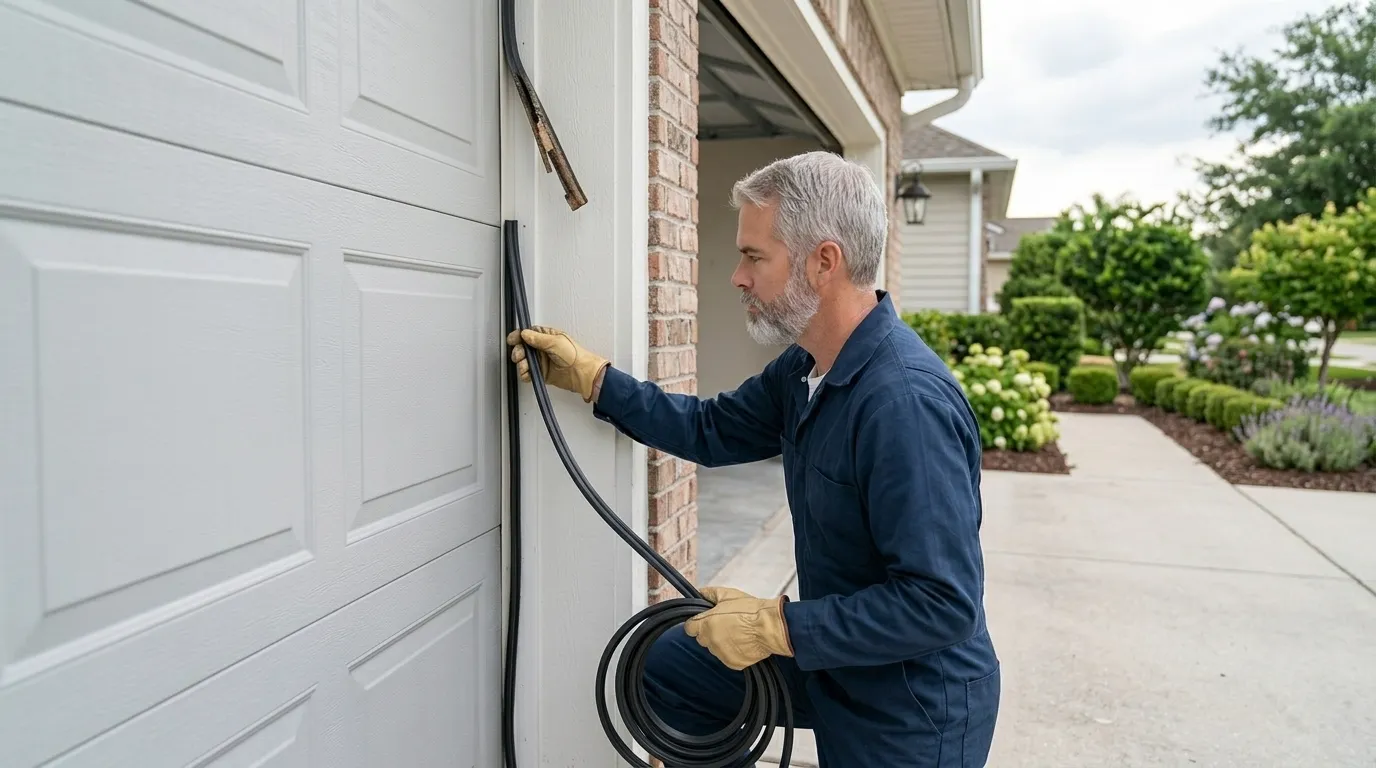

What You Are Seeing
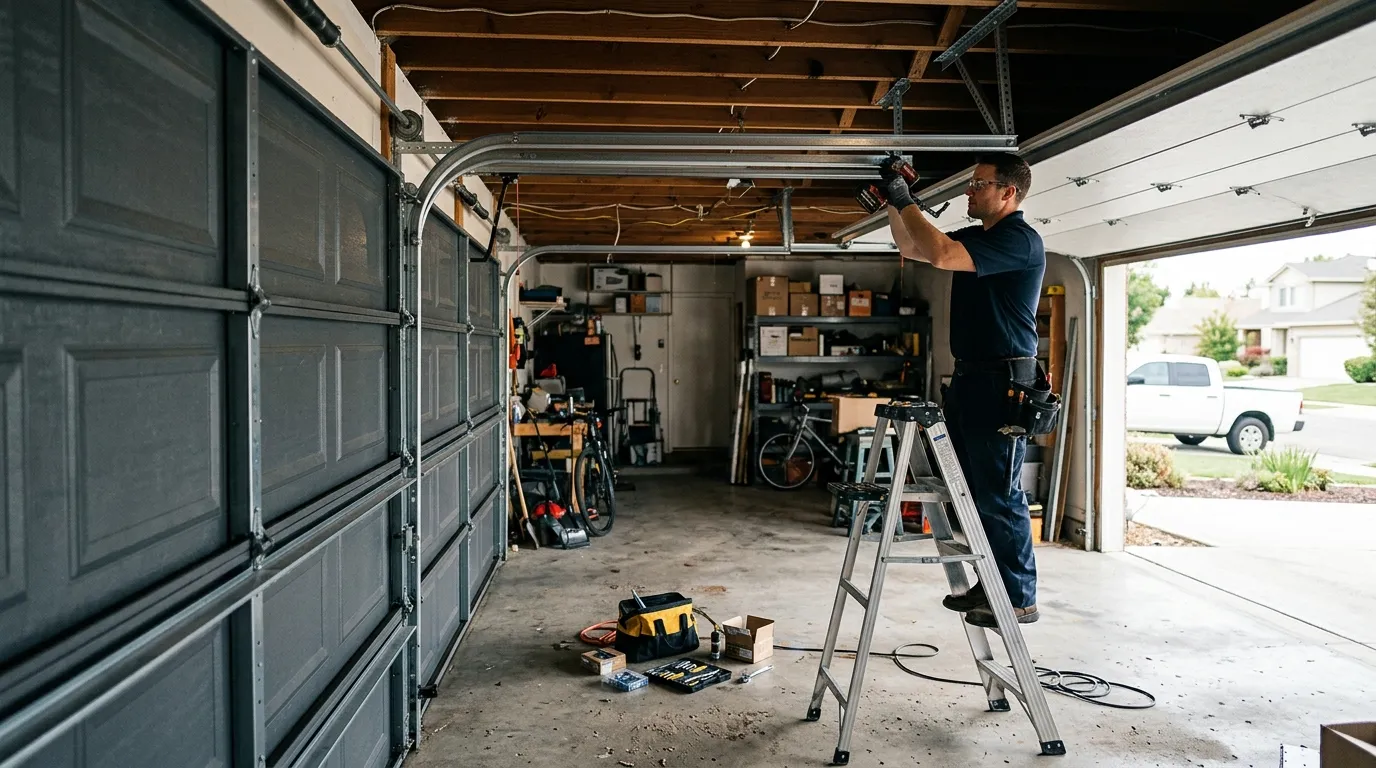
Camano's housing stock, like most of the areas we cover, largely went up between 1972 and 2000, with the median landing around 1991. That means most doors out here are not the builder-grade steel doors from the 2000s housing boom, and they're not the older wood one-piece doors from the '60s either. They're a middle generation: steel sectional doors on torsion springs, often still running their original opener, now pushing 30-plus years on nylon rollers and galvanized cable that was never meant to last three decades.
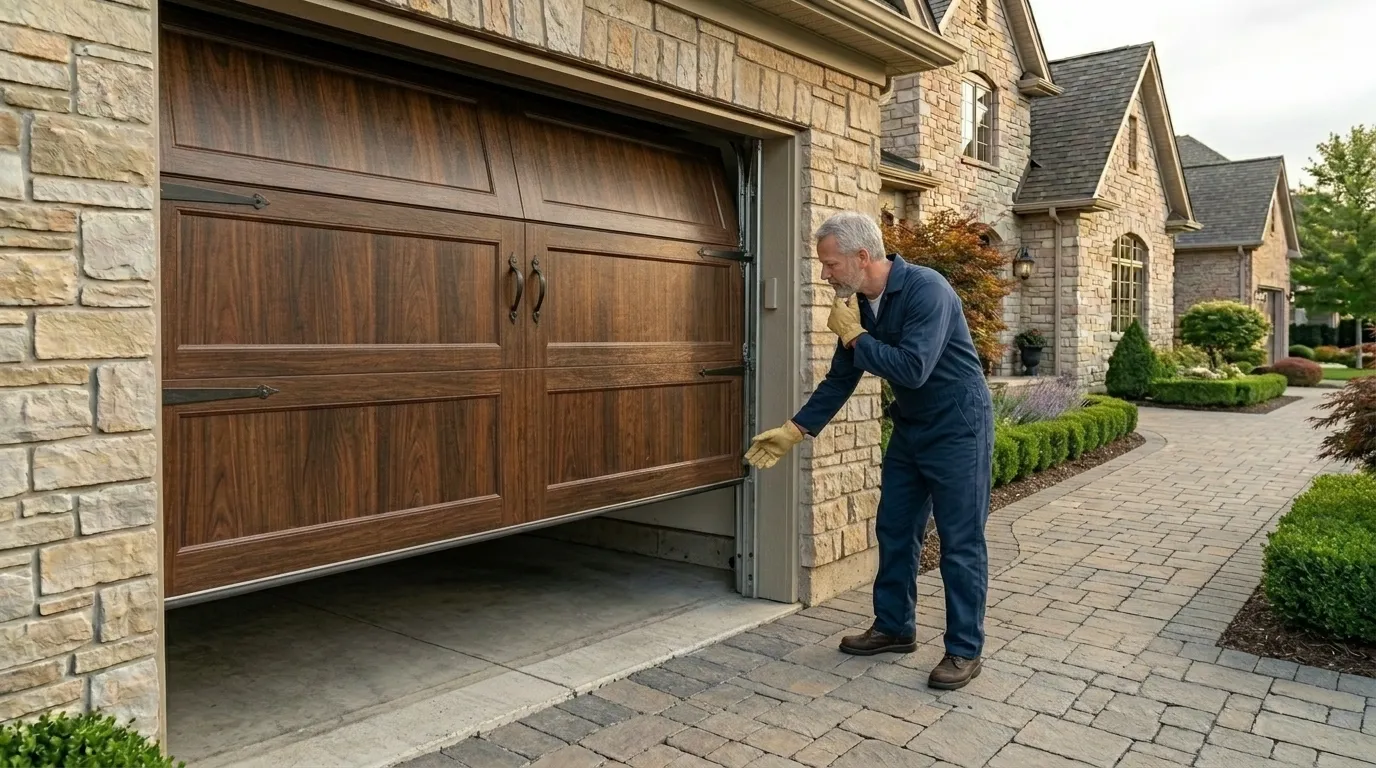
At this age, the failures cluster around a few things: torsion springs that finally fatigue and snap, rollers that have worn oval and rattle in the track, and openers with drive gears worn down to plastic dust inside the housing. None of that is dramatic - it's just metal and plastic doing what metal and plastic do after 30 winters. Given the region's cold-moderate climate, condensation and temperature swings in an unheated garage speed up wear on cable and hardware faster than a heated space would. If your door's making a new noise or hanging unevenly on one side, it's usually one of these three things, not something exotic.
Can You Do This Yourself
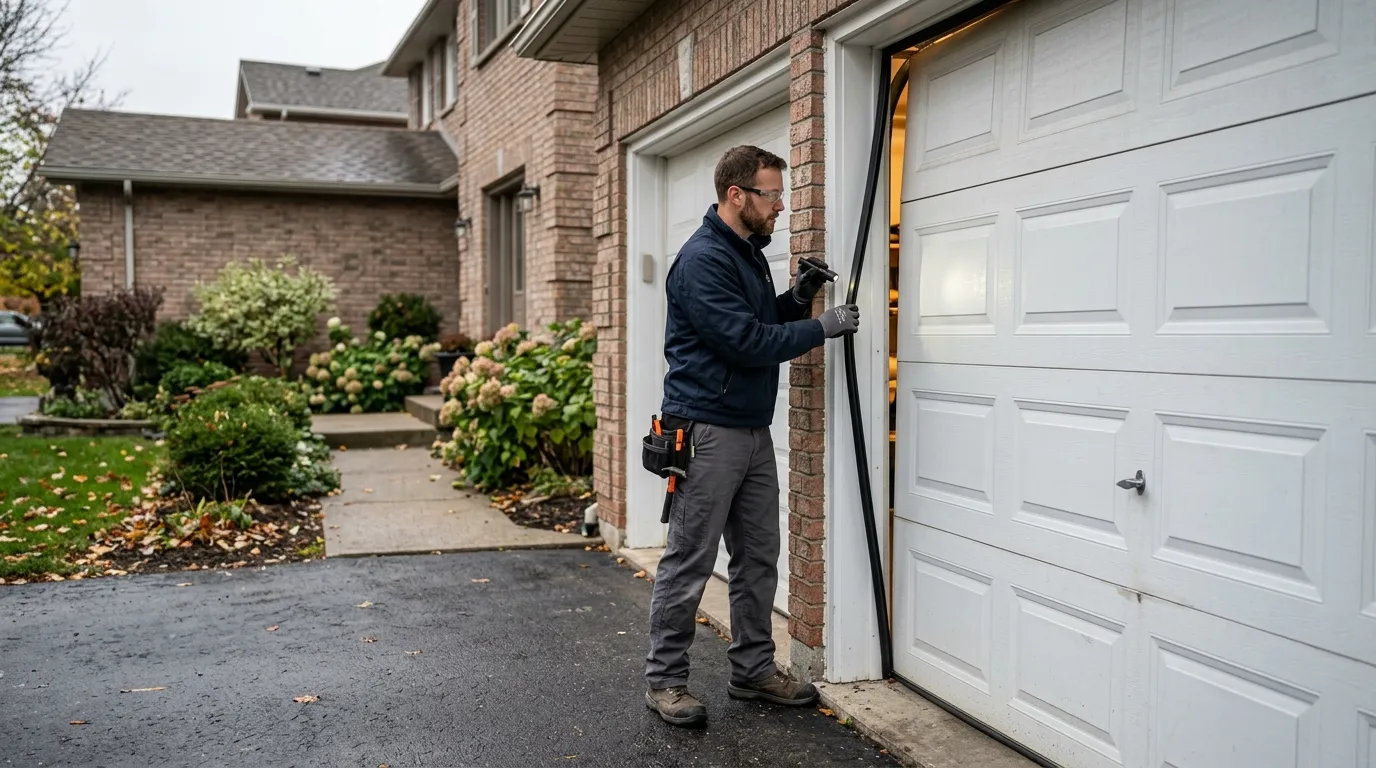
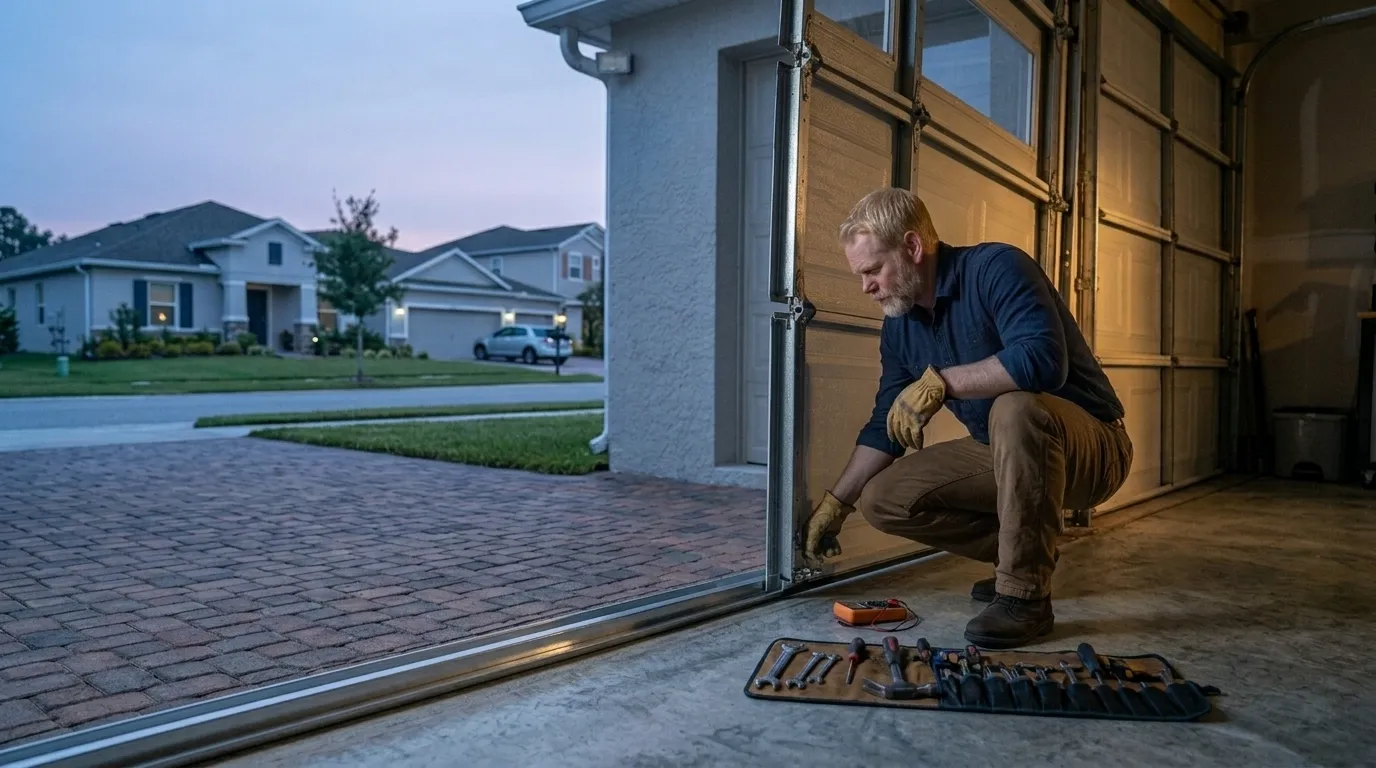
Some of this is genuinely DIY. Lubricating rollers and hinges, tightening loose bolts on the track brackets, swapping worn weatherstripping along the bottom of the door - a homeowner with basic tools can do all of that safely on a weekend afternoon.
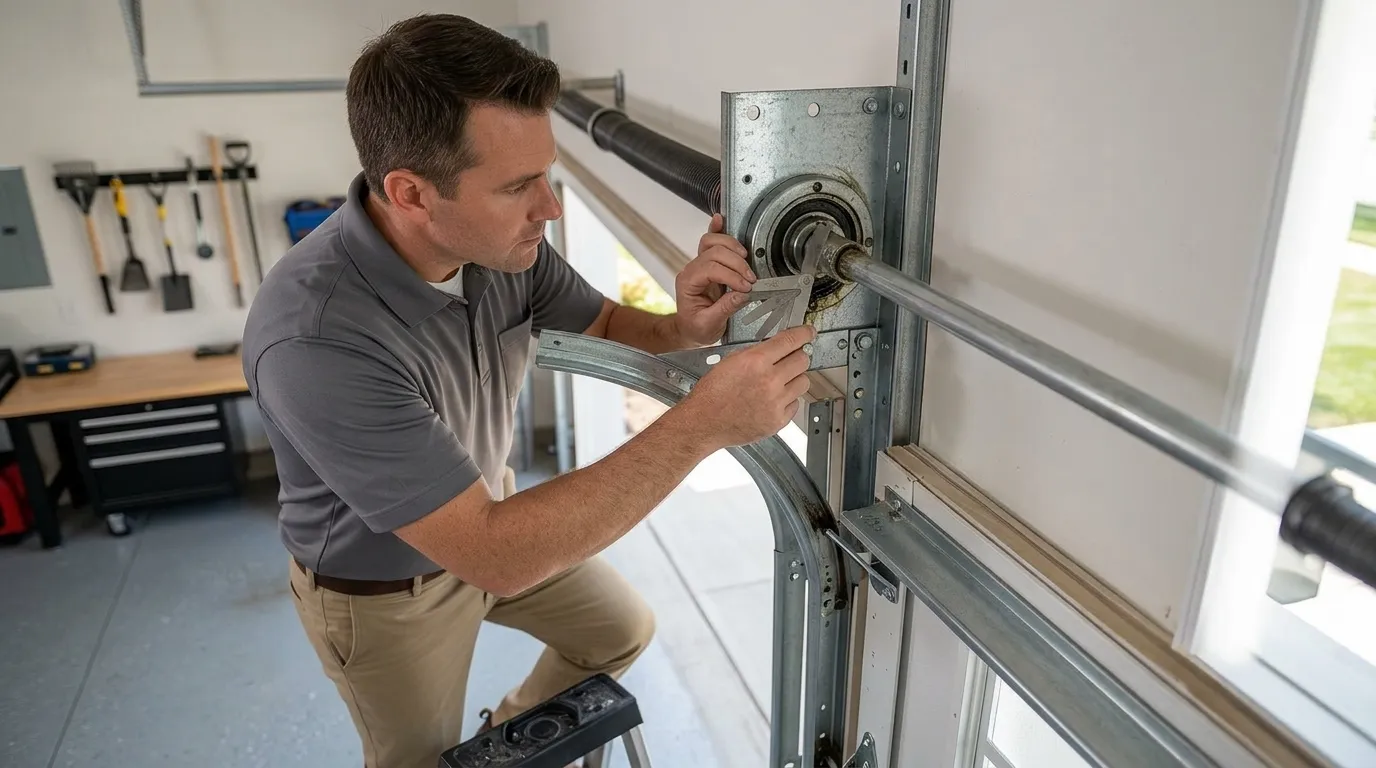
What you should not touch is the torsion spring itself. A wound torsion spring holds enough stored energy to break a finger or worse if it lets go while you're working on it, and the tools to wind and unwind one safely aren't things most garages have lying around. Same goes for the cables under tension and anything involving the opener's internal gearing while the door is under load. We'll walk you through what's safe over the phone if you ask, and tell you plainly when a job is past what we'd recommend doing yourself. Given the drive out here, it's worth confirming the fix before we load the truck rather than after.
What the Repair Takes
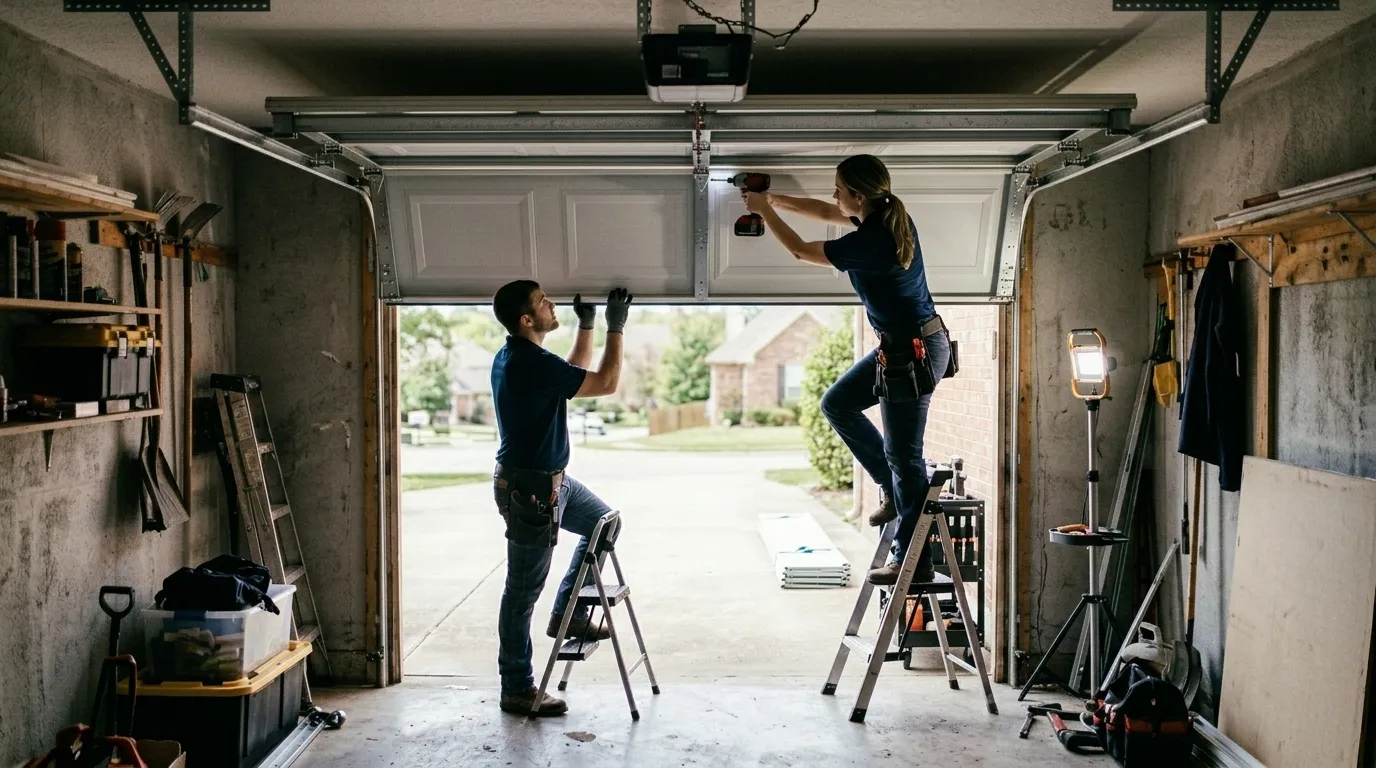
A standard torsion spring replacement or roller swap on a Camano-area door built in this window usually runs under two hours once we're on site, parts permitting. Opener repairs or replacements can run longer if the existing unit is wired into an older circuit that needs adjusting. Given the 15-mile drive, we build the travel time into how we schedule the day rather than into what we charge for the repair itself.
The bigger factor is whether the fix is worth doing at all. A 30-year-old opener with a failed gear is often cheaper to replace outright than to keep patching, especially once you're replacing the same part twice. We'll tell you straight which side of that line your door is on instead of running up a bill on a unit that's near the end of its life anyway.