
The Complications
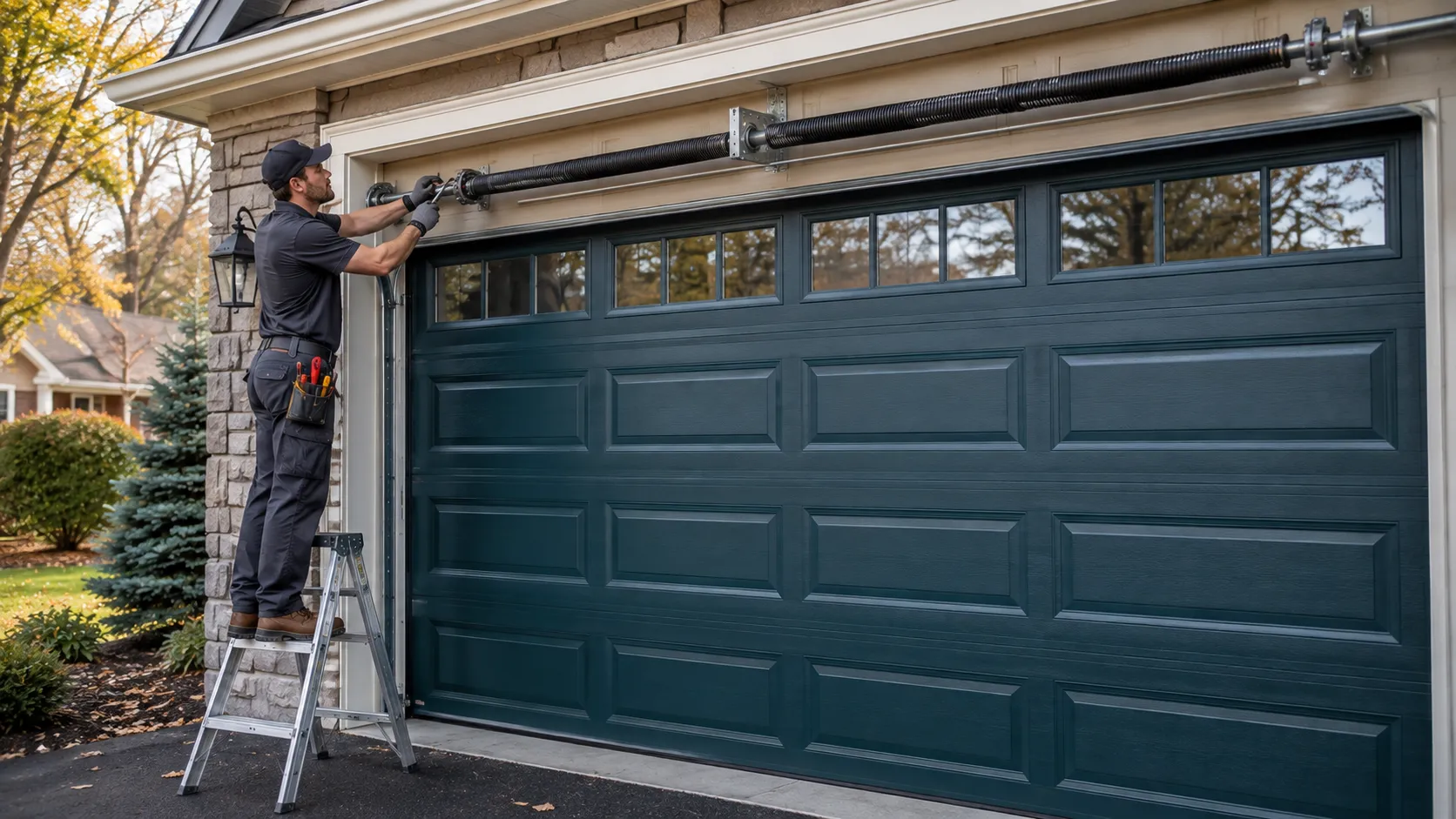
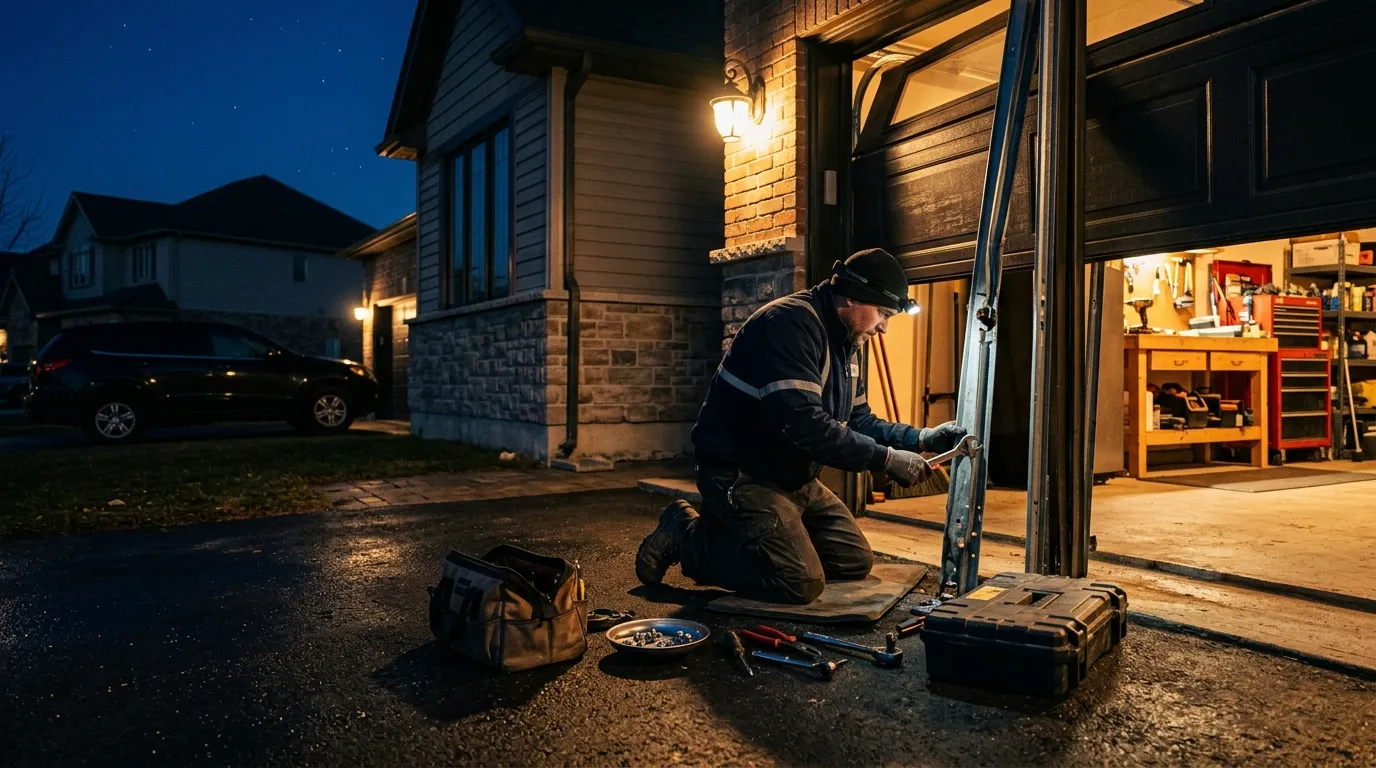
A 1996-built door in Monroe has had roughly three decades of County winters to work on its hardware. The service area sits in a cold-moderate climate band, and repeated freeze-thaw cycling on steel track and galvanized fasteners is what turns a simple roller swap into something bigger. Rust forms inside the track channel where you can't see it until a roller catches instead of rolling, and by then the track edge itself may be chewed up.
The other complication is scale. With about 6,113 households in Monroe, most on similar-aged construction, a lot of these doors are hitting roller failure in the same few-year window - which means when one roller goes, the other nine on that door are usually close behind, plastic having gone brittle at close to the same rate. Replacing one and leaving the rest is a short-term fix.
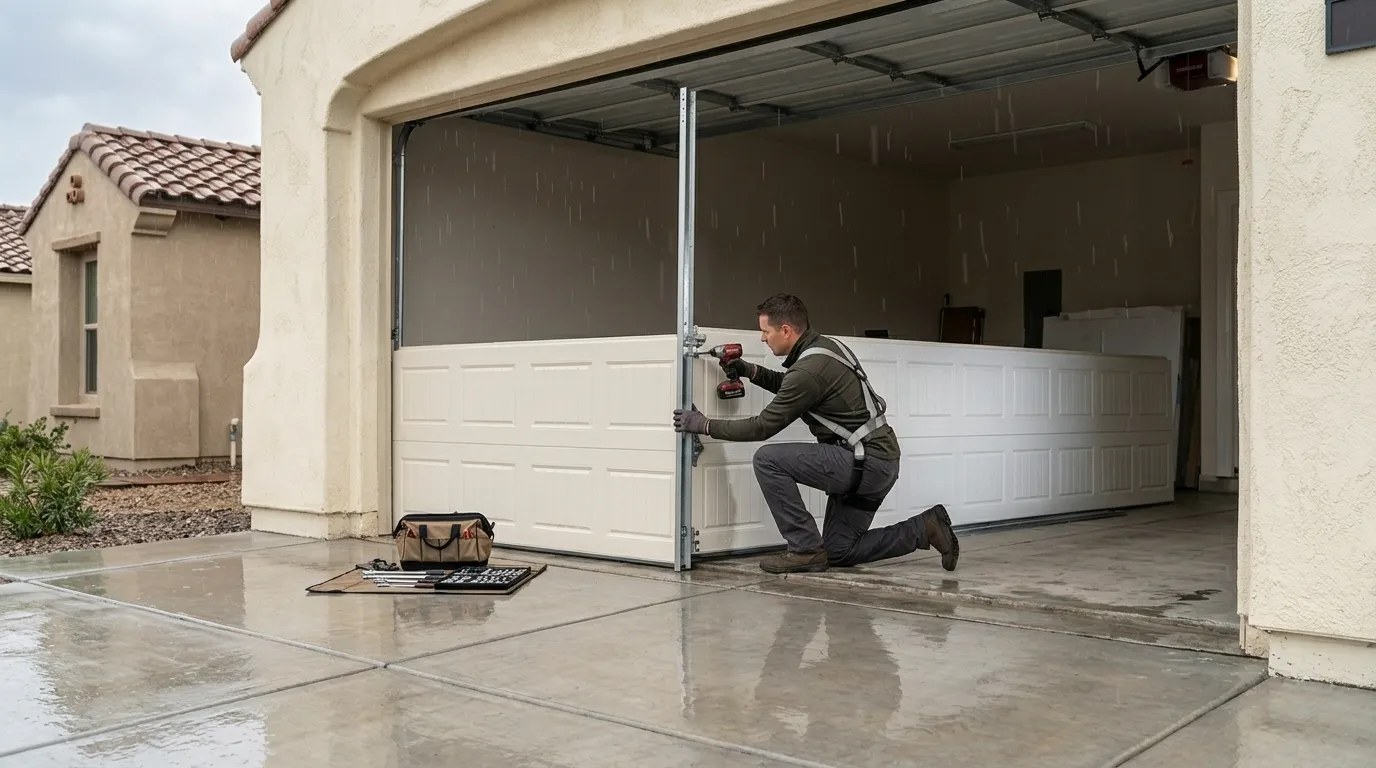
We travel about 17 miles out from Marysville to reach Monroe, so a job here isn't a same-hour walk-up the way it might be closer to the shop. We plan the parts before the drive, based on what you describe on the phone, but if the track turns out to be more damaged than expected once we're on site, that can mean a second visit for track stock we didn't bring.
How Long It Takes
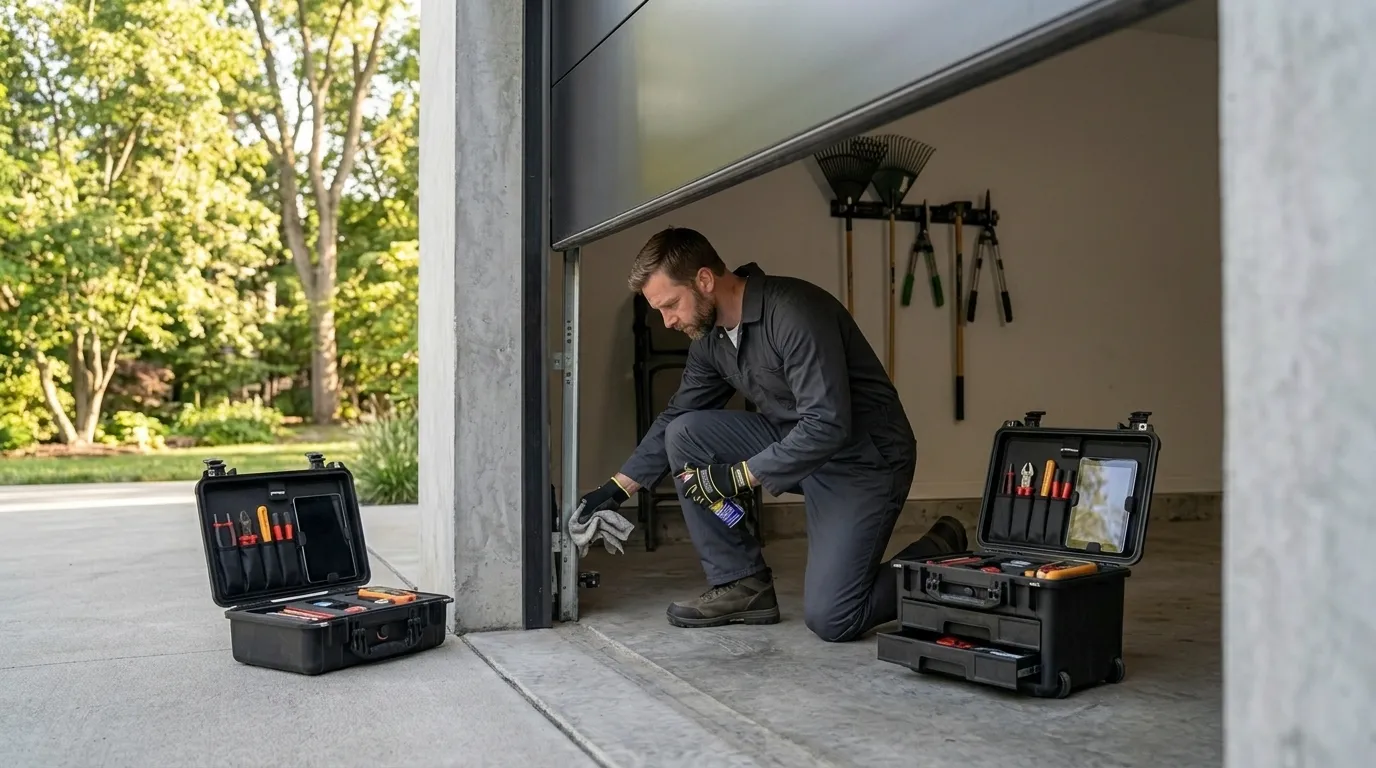
We don't have a fixed number to give you here, and we'd rather say that than make one up. A straightforward ten-roller swap on one door, with track in decent shape, is quick work once we're on site. A job where the track itself is rusted through or the brackets are bent from years of a bad roller dragging on them takes longer, because now we're replacing hardware, not just rollers.
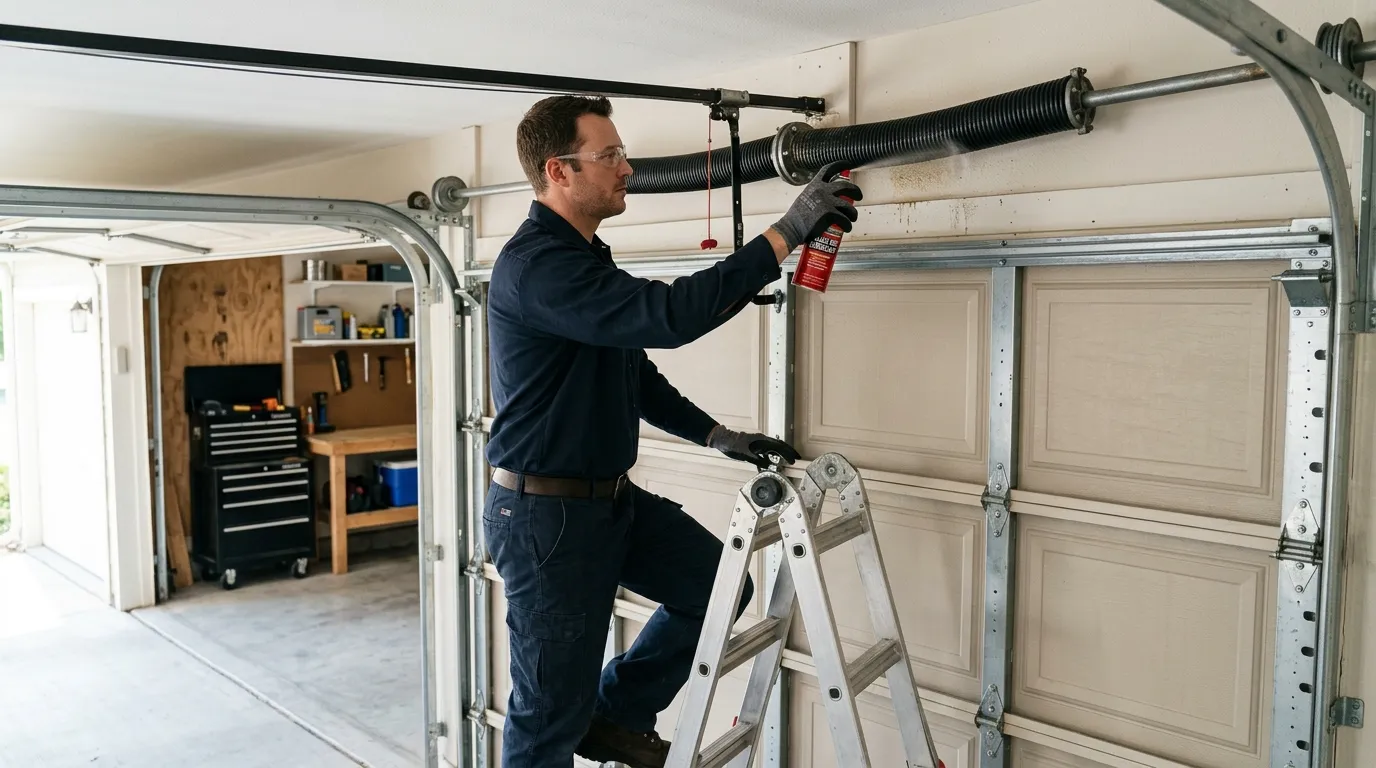
What we can tell you is what changes the timeline: whether both doors on the house need the same work (common in Monroe, since most homes were built to the same 1996-era spec and both doors age together), whether the opener has to come off track to get the top roller out, and whether the track needs re-squaring after the old roller's damage. None of that is unique to Monroe, but given the age of the housing stock here, it's worth expecting rather than being surprised by.
What You Are Seeing
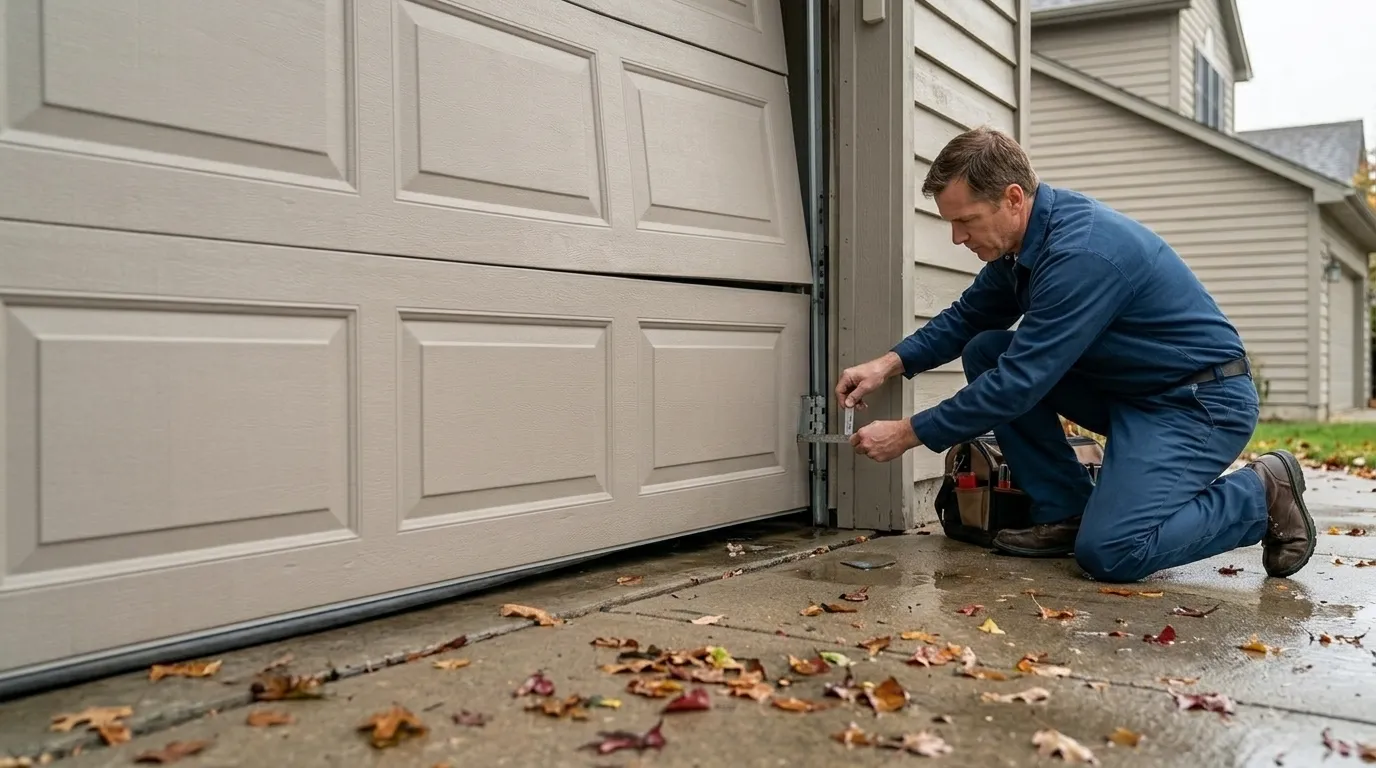
On a door this age, roller failure rarely shows up as a total jam right away. It starts as a grinding or squealing sound low in the door's travel, then a hitch where the door seems to stall for a half-second at the same spot every time. That's usually a flat-spotted or cracked plastic roller catching on the same point in the track. Left alone, the roller can shatter, and the stem drops into the track channel, which is when the door binds hard or comes off the rail entirely.
Another sign specific to houses of this vintage: a door that's noticeably louder than it used to be, overall, not just at one spot. Original 1990s rollers wear evenly across all ten at close to the same rate, so the whole door gets rough at once rather than one roller going bad in isolation. If that's what you're hearing on a Monroe door built anywhere near 1996, it's less likely to be one bad part and more likely the whole roller set reaching the end of its life together.