
The Complications
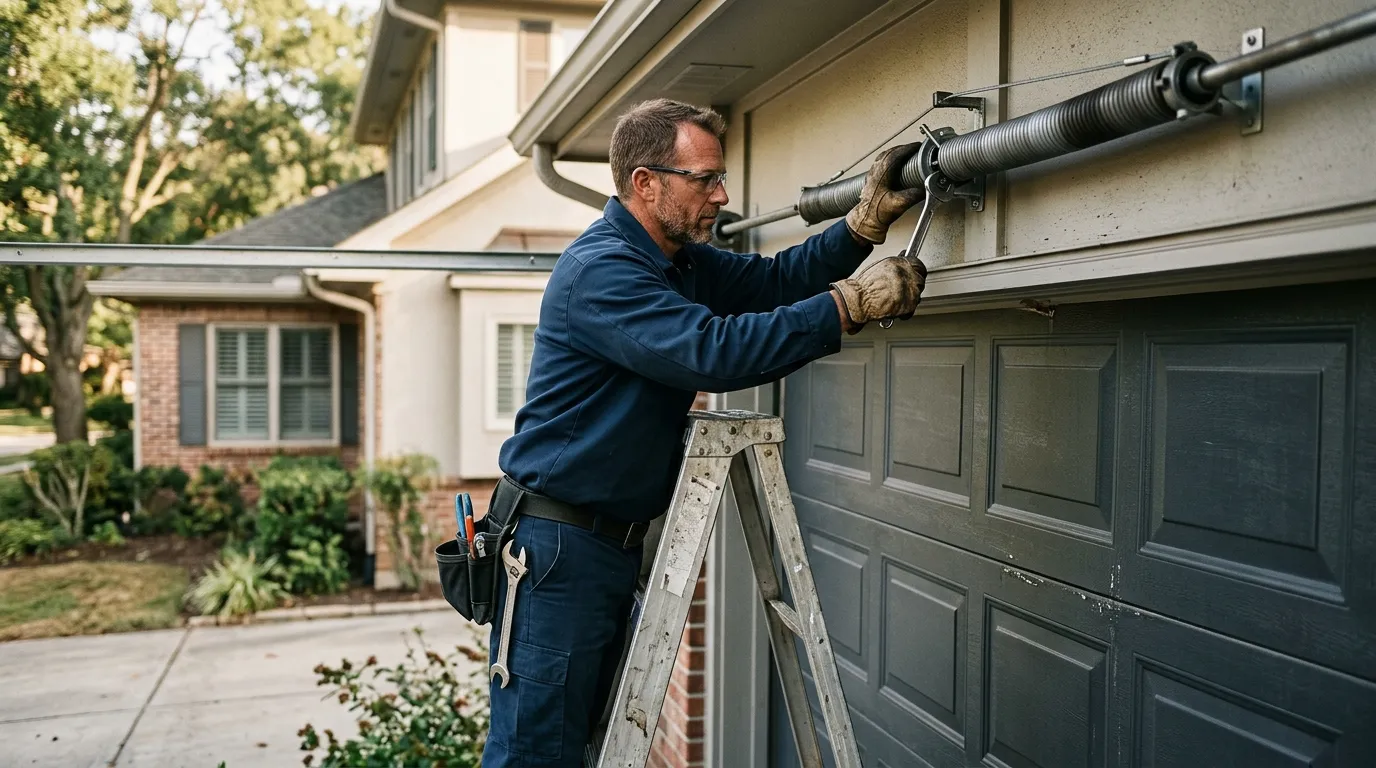
A door built in 1996 is old enough now that the original torsion spring has likely cycled through its rated life once already, sometimes twice. The complication we run into most in Monroe isn't the spring itself - it's the winding cone. Mid-90s cones were often steel-on-steel with no coating, and after nearly three decades they can be seized or worn oval, so what looks like a simple spring swap turns into freeing or replacing the cone too.
The other wrinkle is climate. This area sits in a moderate-cold band, and steel torsion springs lose a little tension consistency in sustained cold and damp, which shows up as a door that feels heavier in winter than summer even before the spring actually fails. That's not a Monroe-specific fault, but on a 1996-era spring that's already near the end of its cycle count, cold weather is often what pushes a marginal spring into a full break.
We travel to Monroe from Marysville, about 17 miles out, so we plan the truck's stock for that trip rather than guessing - which is part of why matching the spring size to the housing era matters before we're on site, not after.
How Long It Takes
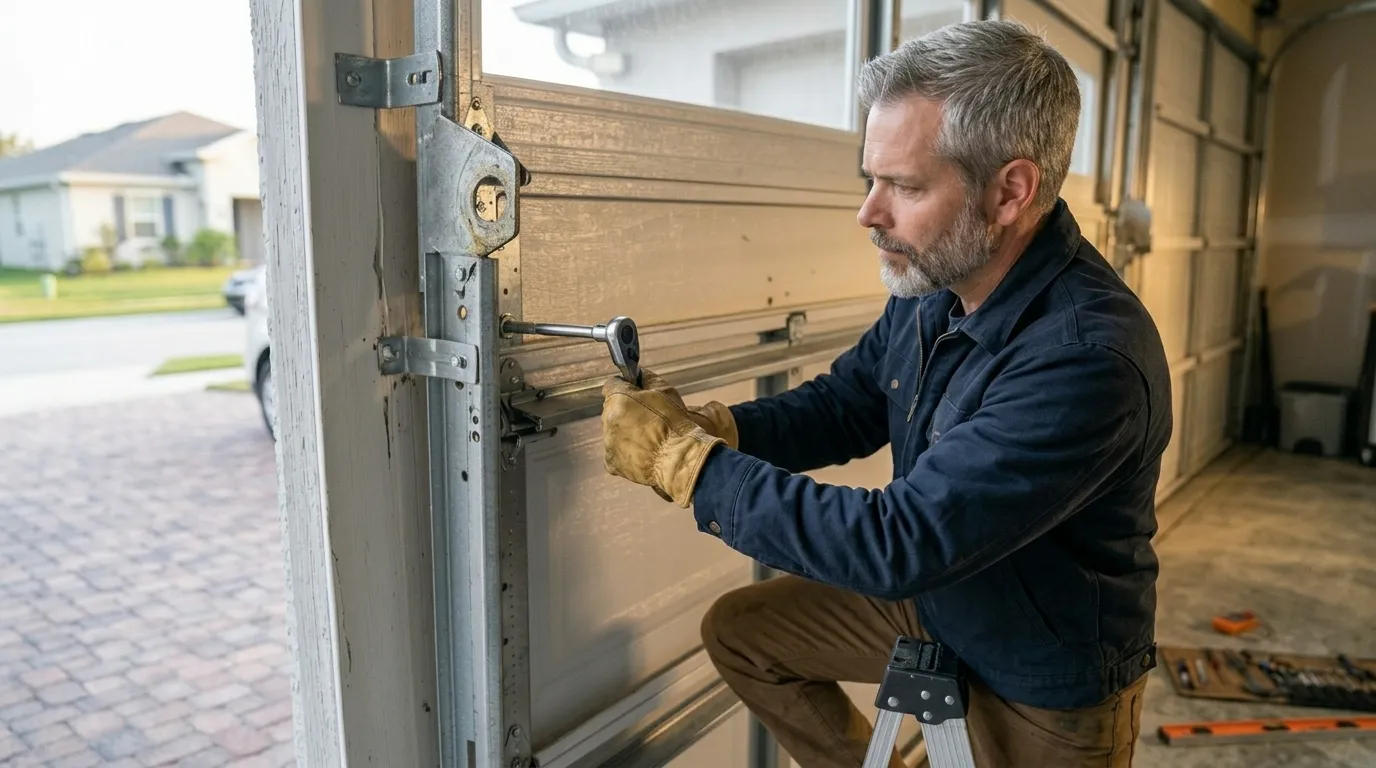
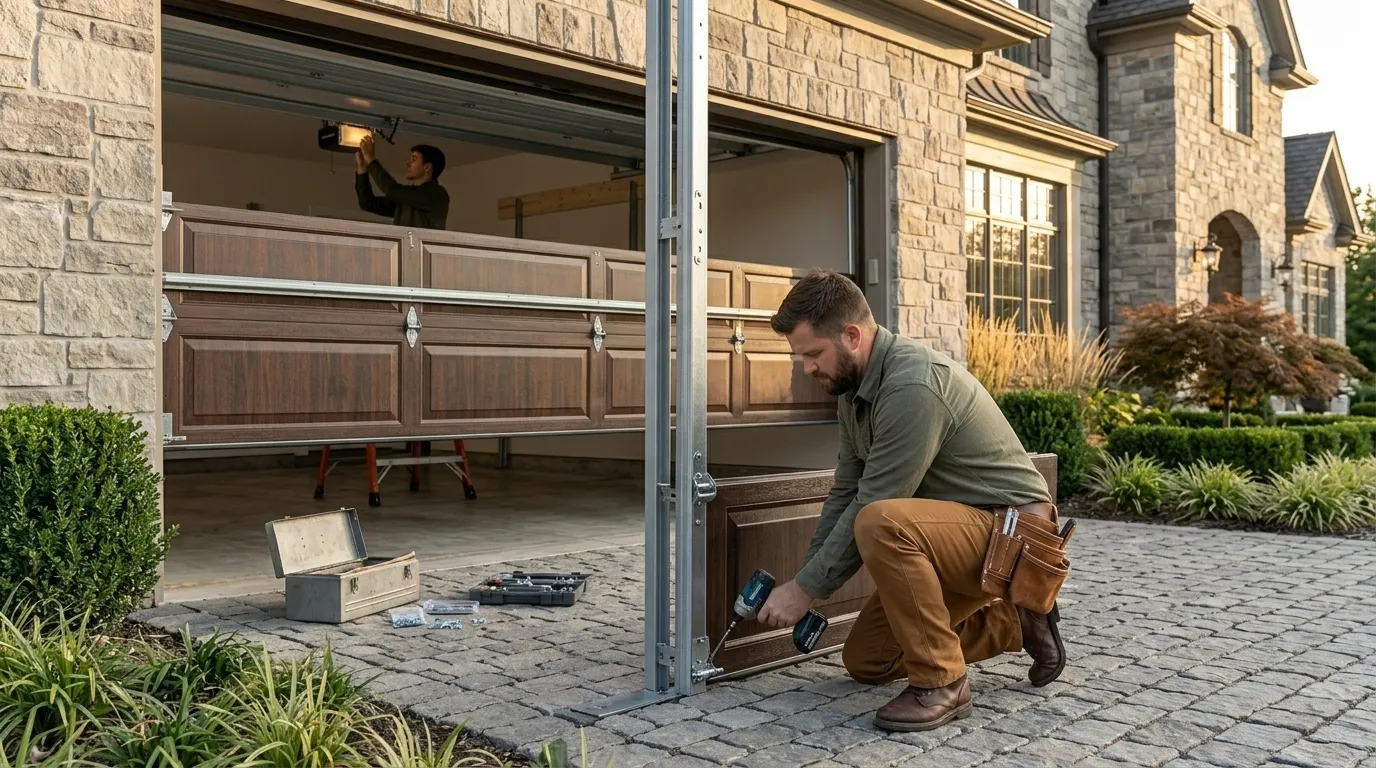
A torsion spring swap on a standard single or double door, with the correct size already on the truck, is a job measured in an hour or so once we're on site - the time is mostly in the safe unwinding of the old spring and winding the new one to the right tension, not in the parts swap itself. Where it runs longer is exactly the seized-cone situation described above, or if the door has two springs and one has been mismatched to the other at some point in its history, which we see more than you'd expect on doors this age. Monroe homes built around 1996 with original hardware tend to be more predictable than a mixed-era street, which helps us quote a tighter window before we arrive. What we can't give here is a fixed response time for the town itself - we run the call from Marysville, and how quickly we can get out depends on the day's schedule, not a local branch.
What You Are Seeing
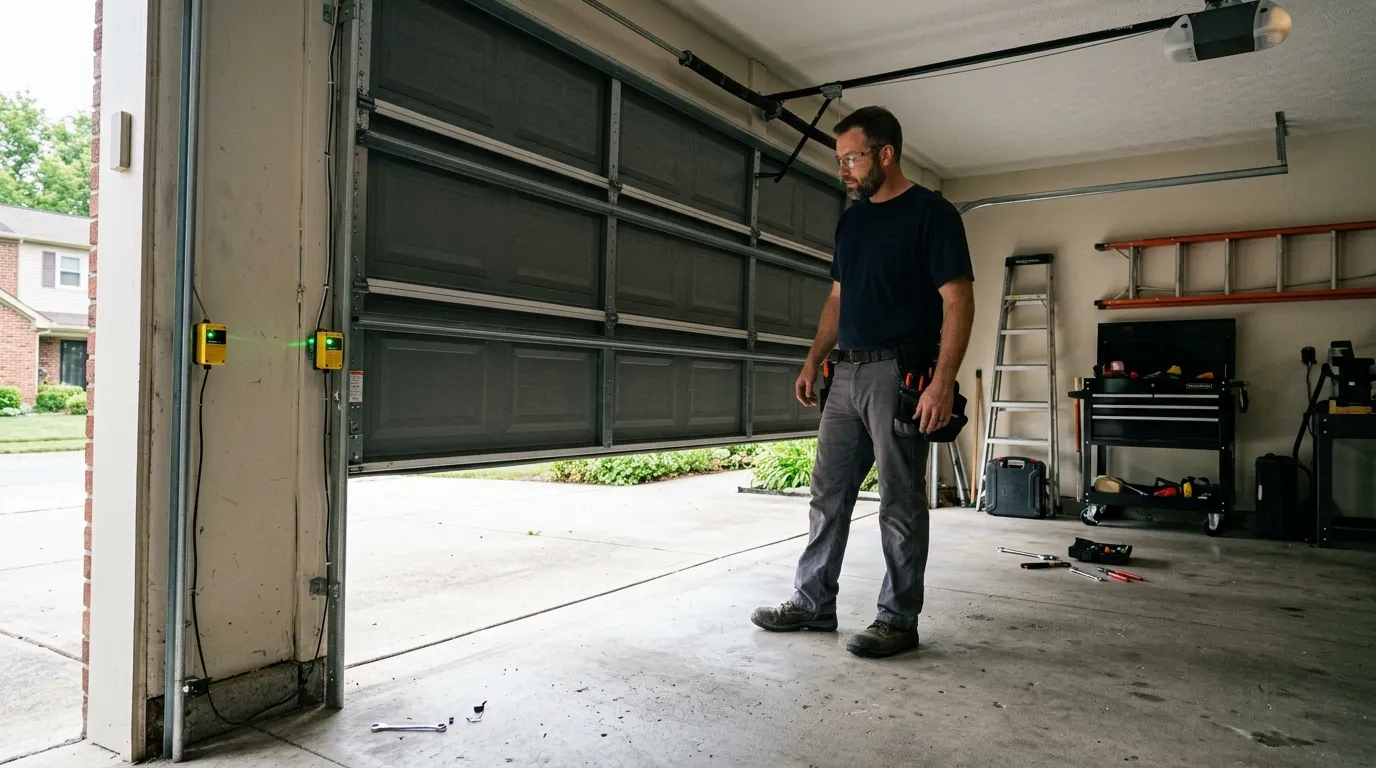
If your door has gotten noticeably heavier to lift by hand, or the opener is straining and grinding on the way up, that's a spring losing tension, not gone yet. A full break usually announces itself with a loud bang, often mistaken for something falling in the garage, followed by a door that won't open at all or that drops the instant the opener releases it. On a door built around 1996, we'd also check the cable condition at the same time - cable and spring tend to wear on a similar timeline, and replacing one without looking at the other on a job this age is how you end up back out here in six months. Monroe's household incomes here run a bit above the wider area's median, and we mention that only because it tends to mean owners keep up with a failing door sooner rather than living with it - which is the right call, since a spring left to fail completely can take a cable or a panel down with it.