Booking a Visit
Tell us the door is dragging, grinding, or hanging up partway through its cycle, and give us the approximate age of the house if you know it. Martha Lake homes cluster closer to 1999 than the 1991 median for the wider service area, which tells us a lot before we even see the door - original hardware from that era used sealed nylon rollers that are now past their expected run.
We travel from Marysville for every call out here, so we don't hold a standing schedule block for Martha Lake specifically. Booking ahead by a day or two, rather than expecting a same-day slot, gets you a cleaner appointment window. See service coverage for Martha Lake for how we handle scheduling across this part of the area.
What the Repair Takes
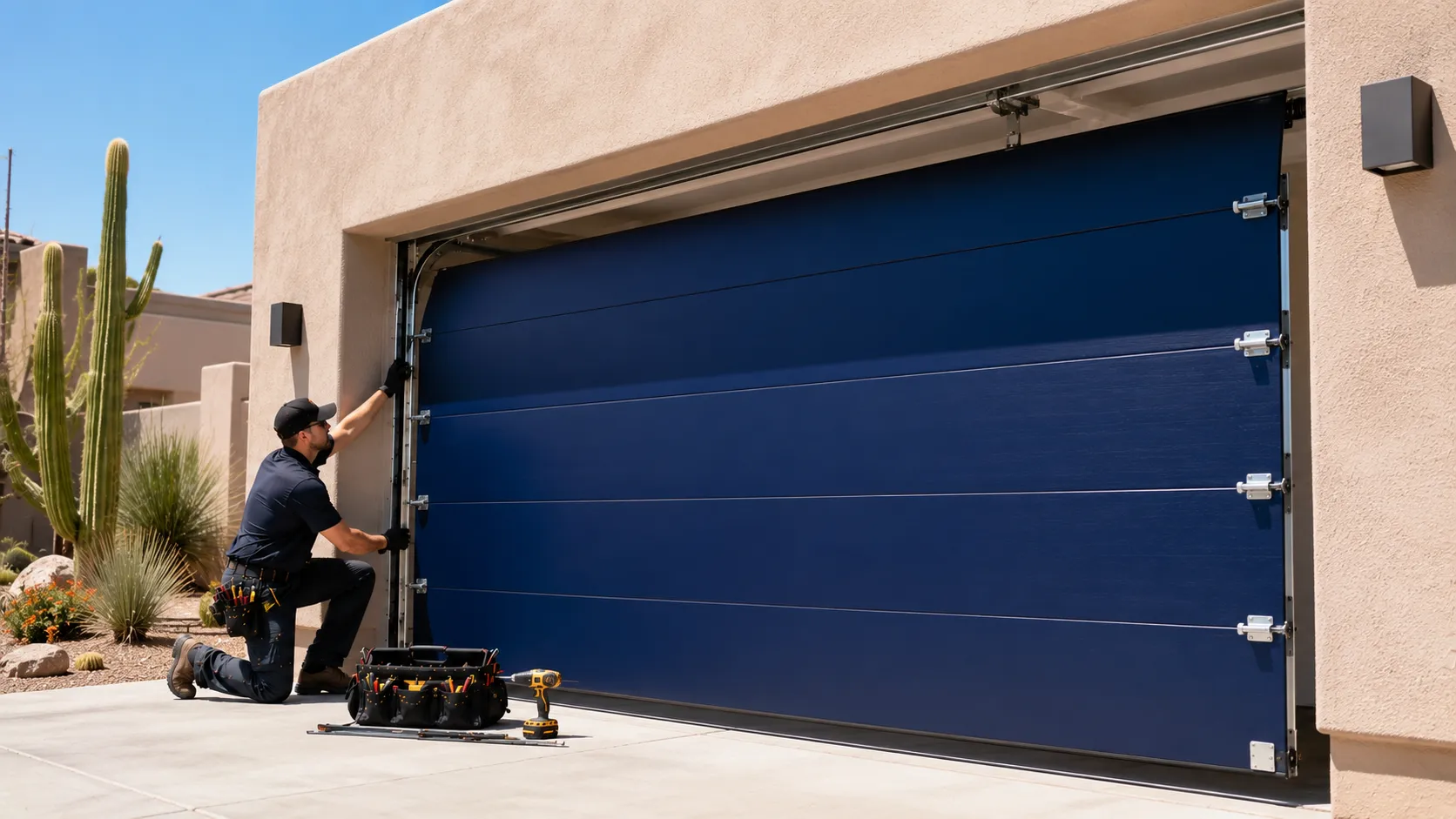
Ten rollers per door, standard 4-inch stem length on most builds from this era, nylon ball-bearing unless the house has had steel rollers put in at some point as a repair. We check stem length and hole spacing before ordering, because doors from 1999 don't all use identical bracket spacing even within the same neighborhood.
We don't stock every roller variant on the truck - if a house has a nonstandard bracket or an odd stem length, that can mean a short return trip rather than a one-visit fix. That's the honest limit here: we'd rather come back with the right part than force a mismatched roller into a bracket it doesn't fit.
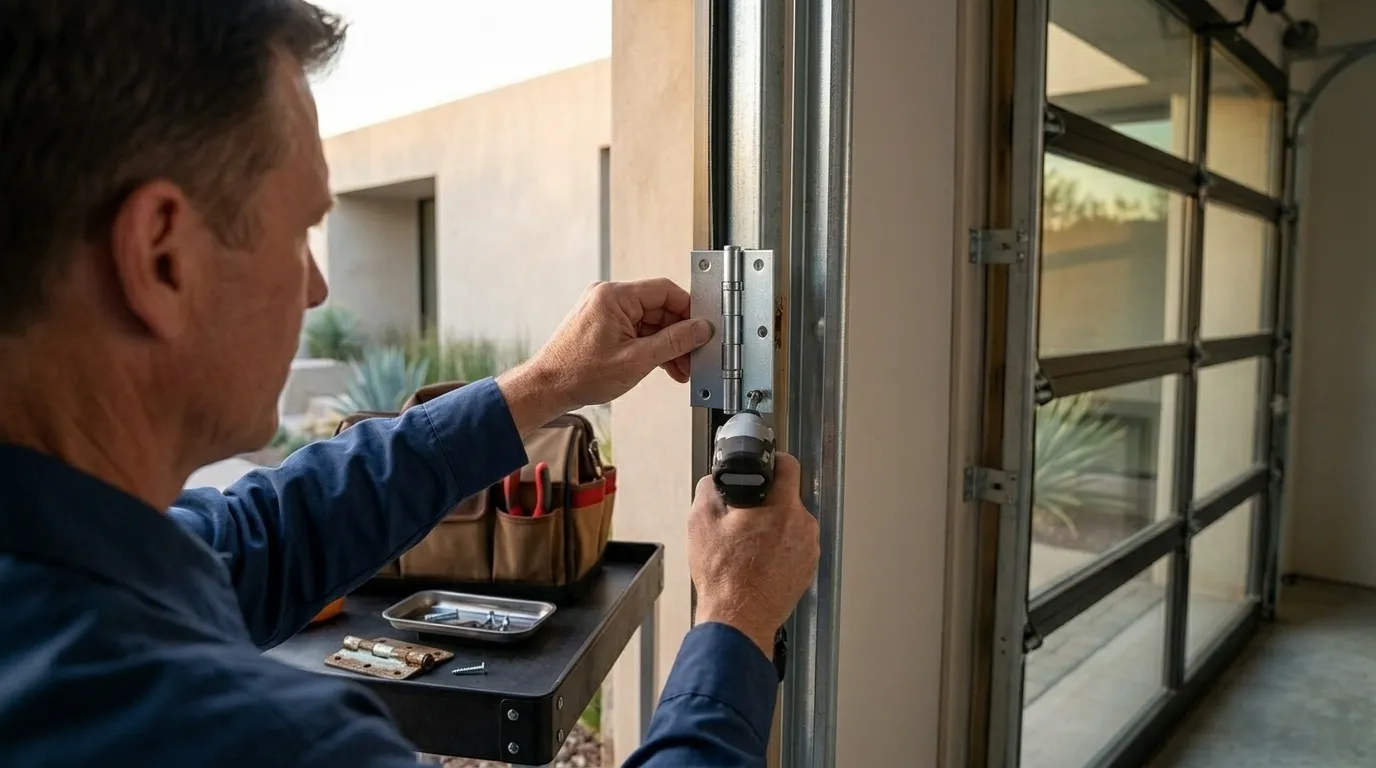
We also inspect the two bottom brackets and the hinges those rollers ride in, since a bent bracket will chew through a brand new roller in a season regardless of quality.
What You Are Seeing
A grinding or rattling sound as the door moves, worse at the top or bottom of the travel where the rollers take the most side load. Sometimes it's a door that jerks or hesitates partway through the cycle instead of running smooth top to bottom. Look at the wheels themselves if you can get a flashlight on them: cracked nylon, a flat spot worn into one side of the wheel, or a wheel that doesn't spin freely when you turn it by hand.
Rust streaks on the track near the rollers usually mean a steel roller has been rubbing rather than rolling. On a door built around 1999, this is close to expected wear rather than a sign something else is wrong - but if the track itself is bent or the door binds hard in one spot, that's a track problem, not just a roller problem, and it needs a different fix.
Can You Do This Yourself
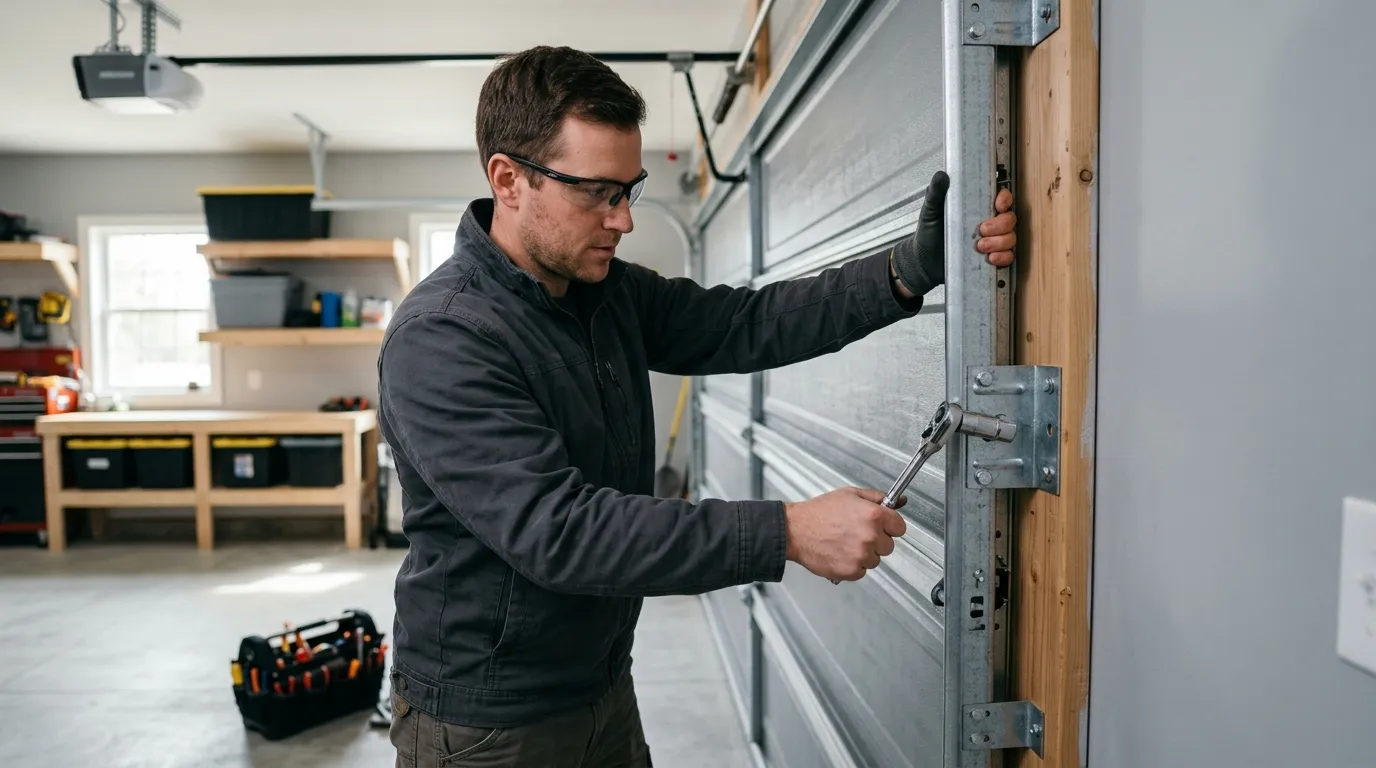
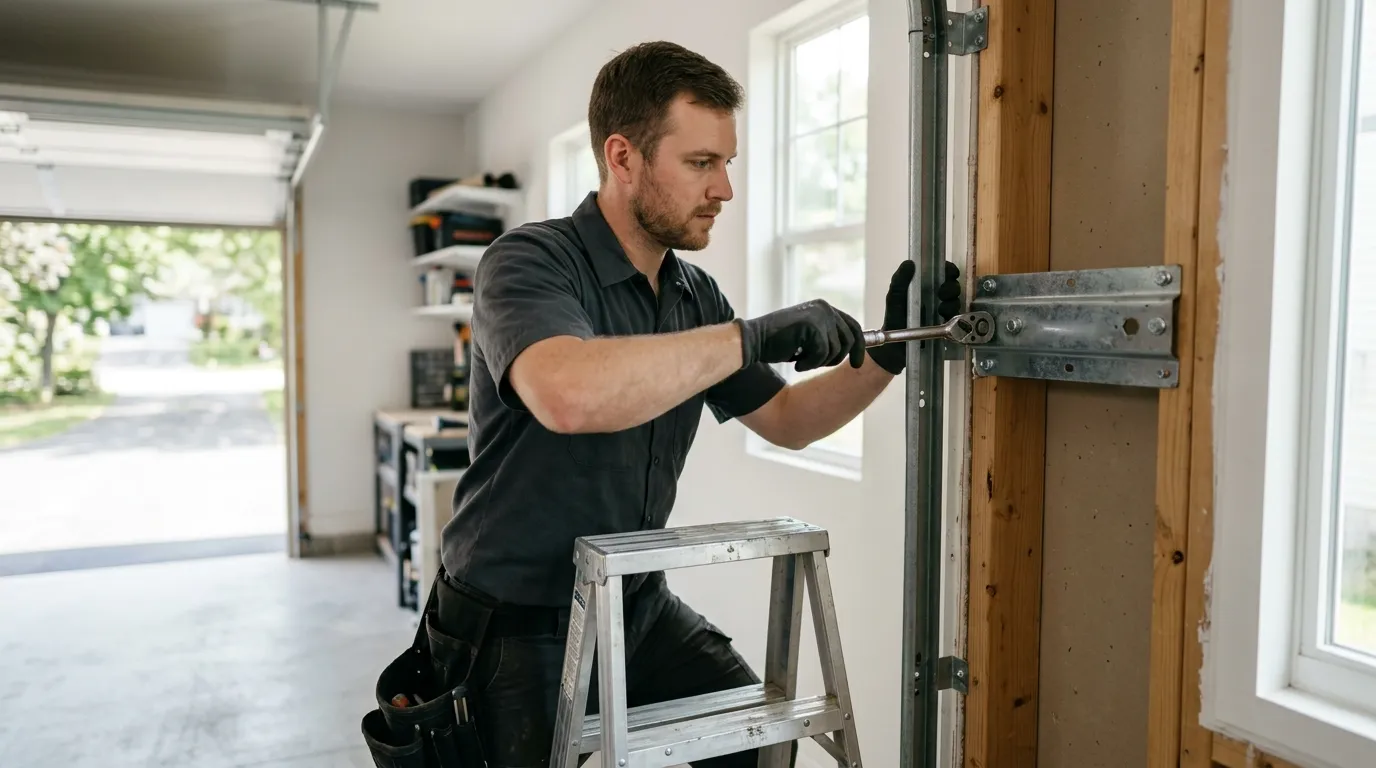
Roller replacement is one of the more doable jobs on a garage door for someone comfortable with a ladder and a ratchet, as long as the door has no exposed torsion spring you'd need to work around. Pop the roller stem out of the bracket, slide the old one out of the track, slide the new one in - no special tools beyond pliers and a set of nut drivers for most bracket types.
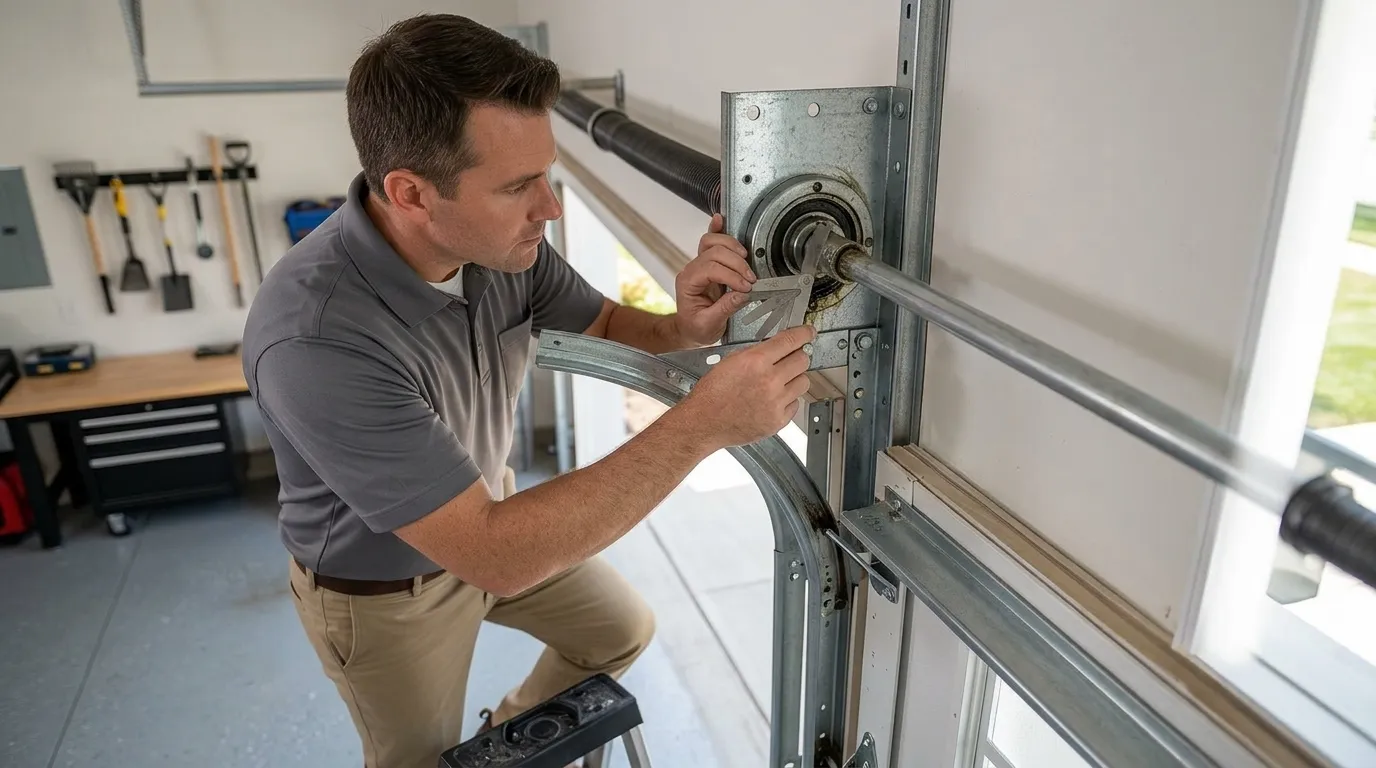
The part we'd flag: the top rollers, closest to the spring and cable system, sit near the highest-tension part of the door. If your hinges are rusted stuck or a bracket is bent, forcing a roller out there can shift more than you intend. If you're not sure which rollers are safe to pull yourself, that's a fair reason to have us take the top row and leave the bottom ones for you.