Booking a Visit
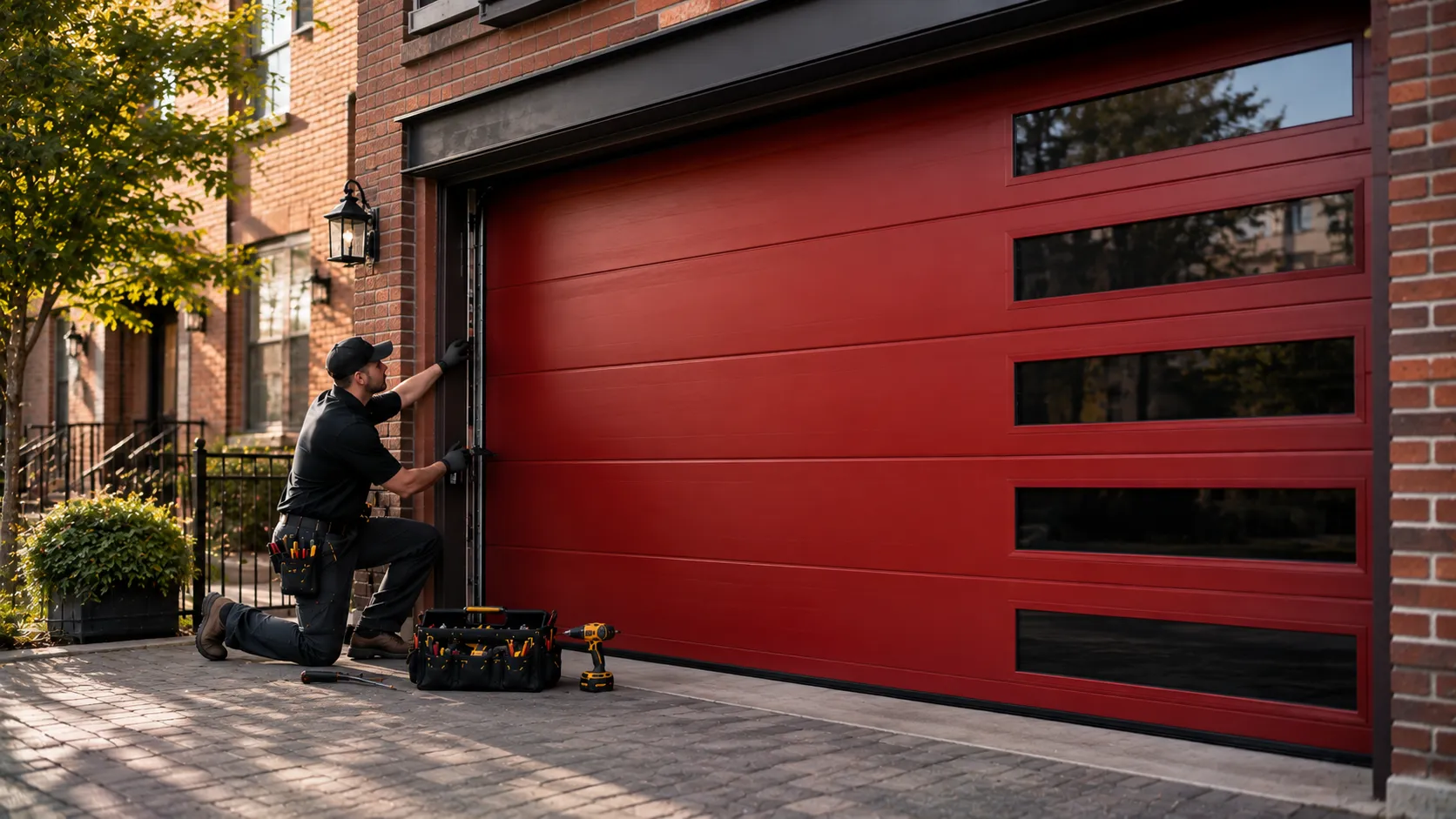
There's no Marysville Garage Door Pros branch in Martha Lake - the truck comes from Marysville, about 17 miles out. That's worth knowing because it means the timing of your visit depends on the route that day, not a local dispatch board. Tell us the door size (single or double), whether it's one spring or two, and roughly how old the door is when you call; if you know it's original to a 1999-era build, say so, since that alone tells us the spring is likely past due even if it hasn't broken yet. With 7,942 households in Martha Lake built in roughly the same era, we see a steady run of the same failure - original torsion spring, same install date as the house - often enough that we usually don't need to send someone out just to measure before ordering parts. That said, we won't quote a fixed number sight unseen if the door's been modified or the tension looks off; some setups need a look before we commit to a spring size.
What the Repair Takes
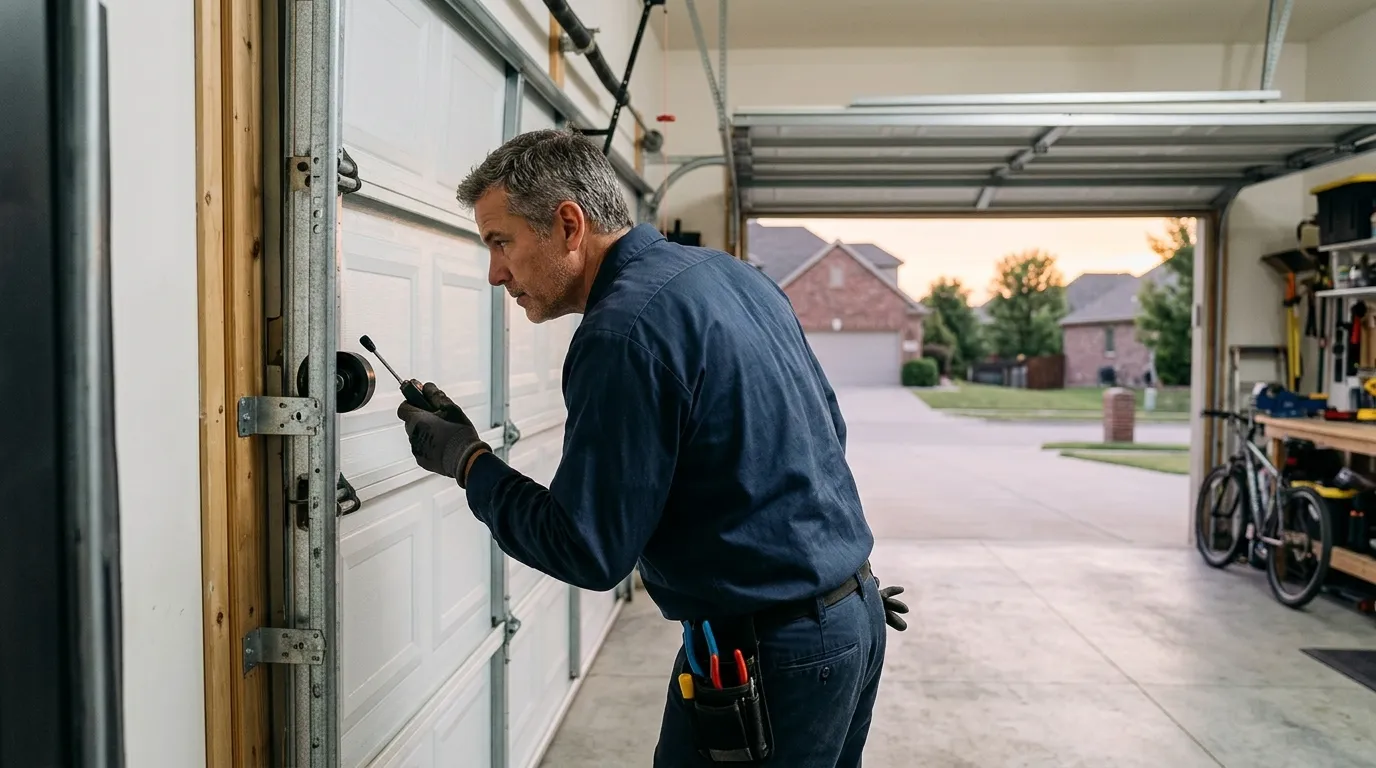
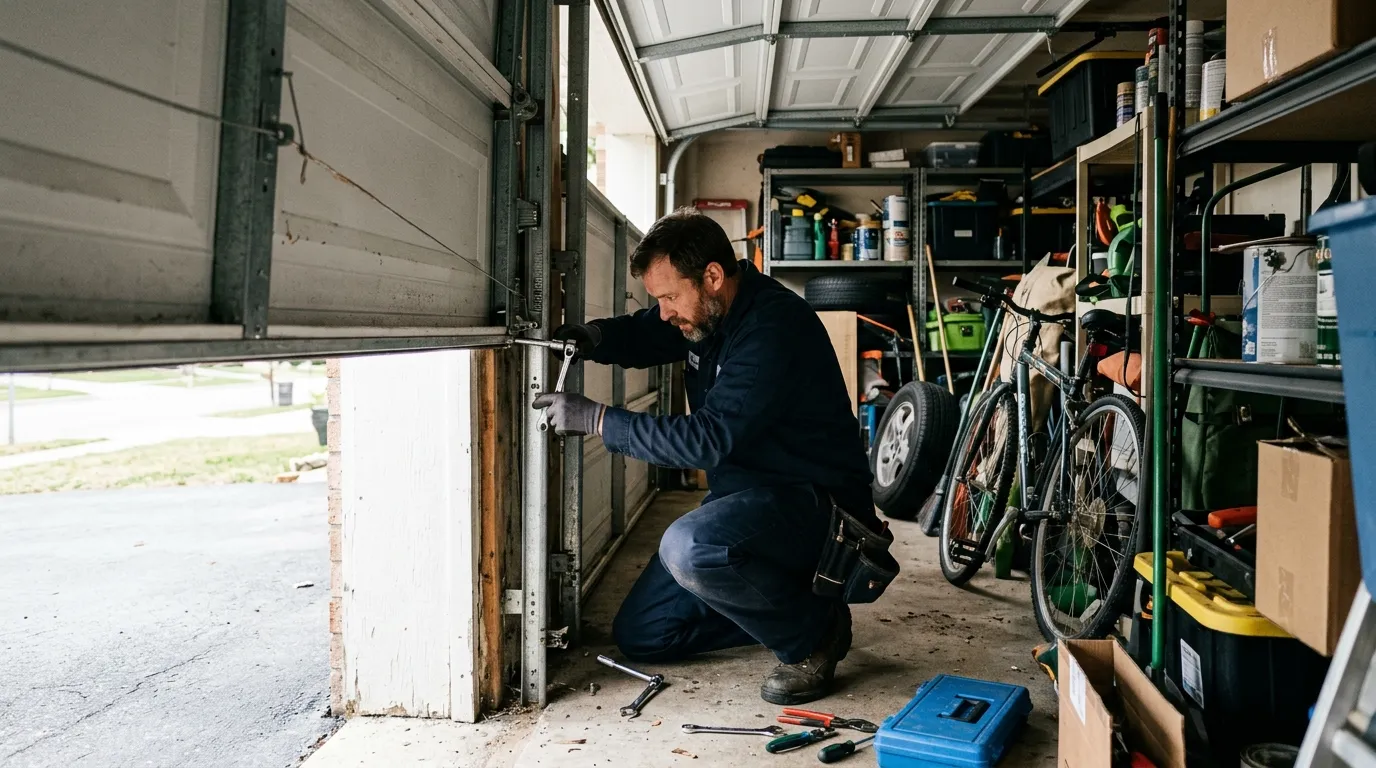
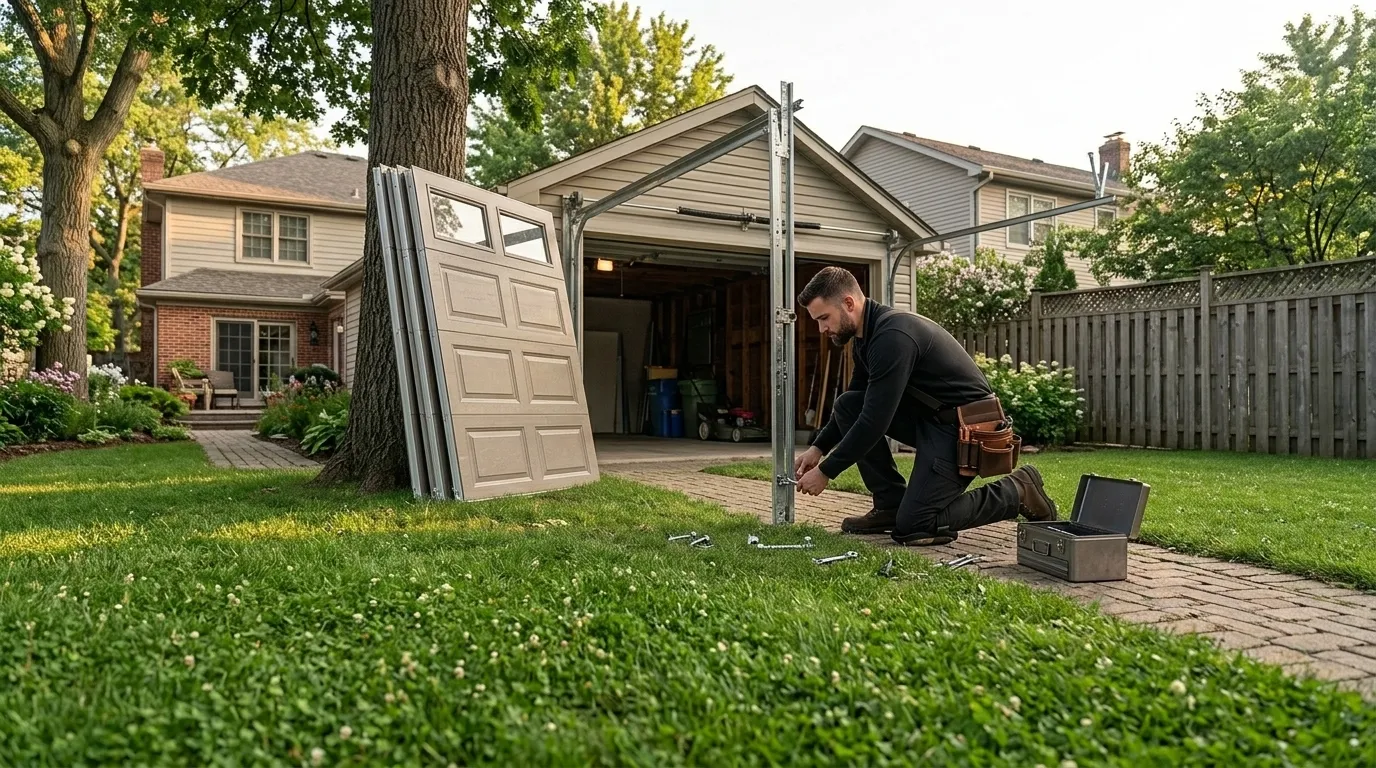
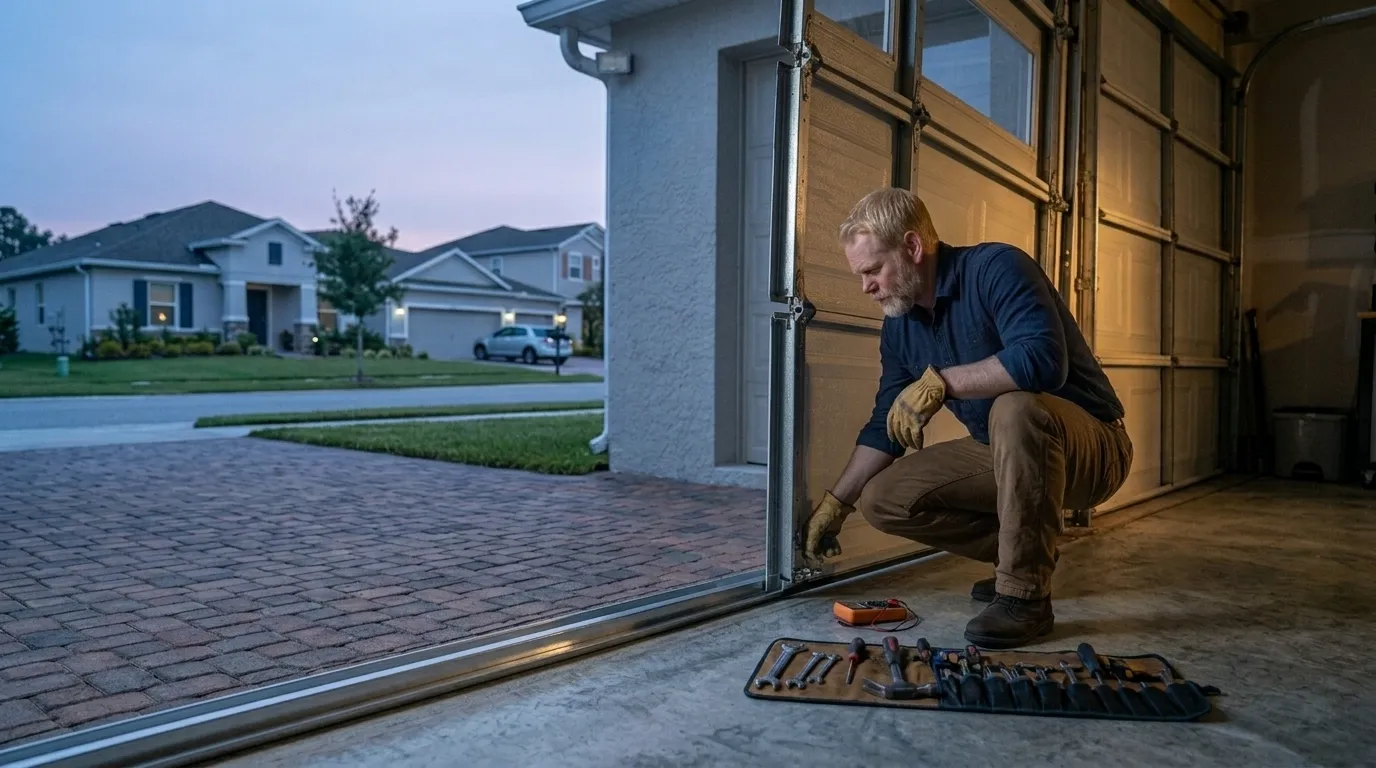
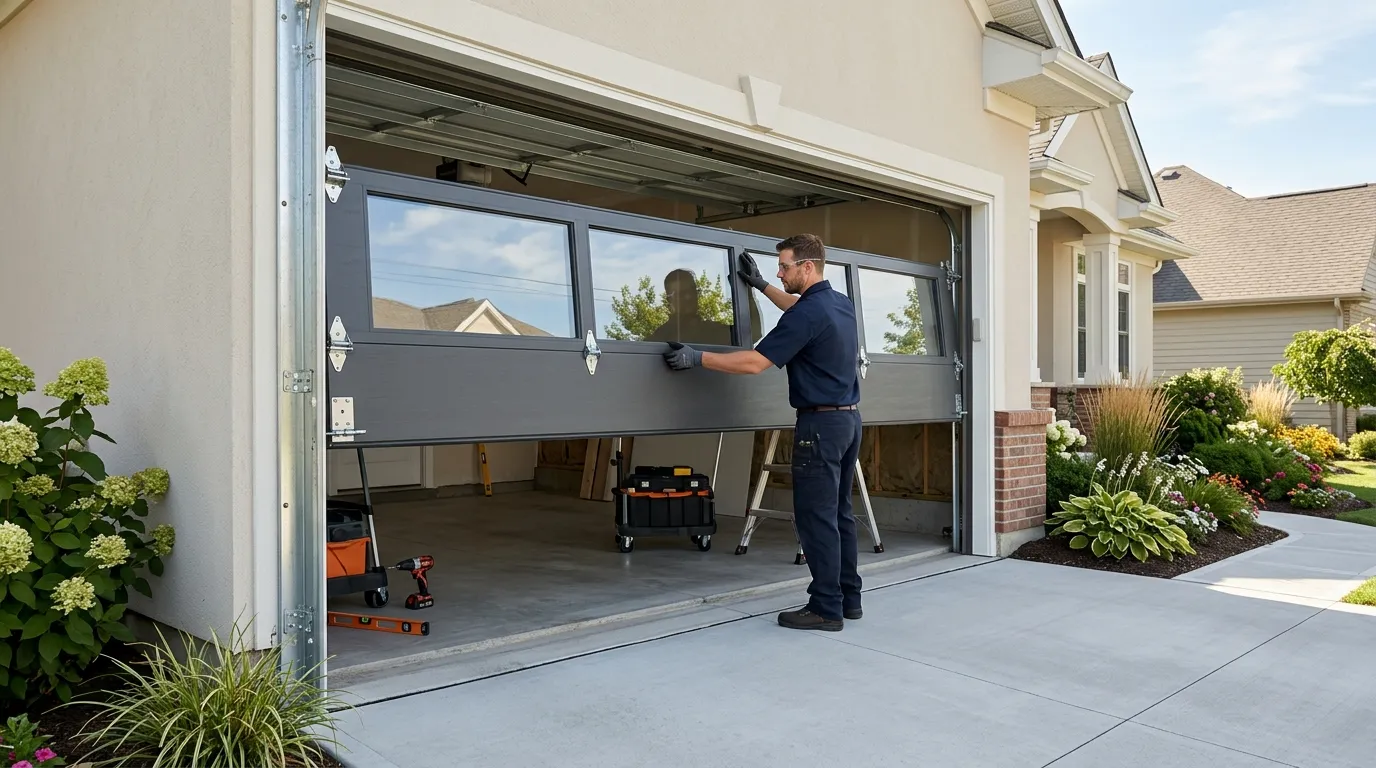
A standard torsion spring swap needs the door itself in working order - track straight, rollers not seized, cables not frayed - because a new spring under a bent track just transfers the load somewhere else and fails again fast. On a house from the 1999 window, the door and track are usually still original too, so we check both while we're there rather than just replacing the one obviously broken part. Parts: winding bars, a properly matched replacement spring (never the wrong wind or wire gauge, which is a common mismatch on older stock), and safety cables through the spring itself if the original installer skipped them, which happened more than you'd think on builder-grade doors from that era. We don't stock every spring size on the truck for every door width and wind direction - if it's an unusual double-spring commercial-style setup, that can mean a short parts wait rather than a same-visit fix. Most single-family torsion springs from a 1999 build are a standard size, so that's the exception, not the rule.
What You Are Seeing
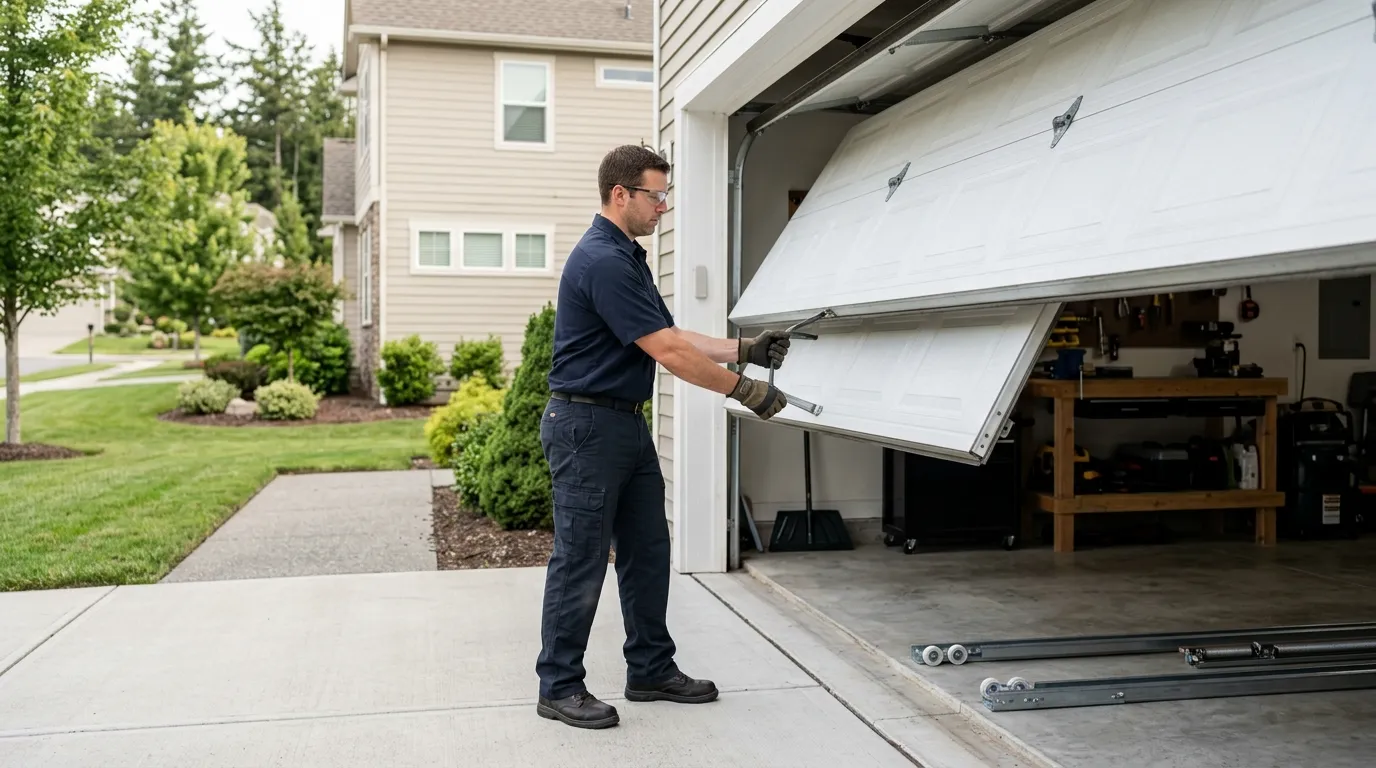
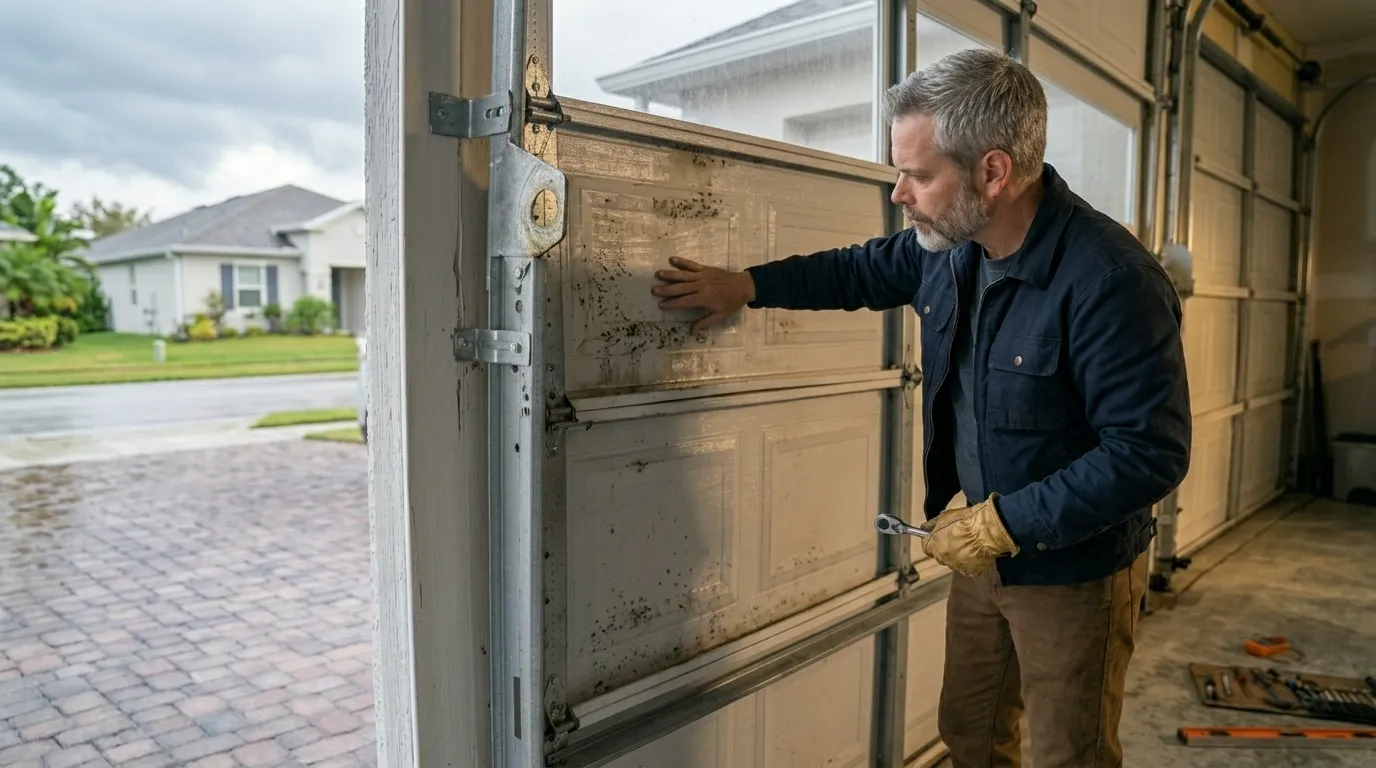
The door won't lift, or it lifts a few inches and stalls - that's the classic sign the spring has let go and the opener is trying to lift the full weight of the door alone, which it isn't built to do for long. A loud bang from the garage, usually when nobody's using the door, is a spring snapping under tension rather than during use; it's startling but it's actually the safer failure mode compared to a slow give. If you look up at the spring itself (door closed, power to the opener off) and see a visible gap in the coil, that's confirmation, not a guess. One thing that looks like a spring problem but often isn't: a door that's noisy and slow to close but still lifts fine under opener power. That's more often worn rollers or a track out of alignment, not the spring - worth mentioning because it's the repair people call about most often only to find the spring's fine and something smaller is dragging.
Can You Do This Yourself
We'll say this plainly: don't. A wound torsion spring stores enough force to break bones or worse if the winding bars slip, and the tools for doing it safely - a proper set of winding bars, vise grips, and knowing the wind direction and turn count for your specific spring - aren't things most homeowners have lying around or want to learn on a live spring. What you can safely check yourself is whether it's actually the spring: look for the visible gap in the coil with the door closed and power off, listen for that bang, and check whether the door stalls partway rather than just moving slowly. That's useful information to give us on the phone. Past that, this is one job where the tool cost and the risk of a wrong call outweigh any savings - a mis-wound spring can put more stress on the door than the broken one did.