Garage Doors on Marysville Homes Built Before Insulation Rules
Marysville homes built between 1972 and 2000 often carry single-layer steel doors with no insulation. Here's what that means for your door, your bill, and your winter.
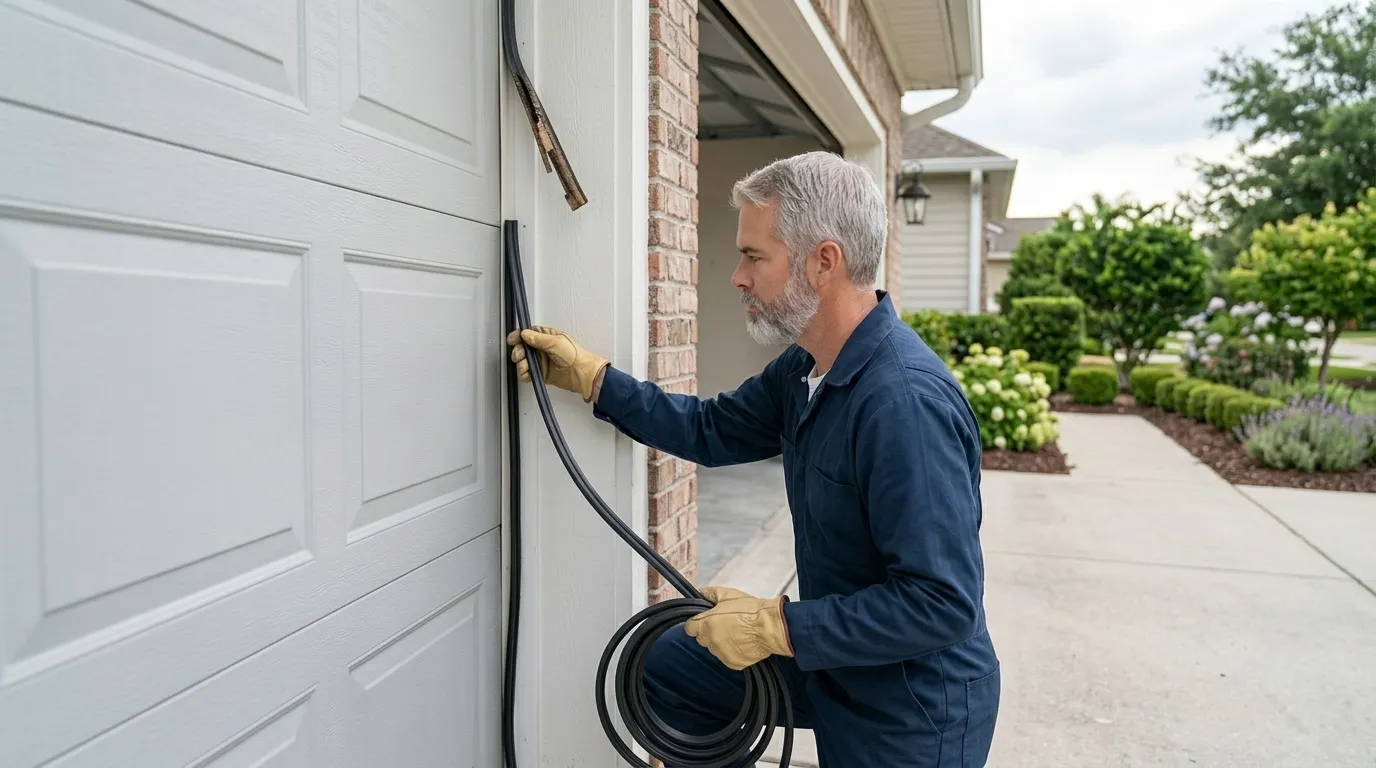
Marysville sits in a cold-moderate climate band, and that matters more for a garage door than most homeowners think. Steel panels contract in the cold months and expand again as temperatures climb back up through spring, and on a door with no insulation layer that movement happens fast, right against the metal, with nothing to buffer it. You'll notice it most in a torsion spring that feels stiffer to lift on a January morning than it did in August, or a track that's picked up a hair of frost and makes the rollers chatter on the first cycle of the day. None of that means the door is failing. It means the metal is doing what uninsulated steel does in this climate. Where it does turn into a real problem is at the bottom seal and the weatherstripping around the panel edges, which harden and crack faster under repeated cold-to-mild swings than they would somewhere with a flatter temperature curve year-round. A door that's fought through twenty or more of these cycles since it went in is a door where the seals are usually the first thing to give, well before the opener or the springs.
What You Pay
We don't have a rate sheet to hand you here, and honestly a number on a page without seeing the door isn't worth much anyway. What we can tell you is what drives the cost up or down on a call in this area. A single broken torsion spring on a standard door is a different job than a double door with two springs and a worn cable, and a door original to a house built in the 1972-2000 window is more likely to need the cable and hardware looked at together, since that's when the wear tends to show up in a bundle rather than one part at a time. With median household income here at $106,164, most jobs we see are repair-first calls rather than full replacements - people want the door working again, not a new one, unless the panel itself is cracked or the insulation gap has gotten bad enough that replacement is the better math. We'll tell you straight when a repair isn't worth doing.
What Is Going On
Most of the housing stock in this area went up between 1972 and 2000, with the median landing around 1991, and that run covers 28 named areas with broadly the same profile: 1980s and 90s construction, most of it built before insulated garage doors became a standard spec rather than an upgrade. What that means on the ground is a lot of original doors still in service that are a single layer of steel with an air gap behind them and nothing else - no foam core, no vapor barrier, no thermal break at the frame. These doors aren't broken by design. They were built to a different expectation of what a garage door needed to do. But thirty-plus years on, the symptoms show up the same way across the area: a garage that runs noticeably colder than the rest of the house, condensation on the inside of the panel on damp mornings, and hardware that's outlived its factory lubrication long ago. If your door dates to that build window and you haven't touched the weatherstripping or the panel insulation, it's worth a look before you assume the opener is the problem.
What Local Conditions Do
With 84,687 households and 50,164 owner-occupied houses across this service area, the door problems we see repeat in patterns tied to when the house went up, not to any one street or subdivision. A door on a house from the 1972-2000 era in this cold-moderate climate takes a specific kind of punishment: temperature swings work the metal, moisture off a cold slab floor creeps up into an unsealed bottom panel, and the original springs - sized to a lighter, uninsulated door - start to sag in their lift capacity as the years and cold snaps add up. None of this is dramatic. It's cumulative, and it's the reason a door that's run fine for two decades can suddenly feel heavy to lift, or start binding in the track on the first cold week of the year. If you're within reach of Lochsloy, Arlington, or Lake Goodwin, the same building era and the same climate exposure apply, so the same wear pattern is worth checking for.
How it works
From “it’s stuck” to “it’s fixed”
01
Tell us what’s wrong
Describe the symptom - won’t open, loud bang, opener runs but the door won’t move.
02
On-site diagnosis
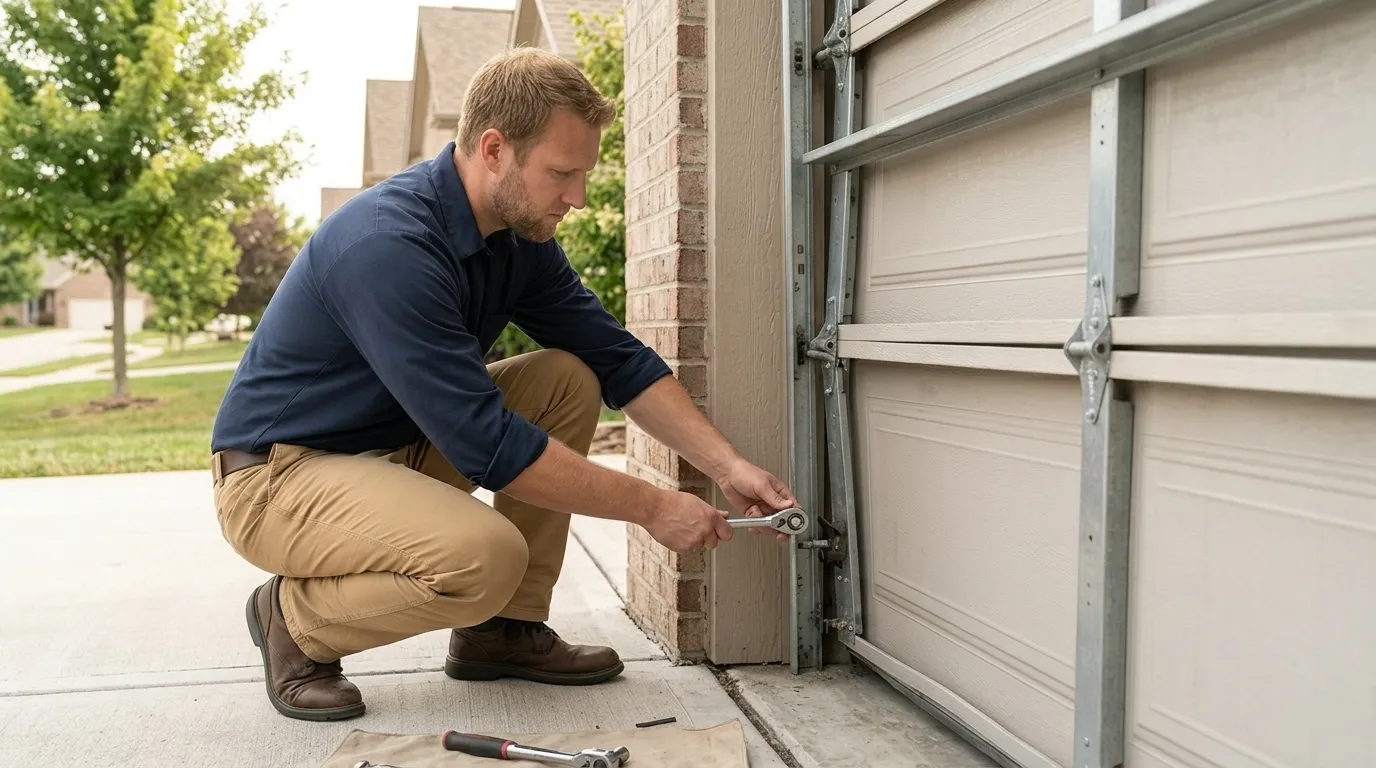
A technician tests the door under power and by hand and finds what actually failed.
03
Clear, up-front plan
You get the fix that’s needed and what drives the cost - before any work starts.
04
Repaired & tested
The repair is done, the door is set true and tested, and the work area left clean.
Serving Marysville, WA - tell us what your door’s doing and we’ll take it from there.
Why does my garage door feel harder to open in the winter?
On an uninsulated steel door, common in houses built in the 1972-2000 window here, the cold makes the metal contract and the torsion spring's tension shift slightly. Add stiffened weatherstripping and you get a door that feels heavier to lift on cold mornings even when nothing is actually broken.
Is it worth insulating an old garage door instead of replacing it?
Sometimes. If the panel and hardware are otherwise sound, adding an insulation kit can cut down on the condensation and cold-transfer problems common to doors from this build era. If the panel is cracked or the door is already at the end of its life, replacement is usually the better spend.
How do I know if my door is original to the house?
If your house was built between 1972 and 2000, which covers most of the housing stock in this area, and the door has never been swapped, it's likely a single-layer steel door without foam insulation. A cracked or crumbling bottom seal and no foam visible at the panel edge are the usual giveaways.
Does the cold ever actually damage the door itself, not just the seals?
Direct damage to the steel is rare. What we see more is the springs losing lift capacity faster and the track hardware picking up stiffness from cold-thickened grease. Both are maintenance items, not emergencies, but left long enough they turn into a stuck door on the worst morning to have one.
Ready to get your garage door sorted?
Tell us what it’s doing and where you are in Marysville - we’ll take it from there.