A guide to garage door noises specific to Marysville's 1972-2000 housing stock and cold, damp climate band, from a local company that knows what each sound means.
Marysville sits in a cold, moderate climate band, and that shows up in your garage door before it shows up anywhere else in the house. Steel contracts in the cold months, which tightens tolerances on rollers and hinges that were fine all summer. A door that ran quiet in July can start to bark at the top of the track by December simply because the metal shrank a few thousandths of an inch. Lubricant behaves differently too - the grease that worked when it was 60 degrees turns stiff and draggy once temperatures drop, and a dry chain or worn nylon roller will tell you about it with a grinding or clunking sound on the way up.
Humidity swings matter as much as the cold does here. Wood jambs and trim around the door opening take on moisture in the wet months and dry out again in summer, and that seasonal movement can throw the door slightly out of square against the weatherstrip. You'll hear it as a new squeak or a scrape that wasn't there before, right where the door meets the frame. None of this means something is broken. It means the house is doing what houses in this climate do, and the door is reacting to it. The fix is usually adjustment and lubrication, not replacement parts.
What You Pay
We don't have a flat number to put in front of you here, because what a repair costs depends on what's actually wrong and how old the hardware is. What we can tell you is what drives the cost in this area specifically: most of the housing stock across the 28 named communities we work in went up between 1972 and 2000, with the bulk of it dating to the 1980s and 90s. Openers and springs from that era were built to specs that have since changed, so a repair sometimes means sourcing a part that isn't the current standard size - that adds time and occasionally cost compared to a newer install.
Household income in this service area runs high (median around $106,000), and we've found that translates into homeowners who'd rather fix something right the first time than patch it twice. That's a preference we can work with, but it's not a discount and we won't pretend otherwise. If your door is original to a 1980s build and the drum or spring is original too, replacement of that one part is usually cheaper than you'd guess, and cheaper than waiting until it fails at 6am.
What Is Going On
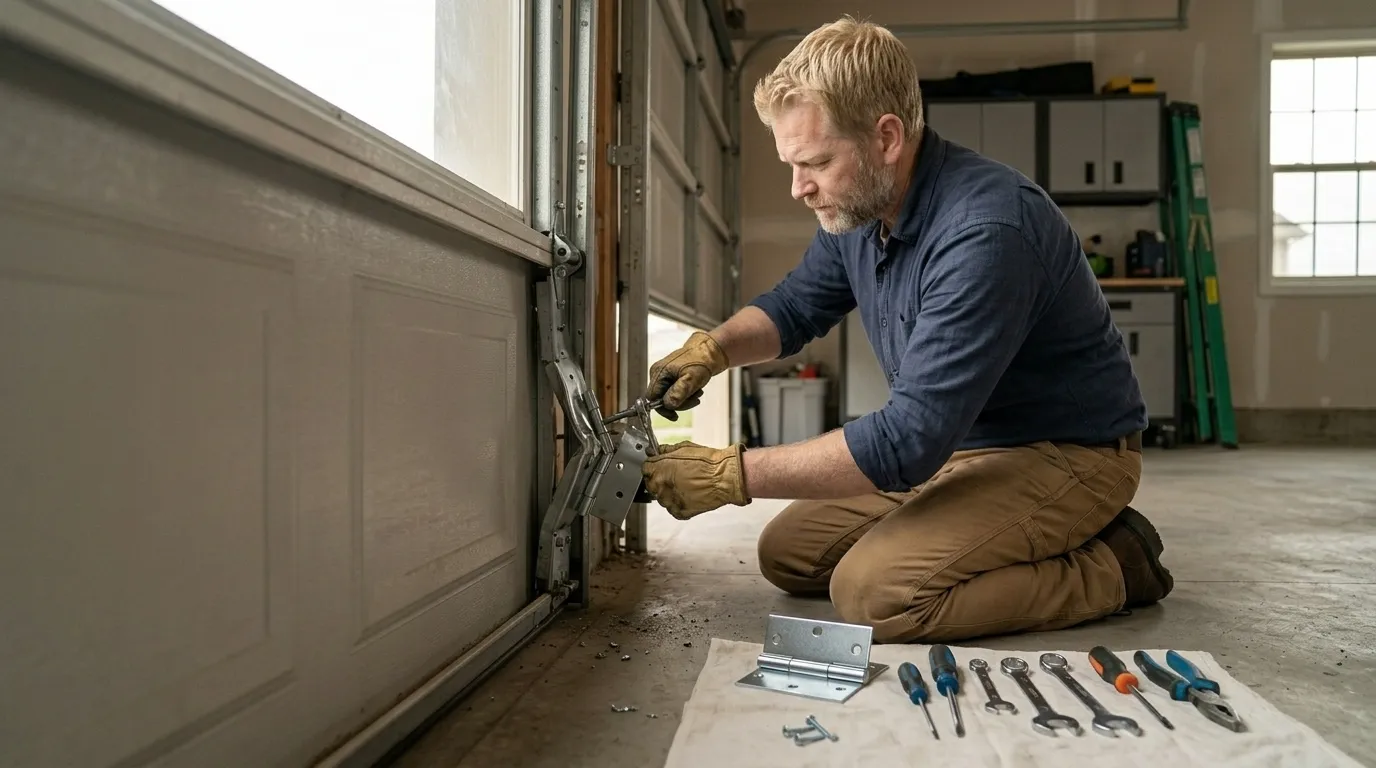
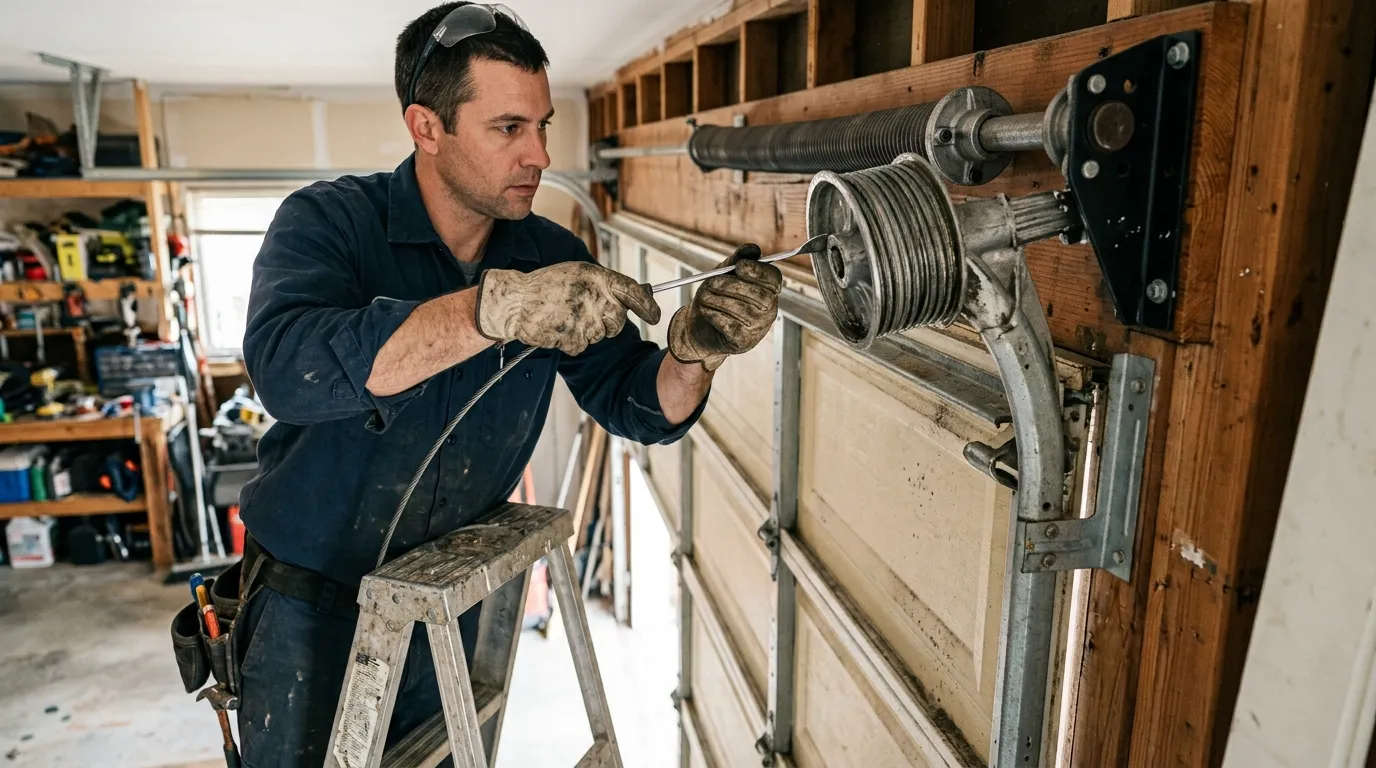
A loud bang followed by the door refusing to move is almost always a broken torsion spring - common enough on doors installed when this area's housing was built up through the 80s and 90s, since those springs have a service life and thirty-plus years is well past it on original hardware. A rhythmic thump once per rotation usually means a flat spot on a roller, not a spring problem at all, and it's a much smaller job.
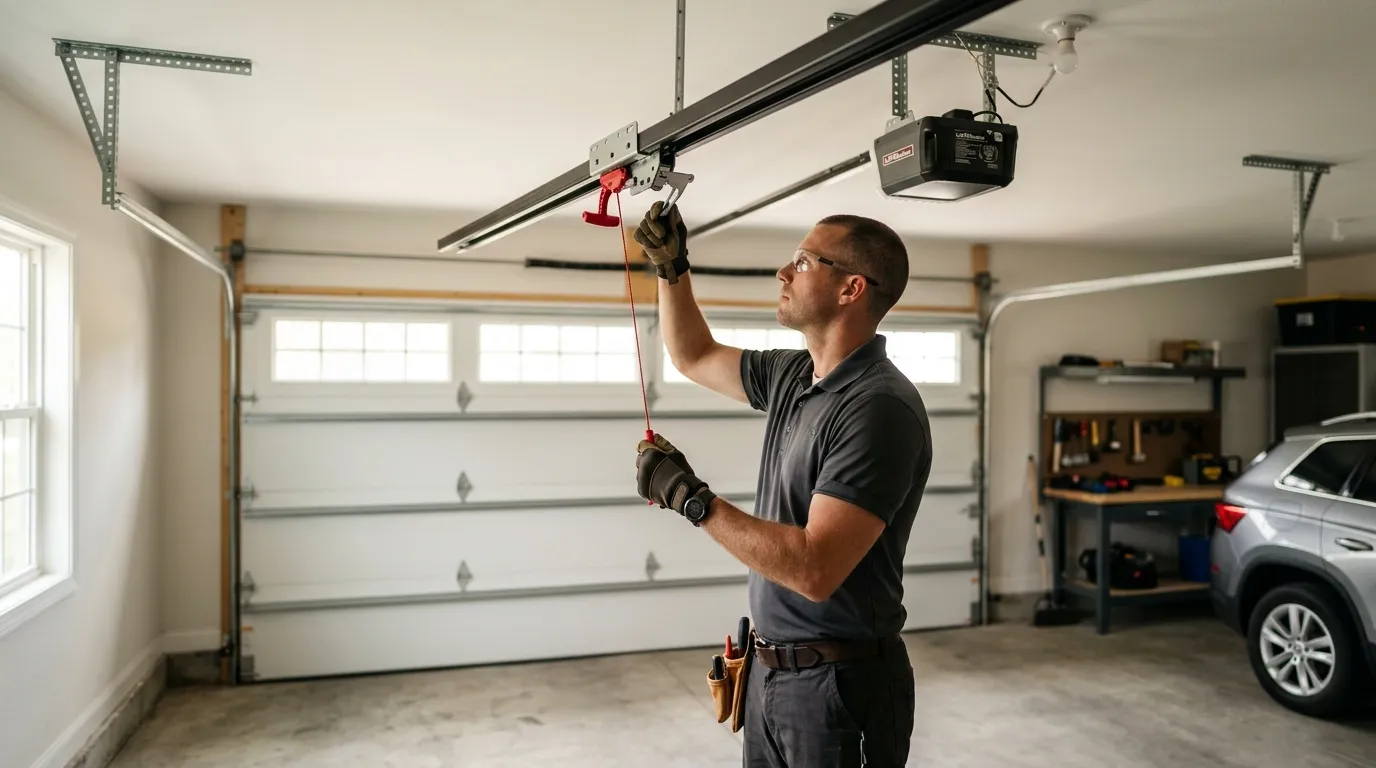
A slow grinding whine as the door travels, getting worse near the top, points to a dry or worn opener chain or belt rather than the door itself. If the door shudders and the whole garage seems to shake when it closes, check the track bolts before you call anyone - on houses from this build era, the wood framing around the opening has had decades to move, and track fasteners work loose as a result. That one's often a 10-minute tightening job, not a repair. We'll say the same thing on the phone if that's what it sounds like, because sending a truck for a bolt you can turn yourself doesn't do you any favors.
What Local Conditions Do
Cold, moderate winters mean the metal-to-metal clearances in a garage door system tighten up for a stretch of the year, and that's when small existing problems turn into audible ones. A hinge with slight wear that was silent in August can squeal in January because there's less room for it to move quietly. That's not unique to any one house - it's the climate band this whole area sits in, and it affects doors on 1970s builds the same way it affects doors from the 1990s, just with different hardware underneath.
Across the roughly 50,164 owner-occupied houses in the wider service area, we see the same pattern repeat: doors installed when the neighborhood was built are now old enough that the springs, rollers, and cable are original or close to it, and cold-weather stiffness is what finally makes the wear audible. If your door has gone quiet-to-noisy over a single winter rather than gradually, that's usually age catching up with it, not damage from one event. We don't replace hardware that's still within its working life just because it makes noise in the cold - most of the time, adjustment and fresh lubricant get you through to spring.
How it works
From “it’s stuck” to “it’s fixed”
01
Tell us what’s wrong
Describe the symptom - won’t open, loud bang, opener runs but the door won’t move.
02
On-site diagnosis
A technician tests the door under power and by hand and finds what actually failed.
03
Clear, up-front plan
You get the fix that’s needed and what drives the cost - before any work starts.
04
Repaired & tested
The repair is done, the door is set true and tested, and the work area left clean.
Serving Marysville, WA - tell us what your door’s doing and we’ll take it from there.
Why does my garage door suddenly squeak only in winter?
Cold tightens the metal clearances in rollers and hinges, and stiffens grease that flowed fine in warmer months. It's the same door, but the tolerances and lubricant behave differently in a cold, moderate climate like this one. Usually it means a re-lube and adjustment, not a broken part.
Is a loud bang from the garage always a broken spring?
Almost always, yes, especially on doors original to houses built in this area's main construction era of the 1970s through the 90s. A sudden bang followed by the door refusing to open is the classic sign of a torsion spring giving out after decades of cycles.
My door shakes hard when it closes. Is that serious?
Often it's loose track bolts, which is common on houses from this build era where the surrounding wood framing has shifted slightly over decades. Check that the bolts are tight before assuming you need a repair call - it's frequently a job you can do yourself.
Should I replace my opener just because it's noisy?
Not automatically. If the opener is original to a house from the 1980s or 90s build era, noise on its own doesn't mean it's failing - a dry chain or worn roller often explains it. We'd rather diagnose the specific sound than swap a working opener.
Ready to get your garage door sorted?
Tell us what it’s doing and where you are in Marysville - we’ll take it from there.