Steel contracts when it's cold. A torsion spring wound tight during a mild afternoon is under more load once temperatures drop, and the metal itself gets less forgiving at the same time. That combination is why late fall through winter is when we get the most spring calls, not because the spring is new or old on any set schedule, but because it's already near the end of its wind cycles and the cold is what finally tips it.
Most of the housing stock in this part of Snohomish County went up between 1972 and 2000, with a lot of it clustering in the 1980s and 90s across the neighborhoods we work in. That means a large share of the springs still in service are original or one replacement in, sized for doors that were standard-weight for their era. Insulated steel and heavier composite doors that got swapped in later sometimes carry a spring that was never rated for the added weight, and cold is what exposes the mismatch.
The climate here sits in a cold-moderate band, not the deep-freeze extremes some regions get, but enough sustained cold that a marginal spring will find its breaking point during a stretch of low overnight temperatures rather than on a random summer day.
What You Pay
We don't have a flat number to hand you here because it depends on spring size, whether it's a single or double door, and whether one spring failed or both are close behind. What we can tell you is that a spring job is a parts-and-labor call, not a diagnostic mystery - once we're at the door we can usually quote on the spot.
One honest note: if a door is original to a house built in the 1970s or 80s, the spring and the drum it winds on are sometimes an older size that isn't stocked on the truck. That can mean a short delay while we source the right part instead of forcing a mismatched one onto your hardware. We'd rather tell you that up front than install something that fails again in six months.
What Is Going On
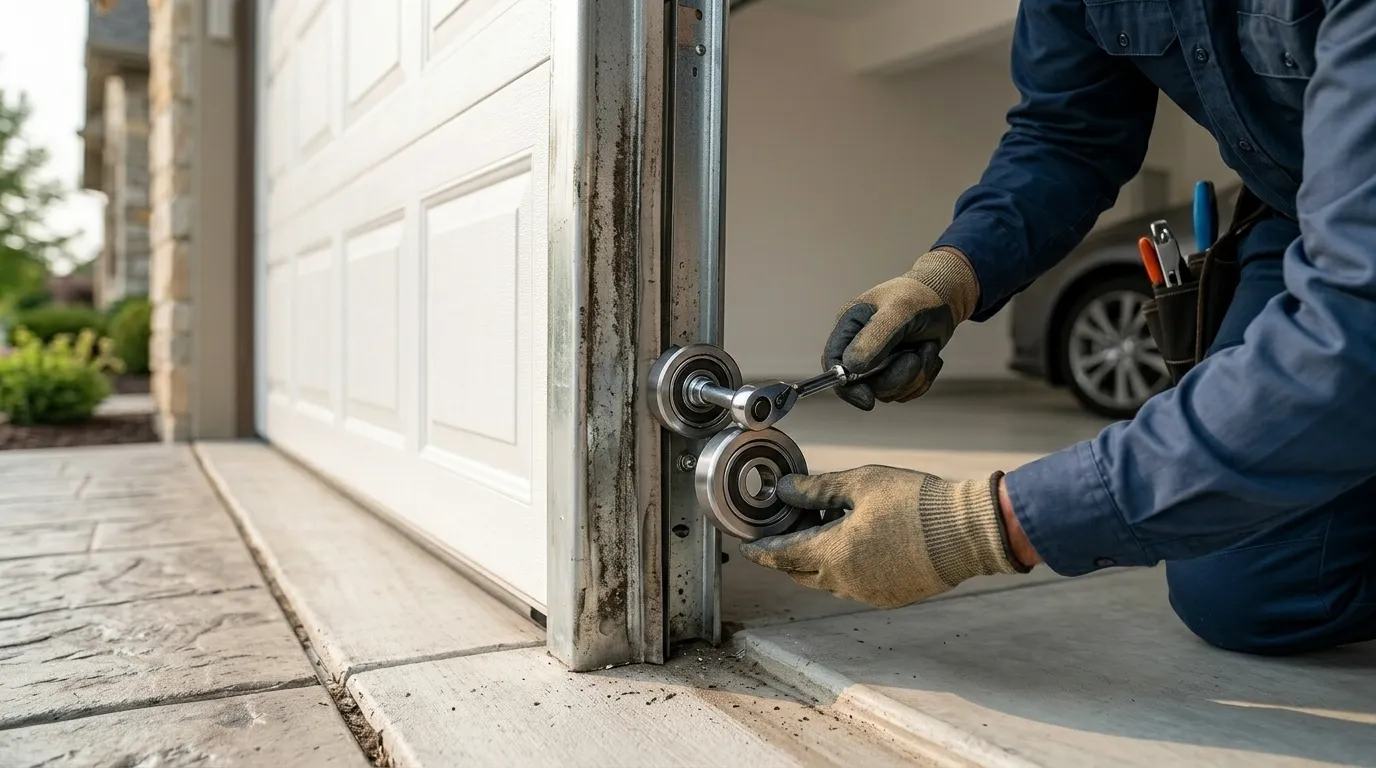
A torsion spring stores energy by twisting around a shaft above the door. Every open and close cycle winds and unwinds it a fraction, and over thousands of cycles the metal fatigues. Cold doesn't cause that fatigue, it accelerates the failure once the spring is already close to its limit. The steel loses a little flexibility, the coating on older springs can be brittle from age, and the extra tension needed to lift a cold, slightly stiffer door is enough to snap a coil that had one or two winters left in it anyway.
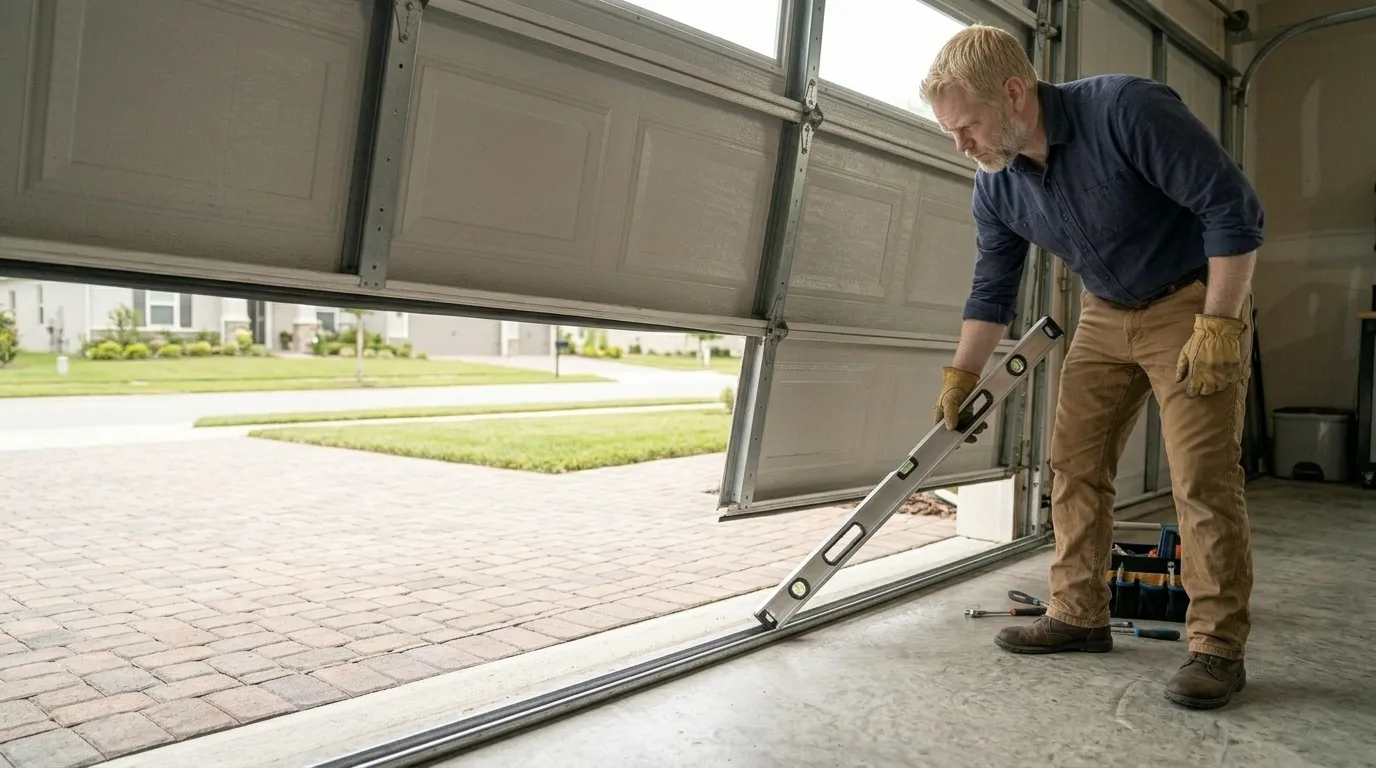
In homes built through the 1980s and 90s in this area, we also see springs that were never resized after a door replacement. A heavier insulated door on the original lightweight spring is already overworked before winter even starts. Add a cold morning where the door gets used more than usual, and that's when the coil lets go, usually with a loud bang and a door that won't budge or slams down hard.
What Local Conditions Do
The cold-moderate climate this region sits in doesn't produce the deep sustained freezes that shatter springs outright the way an extreme cold snap in a harsher zone might. Instead it produces repeated swings - cold nights, milder days - that stress metal fatigue over and over across a winter. That's a slower kind of wear, and it's part of why springs in this area often fail gradually with visible gaps in the coil before they let go completely, rather than snapping without warning.
We see this across the towns we run trucks through - Arlington, Lake Goodwin, Granite Falls, Silvana, Lochsloy, and the rest of the service area out to Stanwood and Monroe - because the housing ages and the winters behave the same way across all of it. A door that's been fine for fifteen winters can go on the sixteenth simply because that's when the coil finally ran out of flex.
How it works
From “it’s stuck” to “it’s fixed”
01
Tell us what’s wrong
Describe the symptom - won’t open, loud bang, opener runs but the door won’t move.
02
On-site diagnosis
A technician tests the door under power and by hand and finds what actually failed.
03
Clear, up-front plan
You get the fix that’s needed and what drives the cost - before any work starts.
04
Repaired & tested
The repair is done, the door is set true and tested, and the work area left clean.
Serving Marysville, WA - tell us what your door’s doing and we’ll take it from there.
Why did my spring break on such a cold morning and not during a storm?
Cold stiffens the steel and increases the load needed to lift the door, which is often enough to finish off a spring that was already fatigued from years of cycles. It's rarely the coldest day of the year that breaks it - it's whichever cold morning happens to line up with a spring that's already near its limit.
Is my spring the original one from when the house was built?
If your home was built between 1972 and 2000, which covers most of this area, it's possible, especially if no one recalls a prior repair. Original springs from that era are sometimes an older size we need to source rather than pull straight off the truck.
Should I replace both springs if only one broke?
On a double-spring setup, we usually recommend replacing both since they wear on the same cycle count and the second one is often close behind. We'll look at the condition of the other coil on site and give you a straight answer rather than upsell both automatically.
Can I just wait until it warms up to fix it?
A broken torsion spring means the door has no counterbalance, so it's heavy and can drop suddenly. It's not a repair to put off through winter - but we understand scheduling around weather and can talk through what's safe to leave closed until we get there.
Ready to get your garage door sorted?
Tell us what it’s doing and where you are in Marysville - we’ll take it from there.