Garage Door Installation, Sized to Marysville Houses
Straight talk on garage door installation in Marysville, WA, tuned to the 1972-2000 housing stock and cold, damp winters common across this service area.
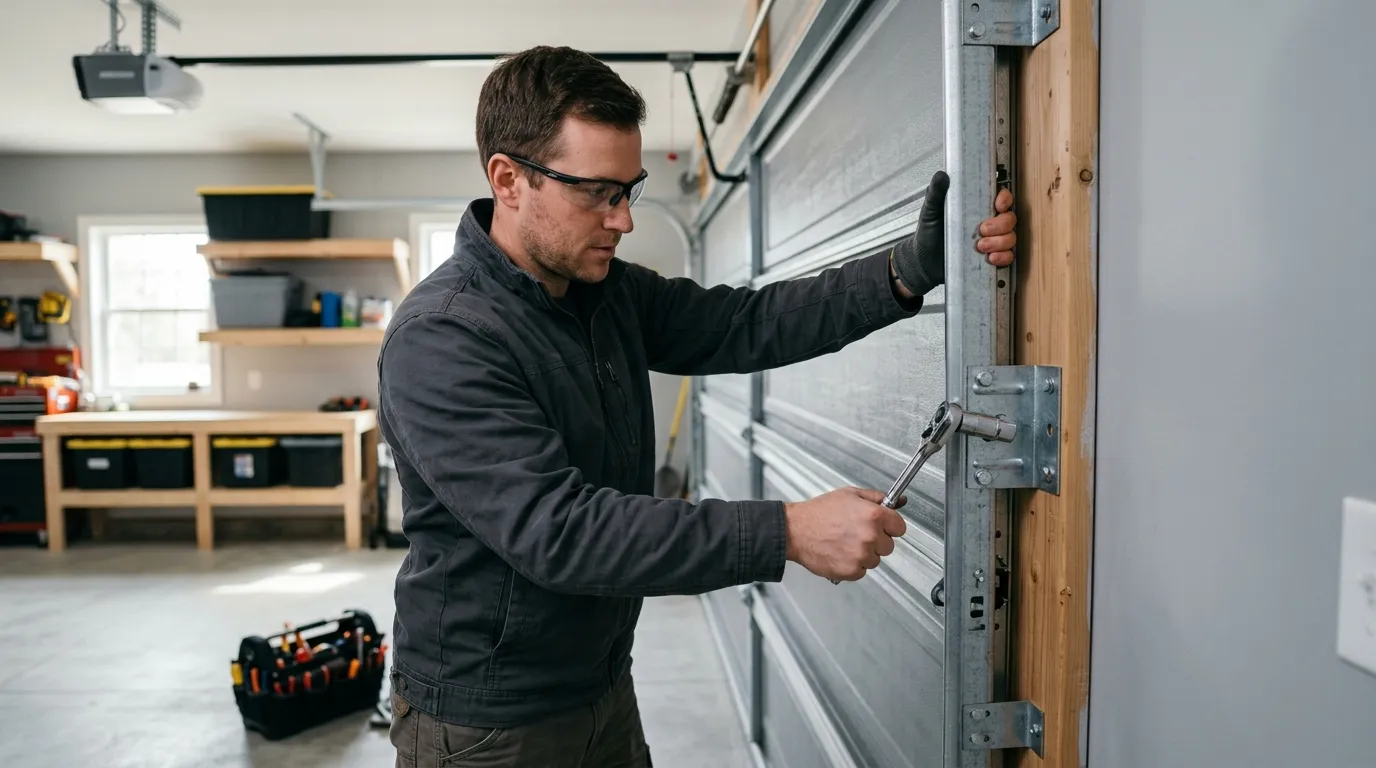
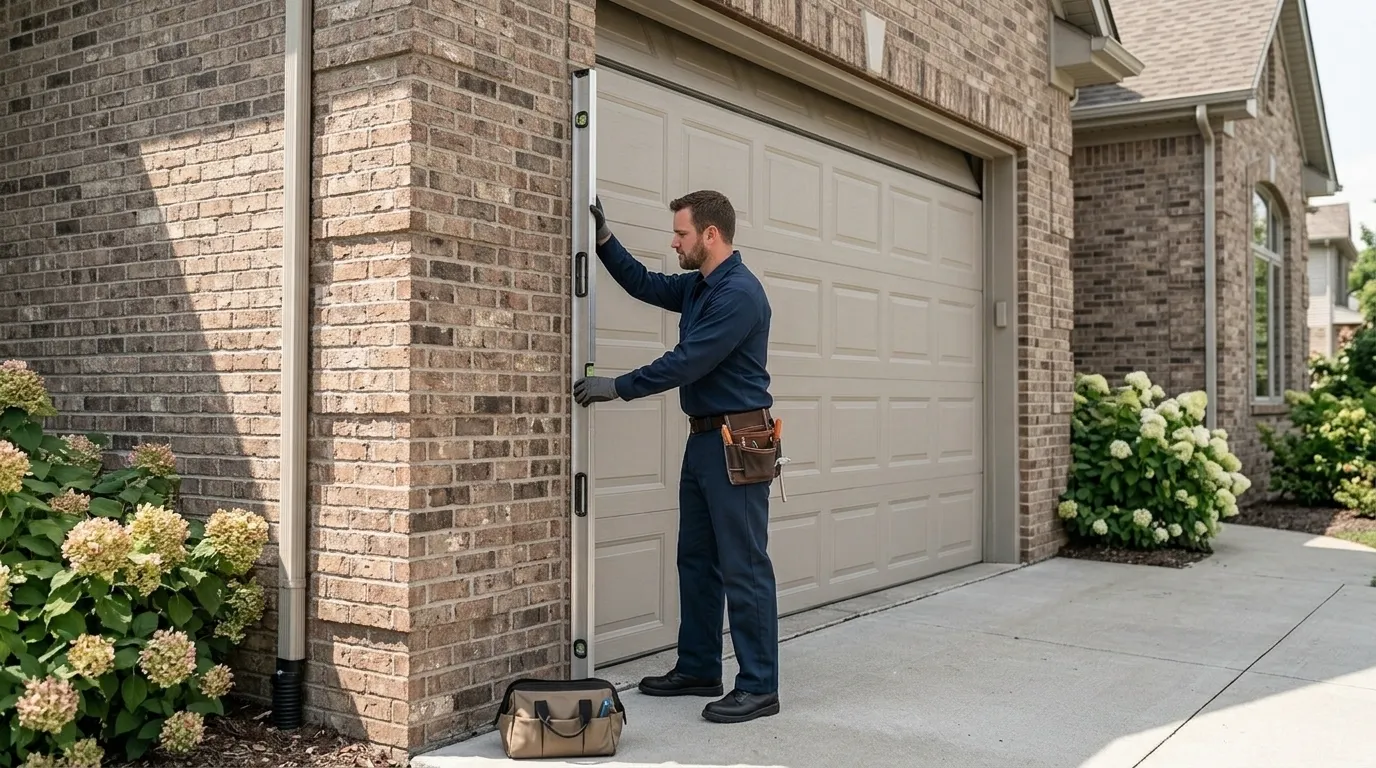
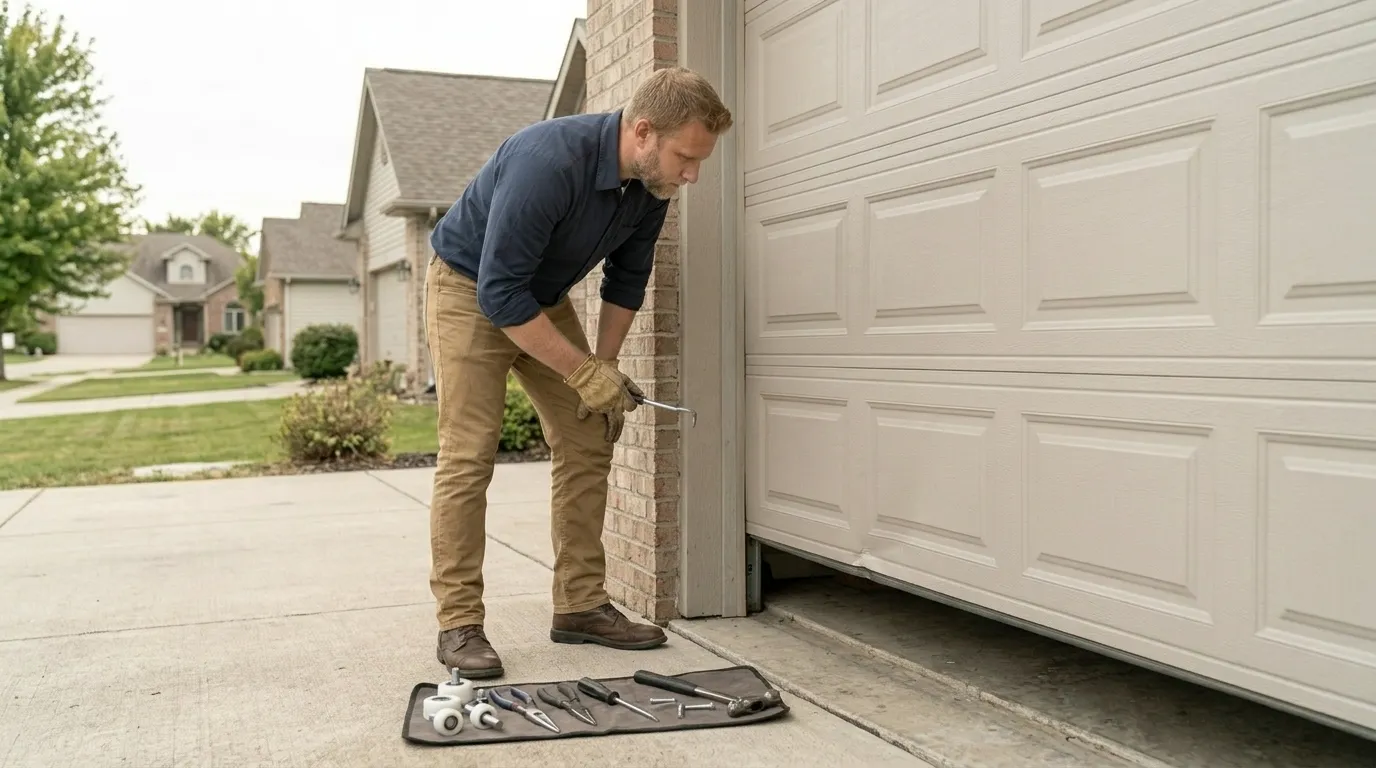
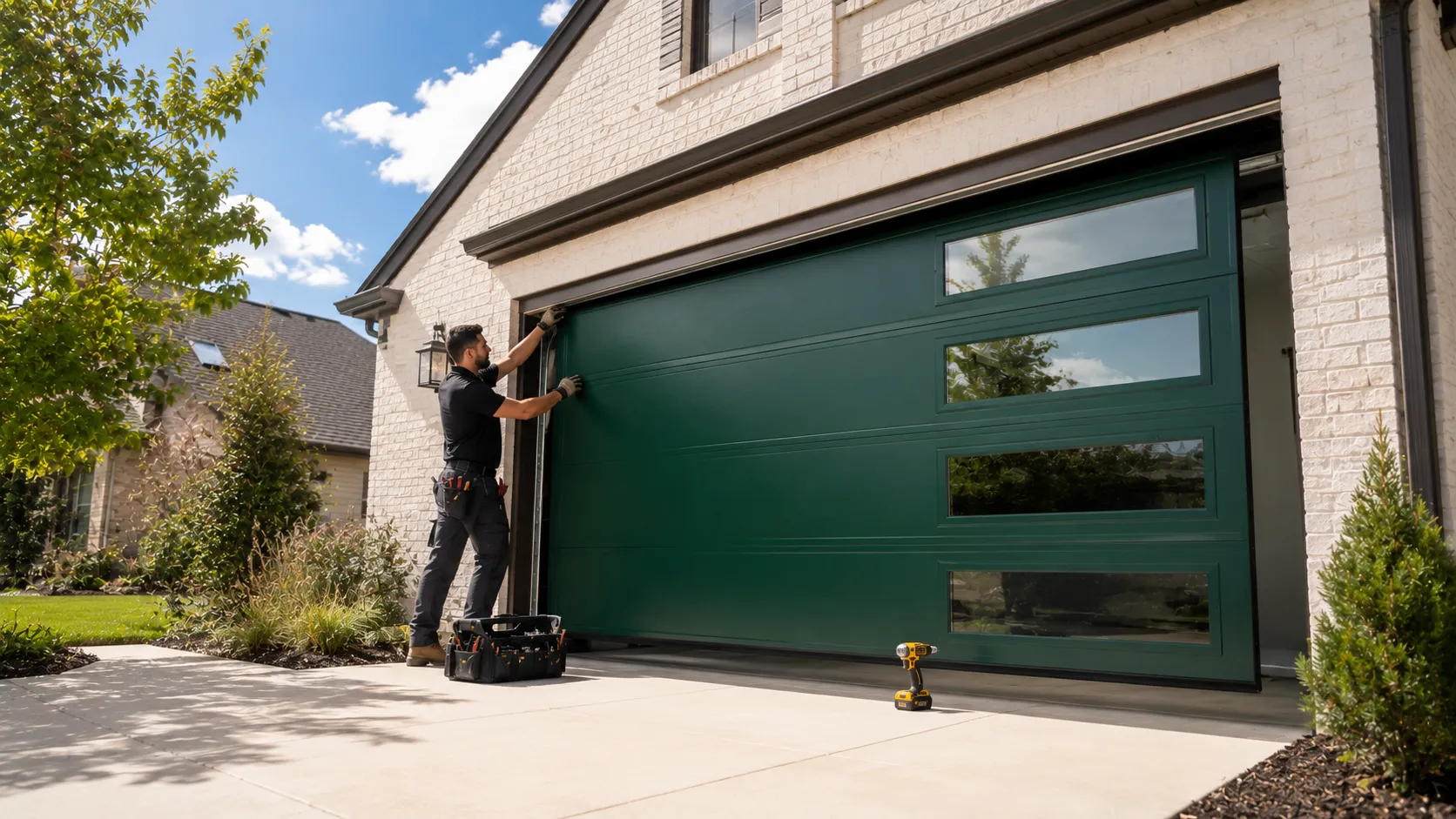
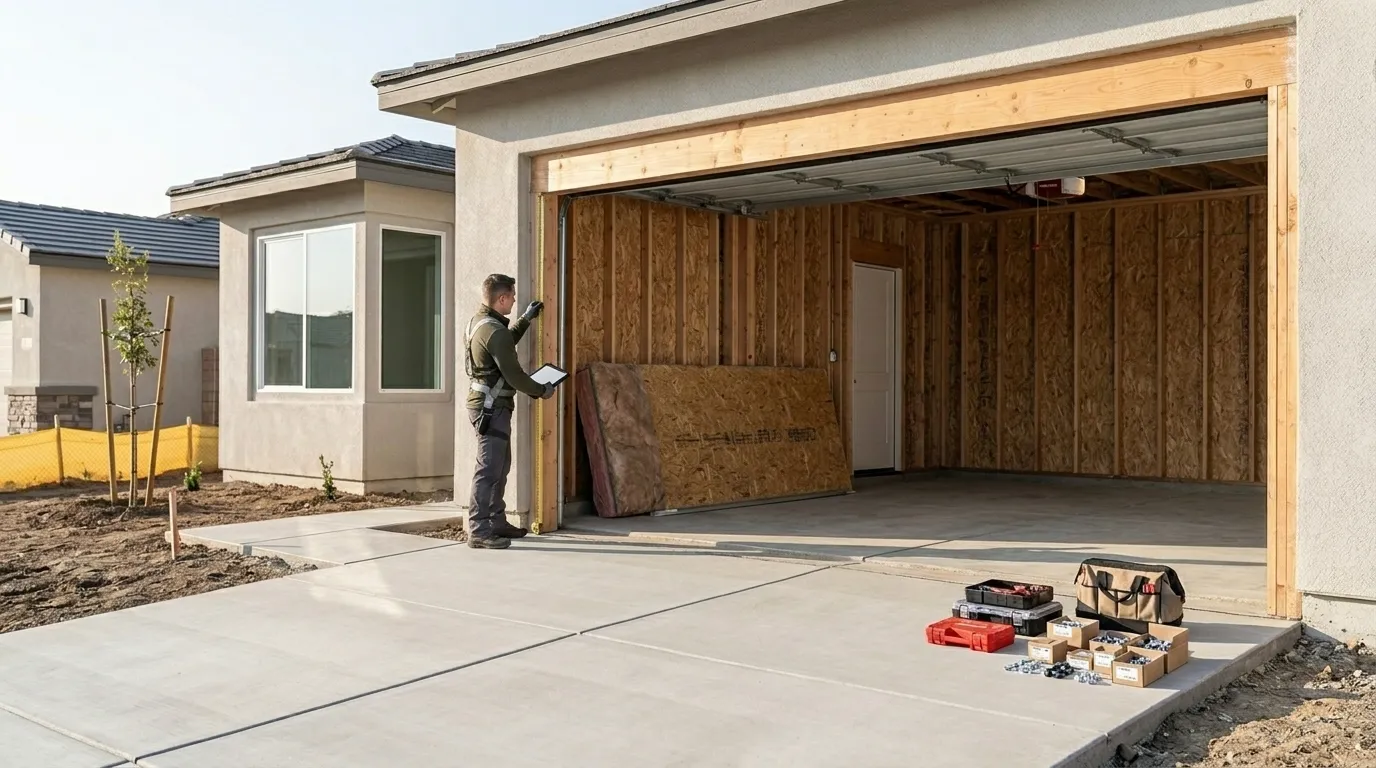
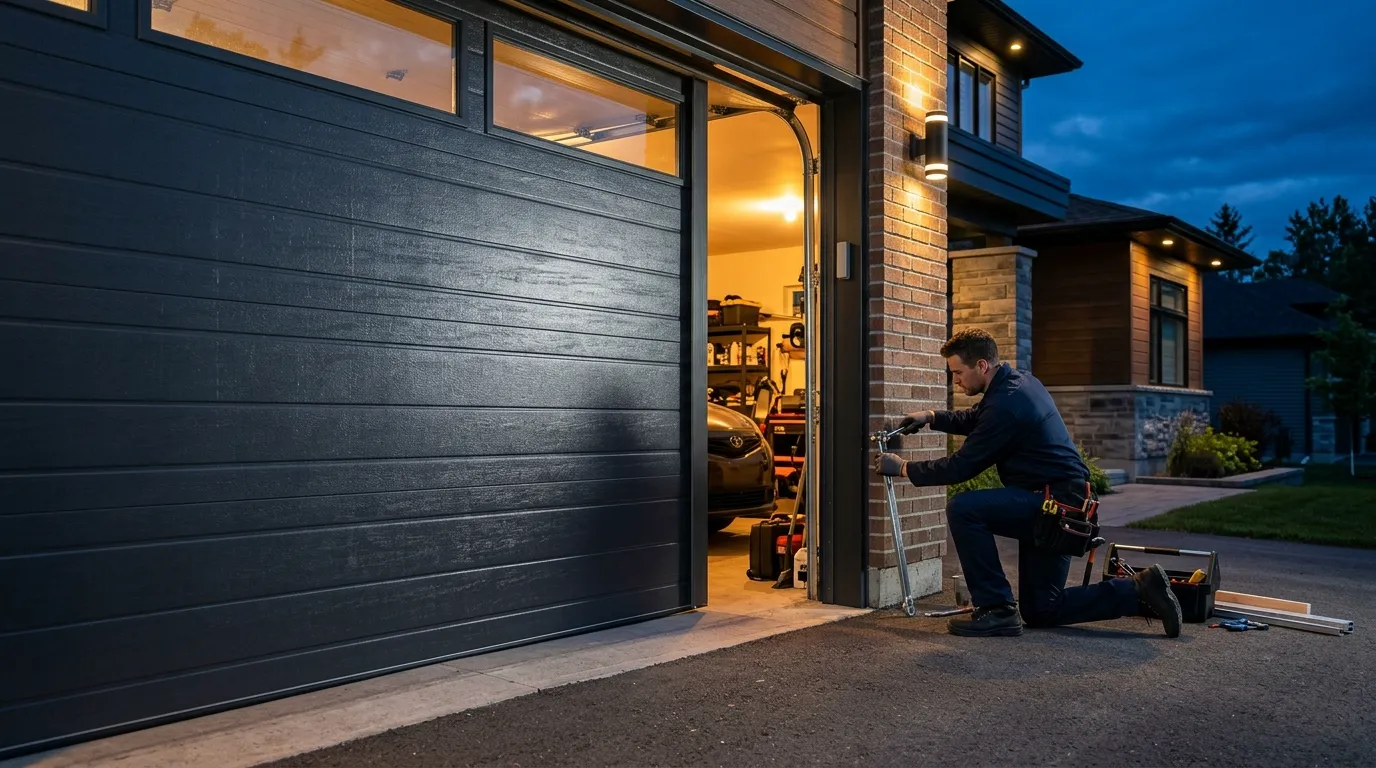
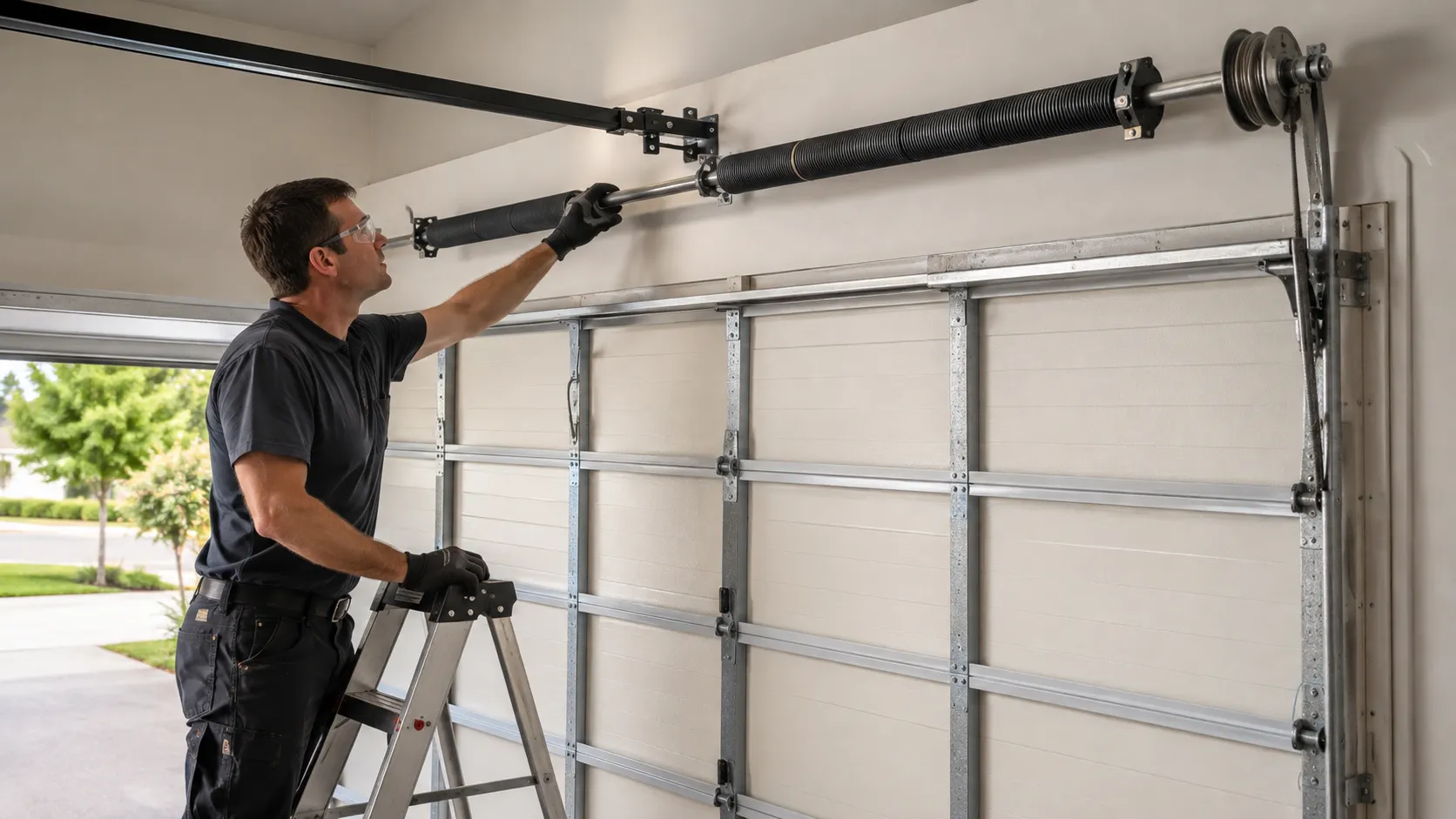
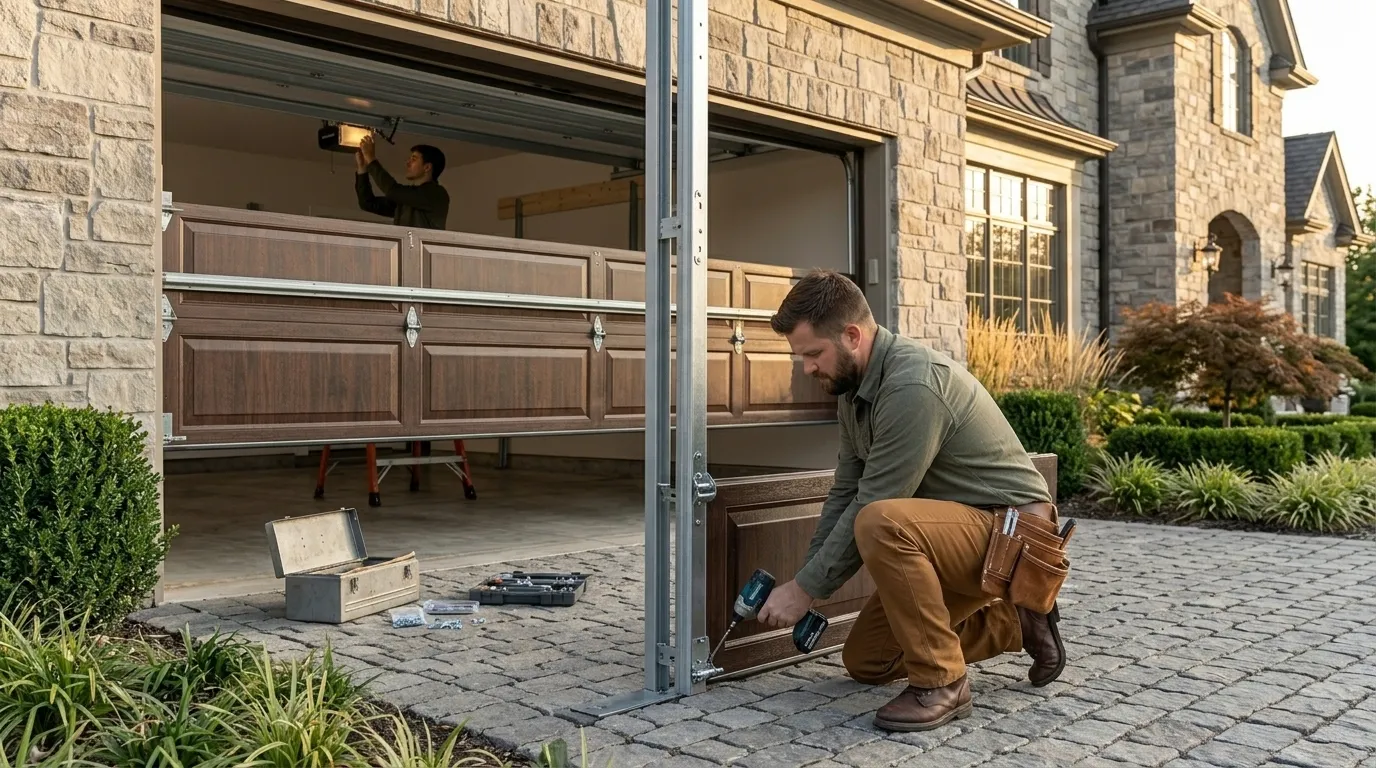
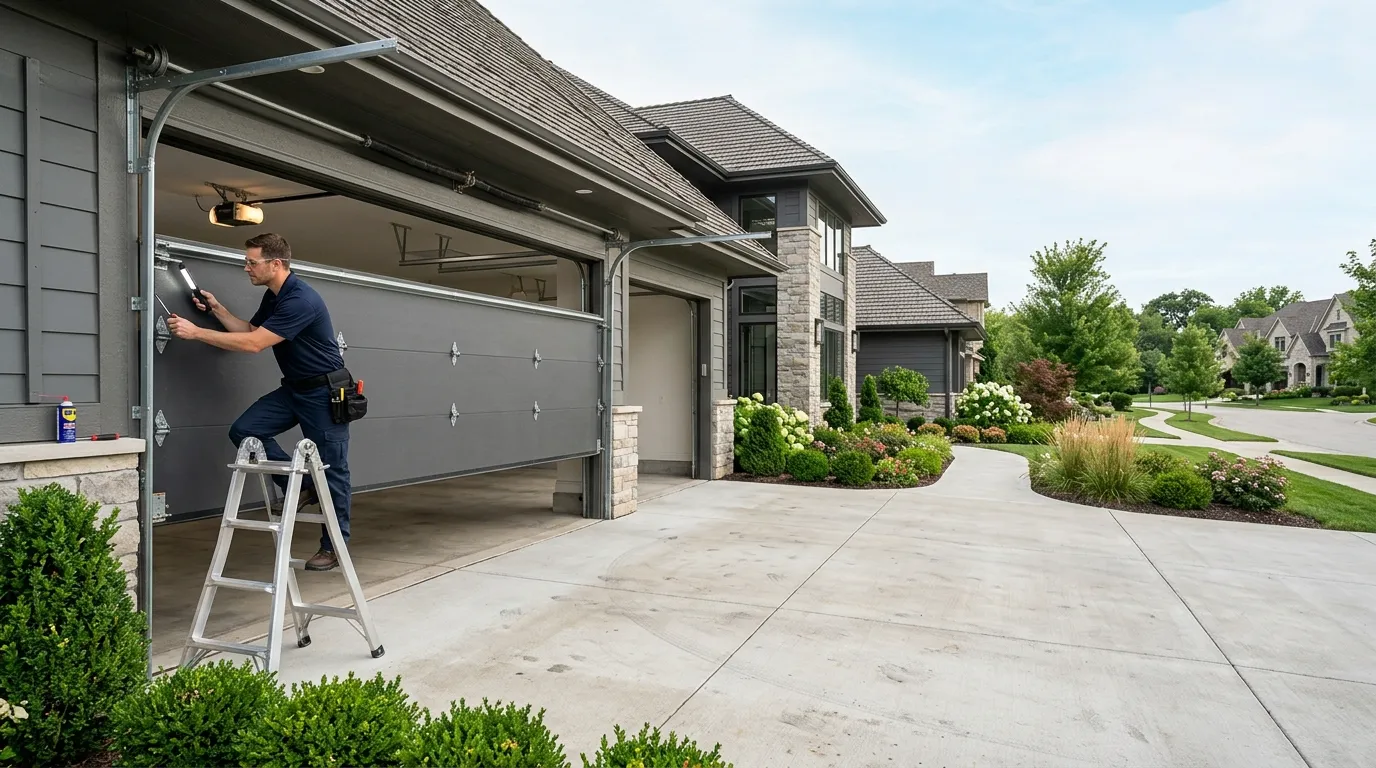
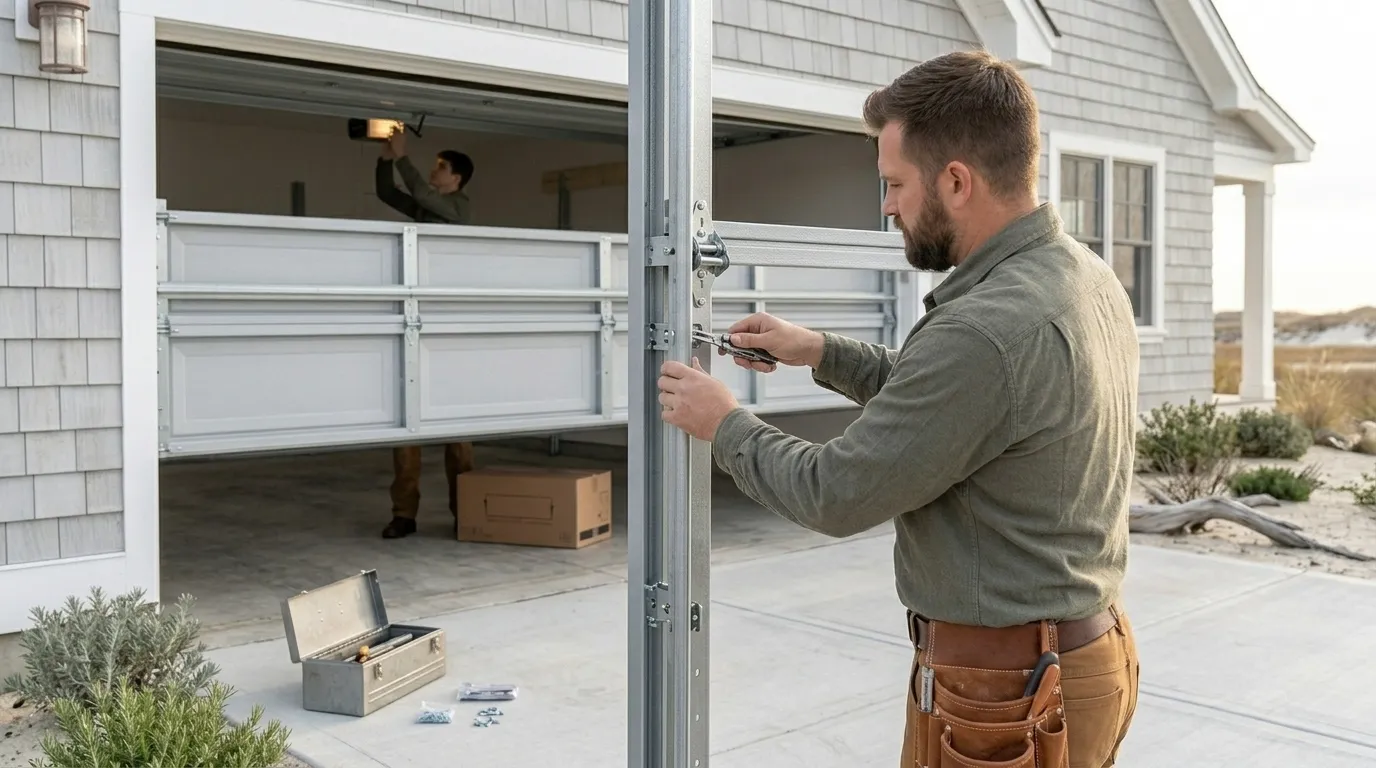
Most of the installation work we do in Marysville isn't a bare wall - it's swapping out a door and track system that's been in place since the house was built, somewhere between 1972 and 2000 for the bulk of this area. That means we're usually pulling an old wood or steel door off galvanized track that's rusted at the roller channel, disconnecting an extension-spring setup that was standard for that era, and squaring up a frame that's settled a bit over three or four decades. A clean install needs the opening measured for square and plumb before anything new goes up, because a lot of these openings have shifted slightly since the original framing. We set new track, new springs sized to the door weight, and an opener with a backup or manual release that works if the power drops - worth having given how often storms here knock out power for a few hours at a time. If the header or jamb has water damage from years of moisture working into the wood, we flag it before we hang a new door, not after. Skipping that step is how a good install turns into a callback in eight months.
How Long It Takes
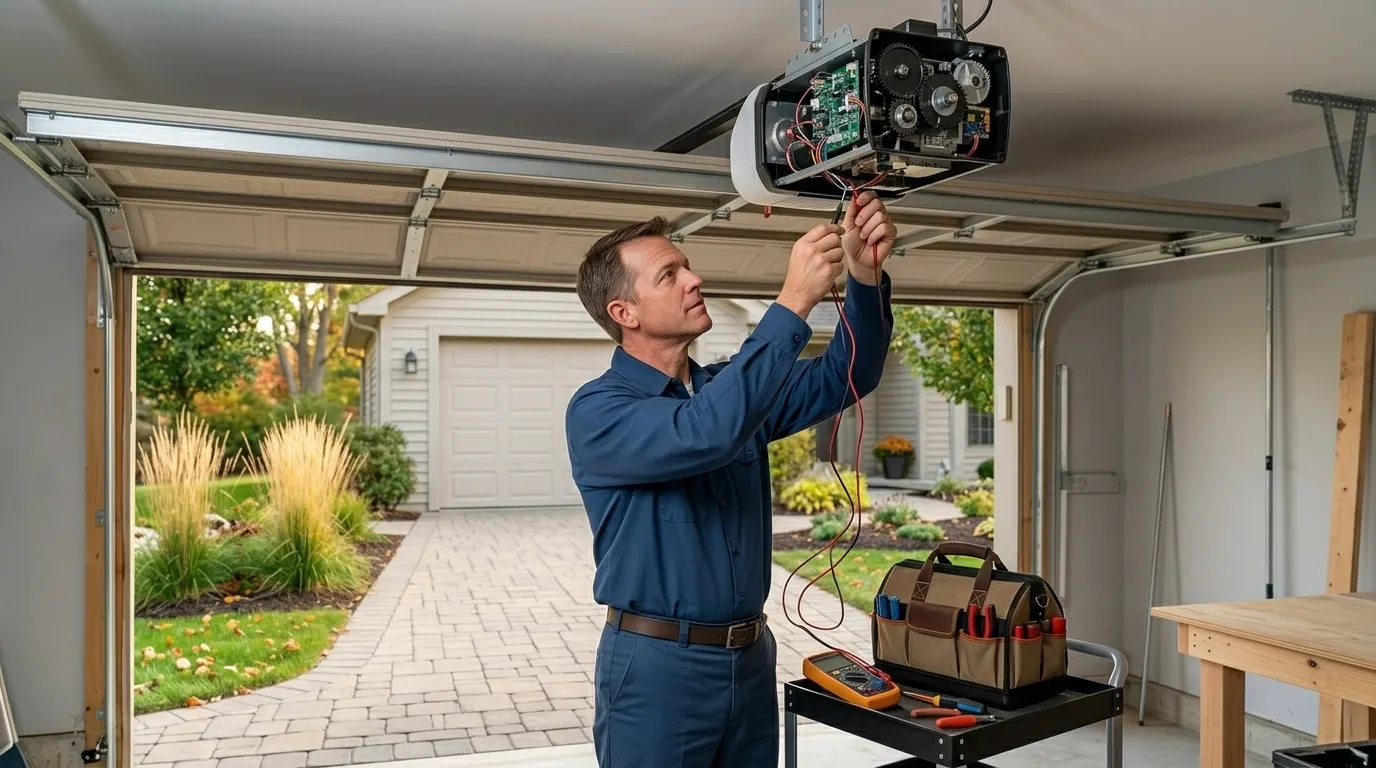
A standard single or double door swap on an opening that's already square runs a few hours start to finish, including hauling off the old door and hardware. Where it runs longer is the framing repair - houses built in the 1980s and 90s around here often have jamb wood that's taken on moisture over the years from the wet winters, and if we find soft wood once the old door's off, we're not going to hang a new one on it. That adds time and, honestly, sometimes means calling in a carpenter before we can finish the job, which we'll tell you straight rather than force a fix that won't hold. If you're doing a full opener replacement alongside the door, expect the whole job to take most of a work day, not because the opener install itself is slow but because we're also testing balance, travel limits, and safety reversal on a system that has to run right through another cold, wet winter.
What You Are Seeing
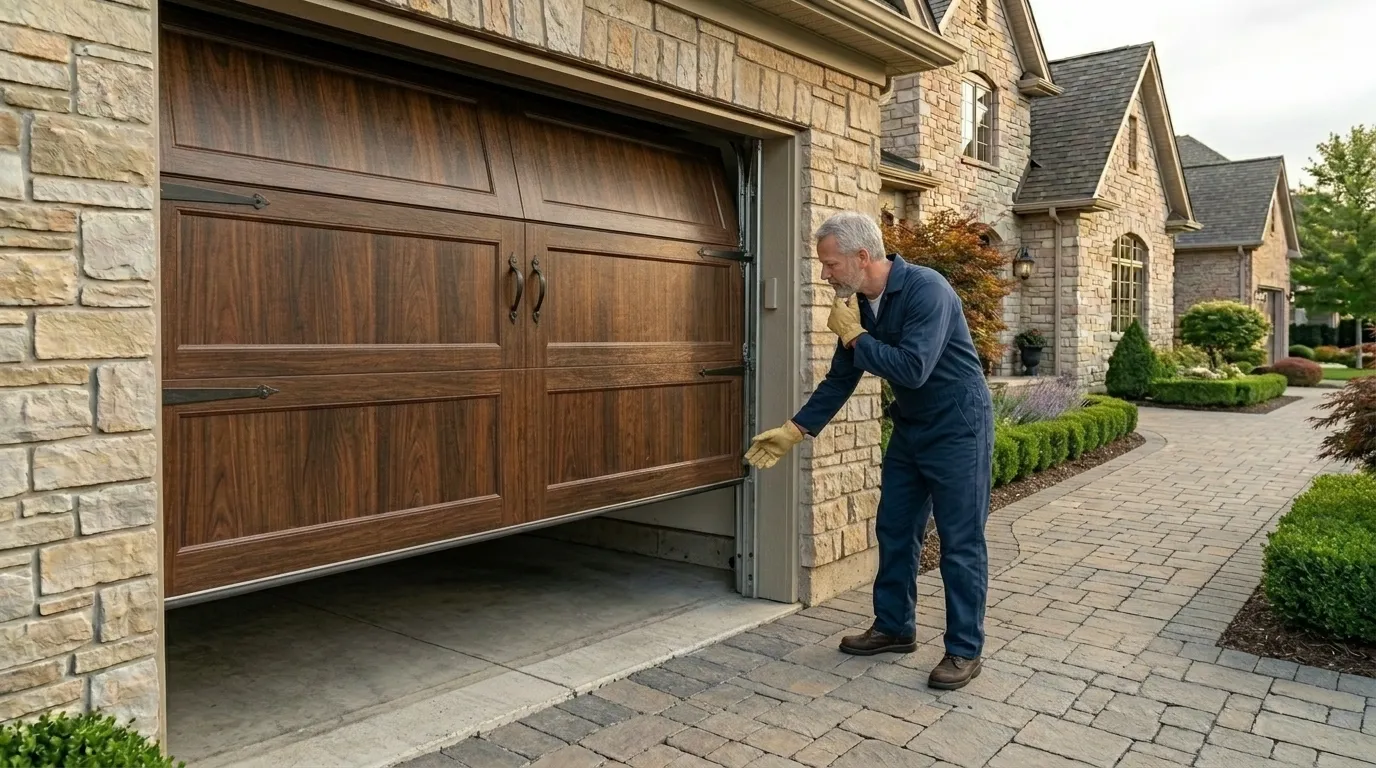
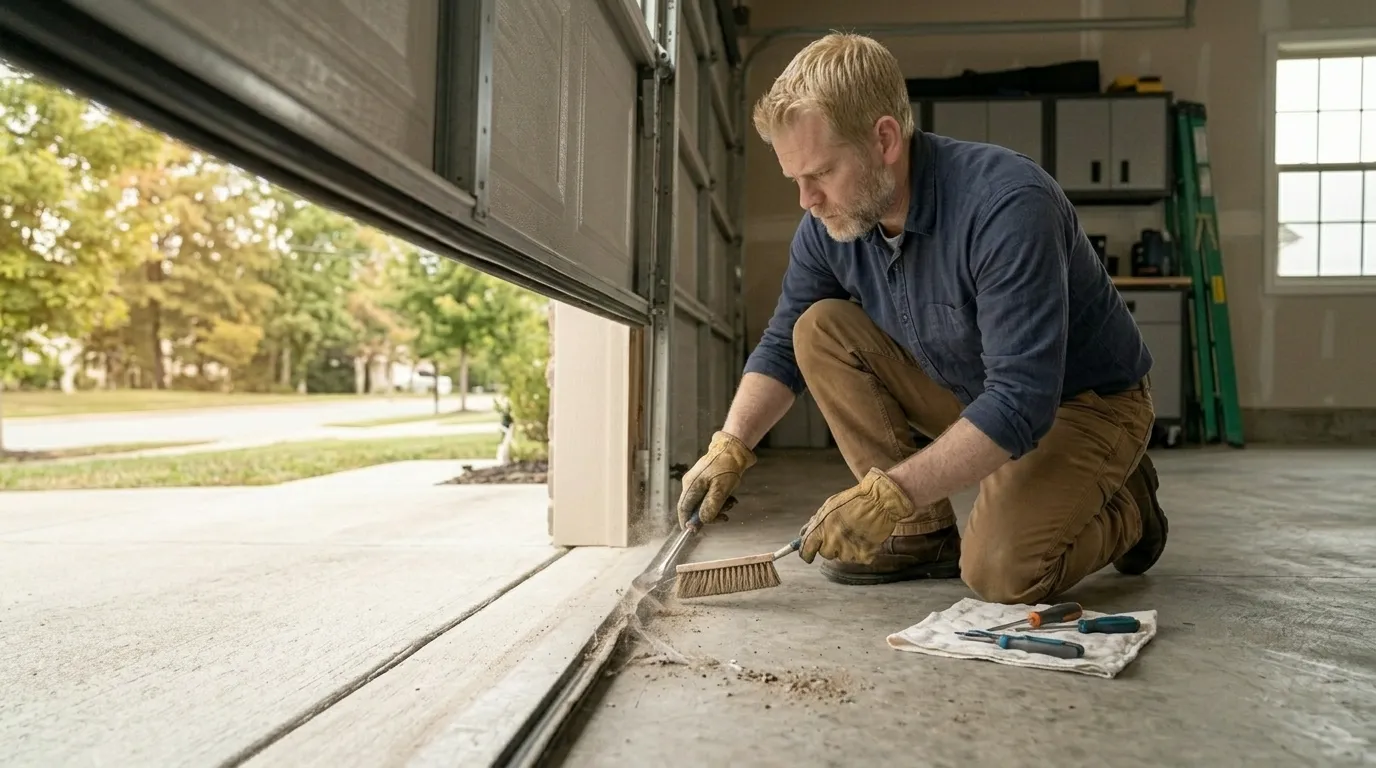
If you're looking at installation because your current door is failing rather than because you're renovating, the signs tend to be specific to a house this age. A door that's heavy to lift by hand, sags at the bottom corners, or has visible rust bleeding through the paint at the panel seams is usually original to a house from the 1980s or 90s and past the point where patching makes sense. Track that's pitted or bent from rust rather than impact is common on doors that have sat through 25-plus winters of the cold, damp weather this area gets. If your opener still uses an old chain drive with no battery backup and the door binds or reverses randomly, that's an opener nearing the end of its service life, not a quick adjustment. We'll always tell you when a repair is the better call - replacing springs or a bent panel on a door that's otherwise sound is usually cheaper than a full install, and we won't push a new door on you if the old one has years left in it.
What Causes It Around Here
The housing stock across this service area - mostly built between 1972 and 2000 - was largely fitted with doors and hardware standard for that period: steel panel doors on galvanized track, extension springs rather than torsion, and openers with none of the current safety sensors. Thirty to fifty years on, in a cold, moderate climate with wet winters, that hardware corrodes at the rollers and track brackets faster than in drier regions, and the original wood jambs on many of these houses have taken on moisture damage that weakens the fasteners holding the track in place. With roughly 50,164 owner-occupied houses in this service area built largely in that same window, we see the same failure pattern house after house: rust-seized rollers, sagging bottom panels, and jambs too soft to hold new hardware without repair first. That's less about age alone and more about that specific hardware generation meeting decades of this specific weather.
How it works
From “it’s stuck” to “it’s fixed”
01
Tell us what’s wrong
Describe the symptom - won’t open, loud bang, opener runs but the door won’t move.
02
On-site diagnosis
A technician tests the door under power and by hand and finds what actually failed.
03
Clear, up-front plan
You get the fix that’s needed and what drives the cost - before any work starts.
04
Repaired & tested
The repair is done, the door is set true and tested, and the work area left clean.
Serving Marysville, WA - tell us what your door’s doing and we’ll take it from there.
Is my garage door too old to install a new opener on it, or do I need a whole new door?
It depends on the door, not just its age. If the panels are solid and it's just the opener that's failed, we can often install new equipment on the existing door. If the door itself is sagging, rusted through at the seams, or the track is bent from corrosion - common on houses from the 1980s and 90s around here - replacing the door makes more sense than propping new equipment on old panels.
Why does my jamb need repair before you can install a new door?
Wood jambs on houses from this era have had decades to absorb moisture from wet winters, and soft or rotted wood won't hold the mounting screws for new track and hardware securely. If we find that once your old door's off, we'll tell you before installing anything new, because a door hung on a weak jamb will fail again.
How long does a full garage door installation take in Marysville?
A standard door swap on a square opening usually takes a few hours. If we find jamb damage or need to true up an opening that's shifted over the years - which happens on houses built in the 1970s through 90s - the job runs longer, sometimes into a full day if carpentry repair is needed first.
Do you install torsion spring systems instead of the old extension springs?
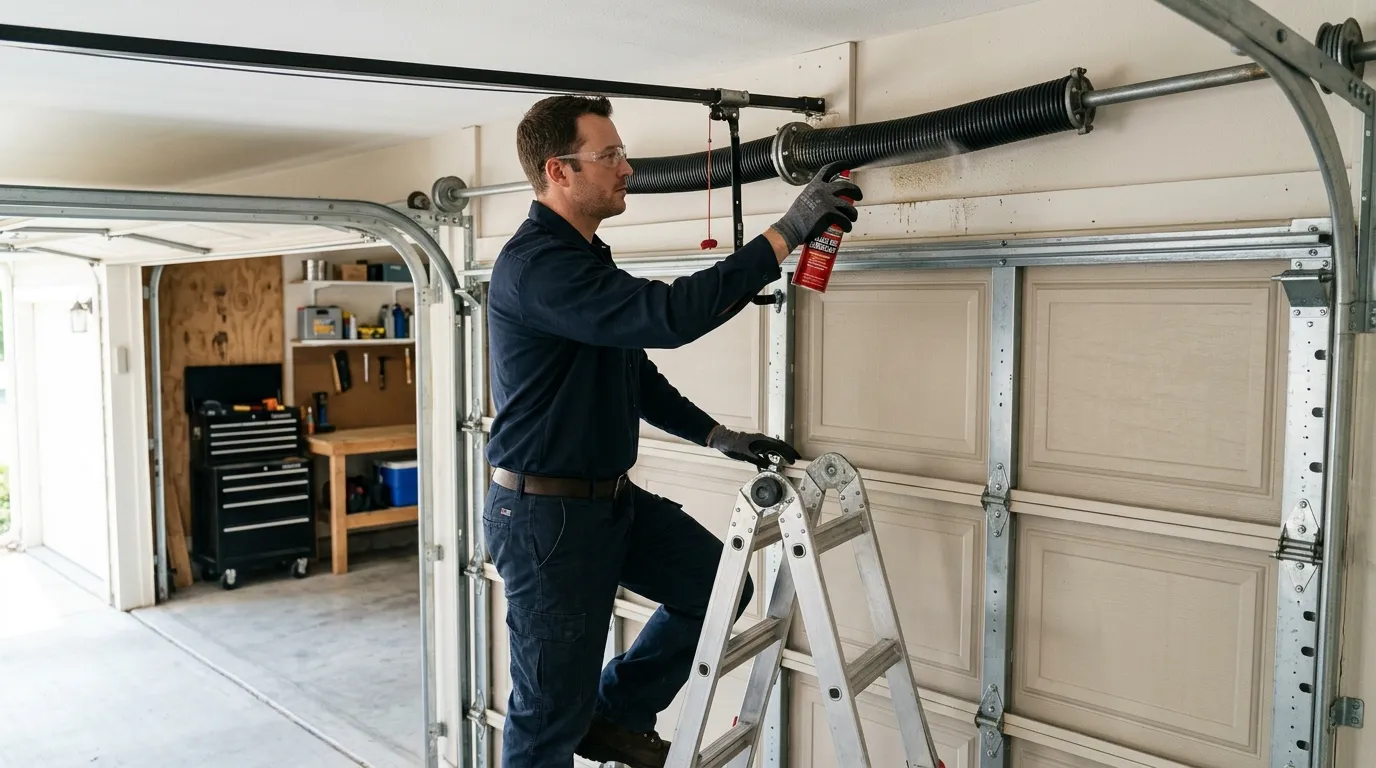
Yes, and for most replacement installs we recommend it. Extension springs were standard when a lot of these houses were built, but torsion systems handle heavier insulated doors better and hold up longer under repeated use, which matters given how many door cycles a garage sees over 20-plus years.
Ready to get your garage door sorted?
Tell us what it’s doing and where you are in Marysville - we’ll take it from there.