Straight Answers
Houses built between 1972 and 2000 in this part of Washington typically came with steel sectional doors on torsion springs, and openers that, if never replaced, are chain-drive units well past their rated cycle count. That's not a guess about your specific house - it's what that construction era used almost everywhere in the region, and it's consistent with what we find on calls out this way.
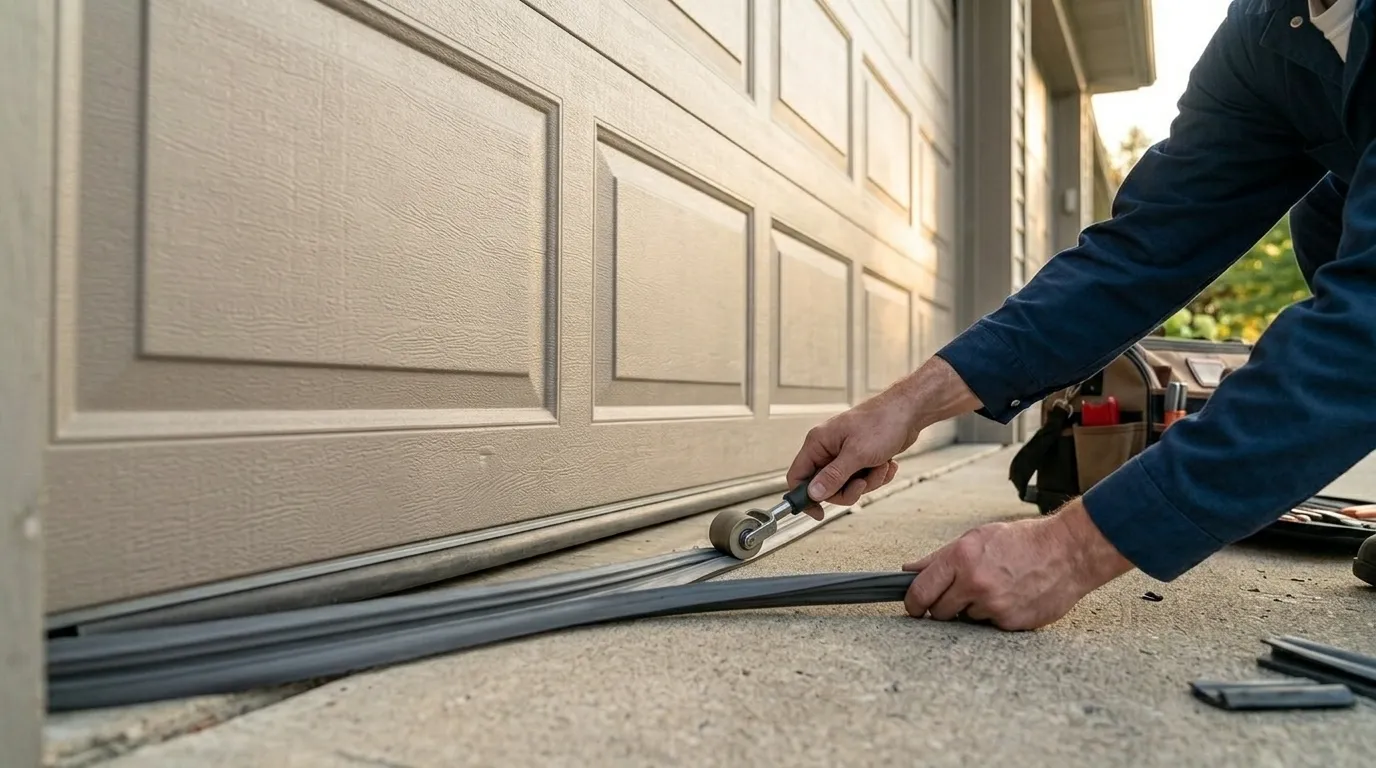
The climate here is cold-moderate, not the deep-freeze conditions that crack doors outright, but enough temperature swing and damp to matter for weatherstripping and for steel that's been flexing on the same hardware for thirty-plus years. Springs rated for a certain cycle count don't care how well you've maintained the rest of the door - they wear on a clock, and a house from the early 90s is due, if it hasn't already gone.
One honest limit: we don't do full structural framing repair if water or rot has gotten into the door opening itself. On older homes we sometimes find that the door problem is really a wall problem, and at that point you need a carpenter before you need us. We'll tell you straight if that's what we're looking at instead of selling you a door that won't sit right in a bad frame.
What We Get Called For
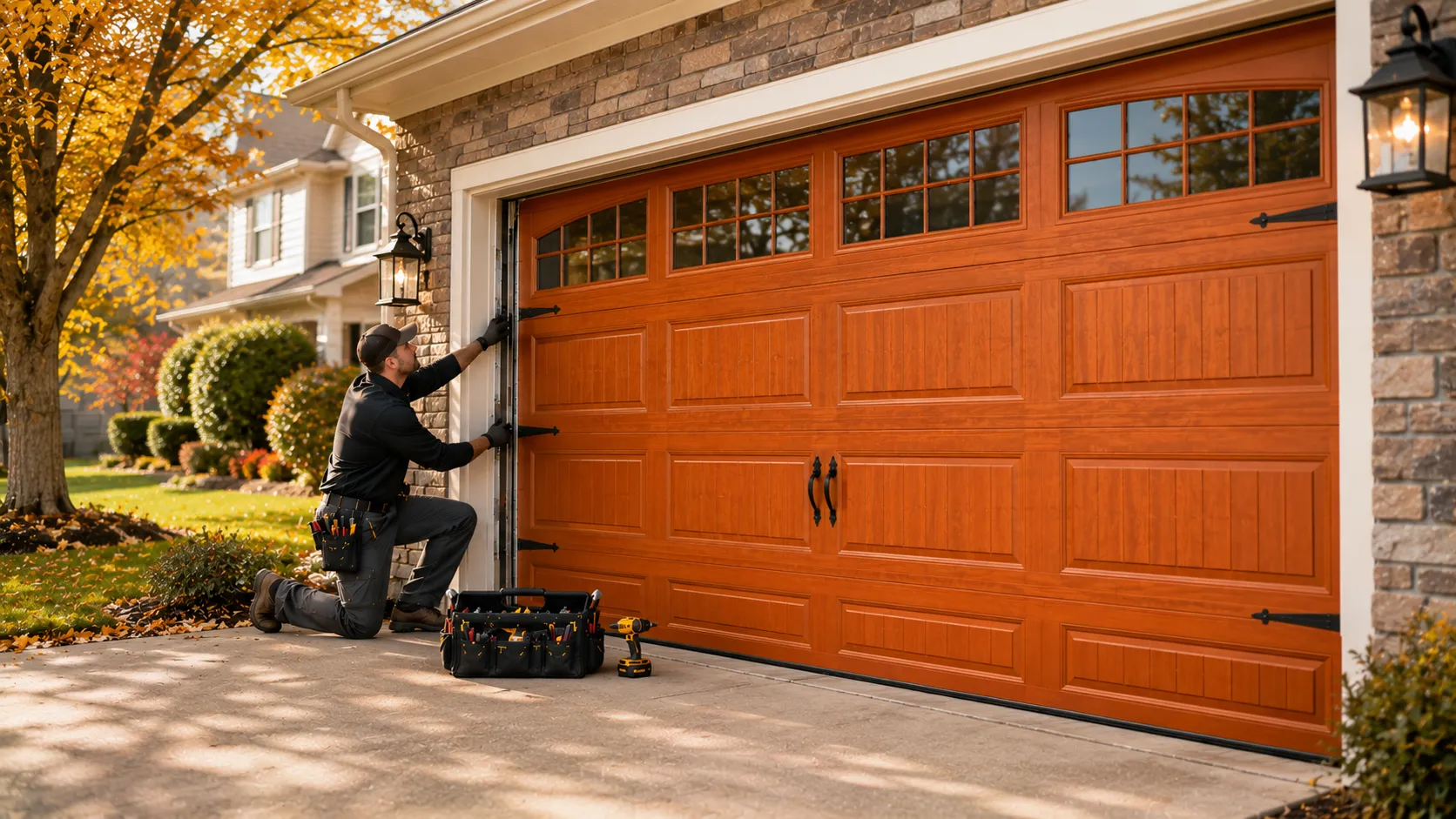
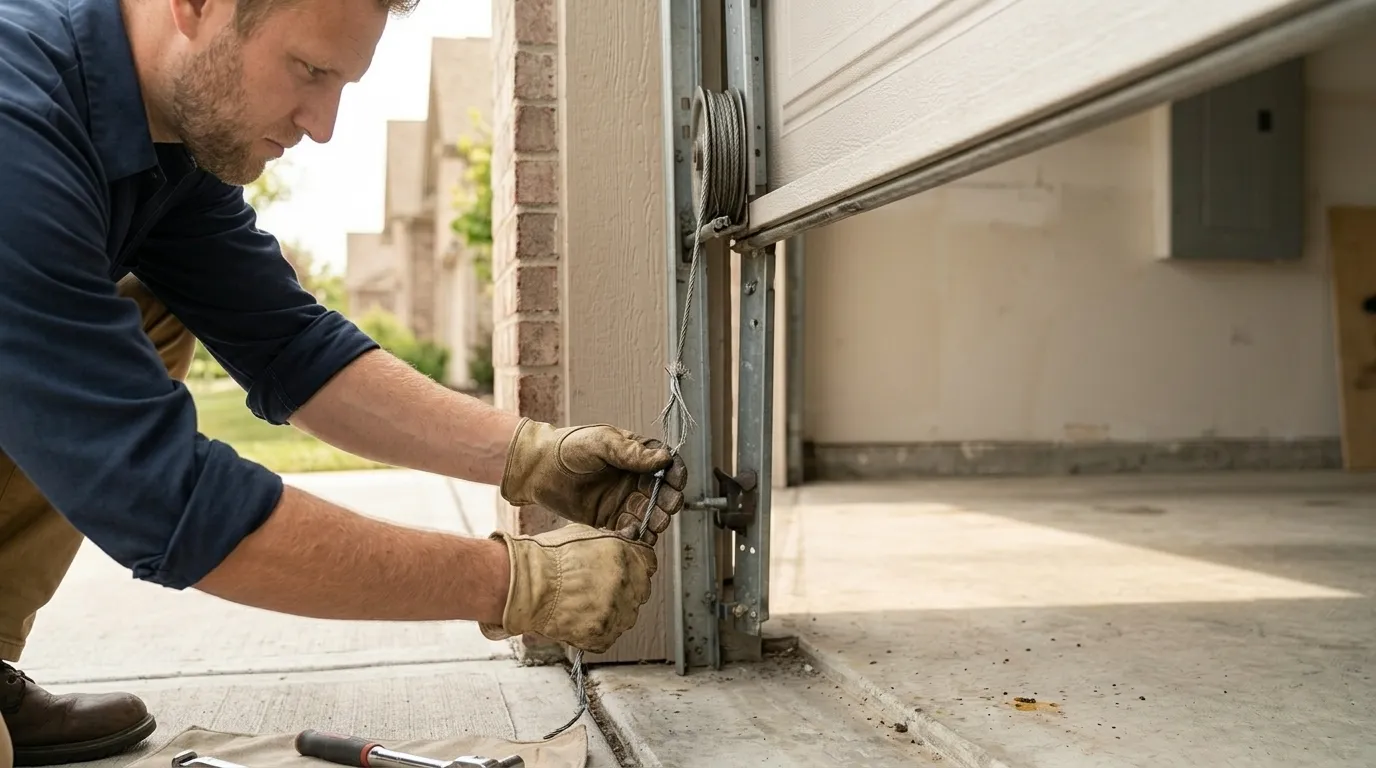
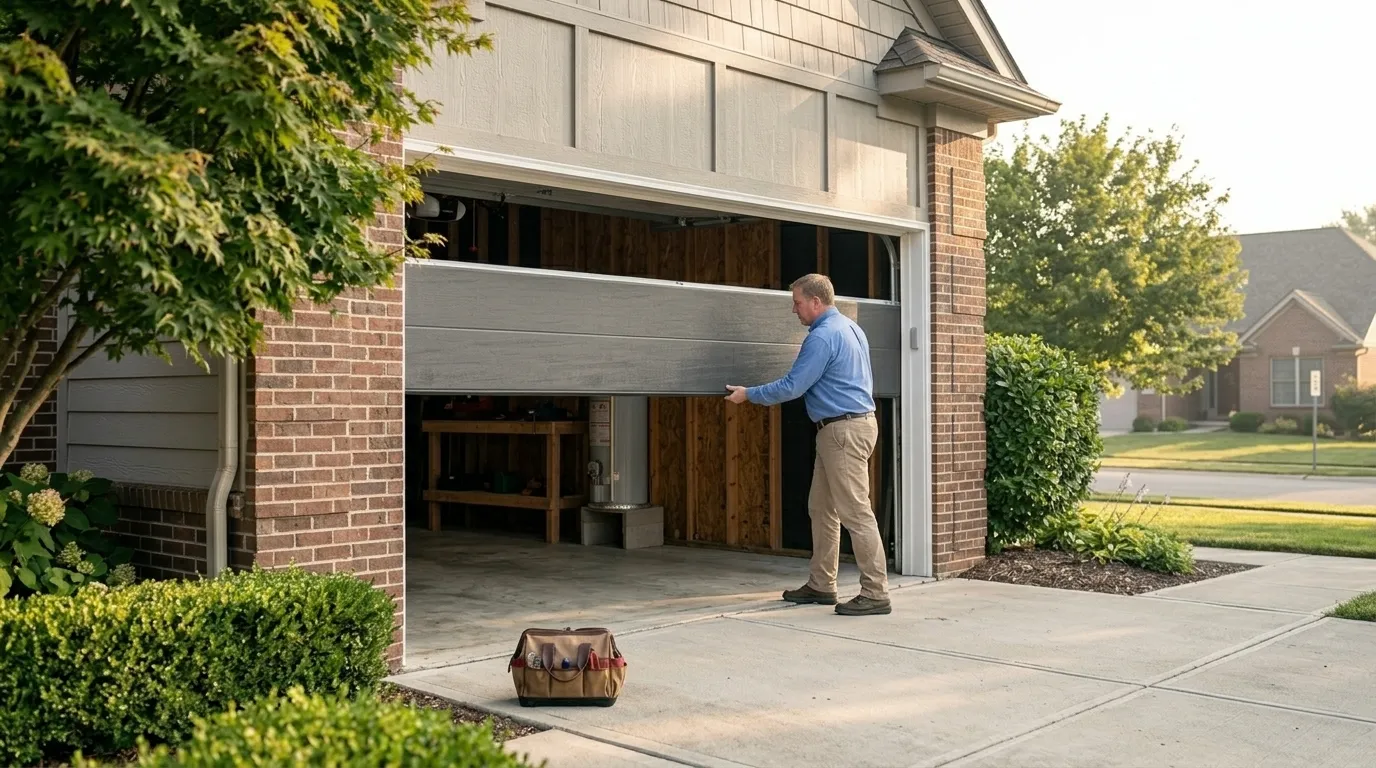
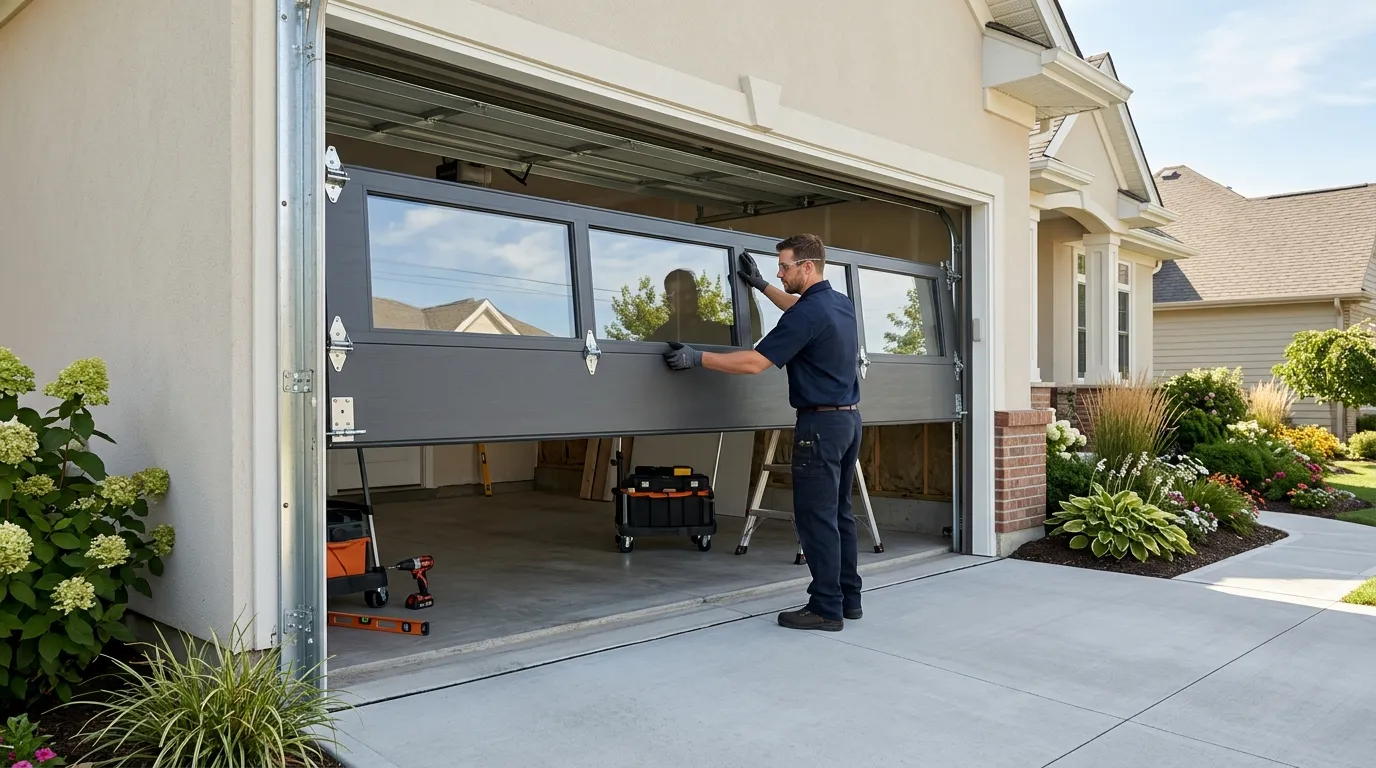
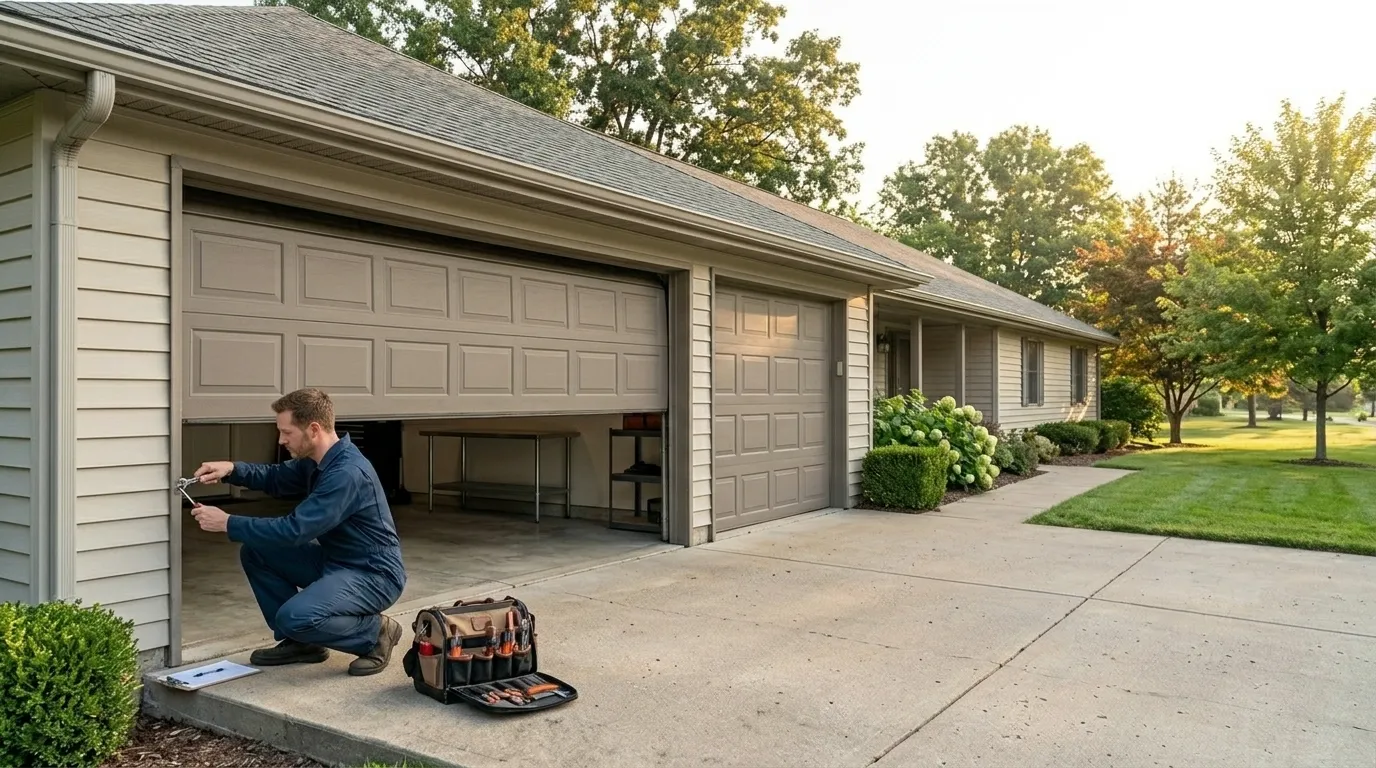
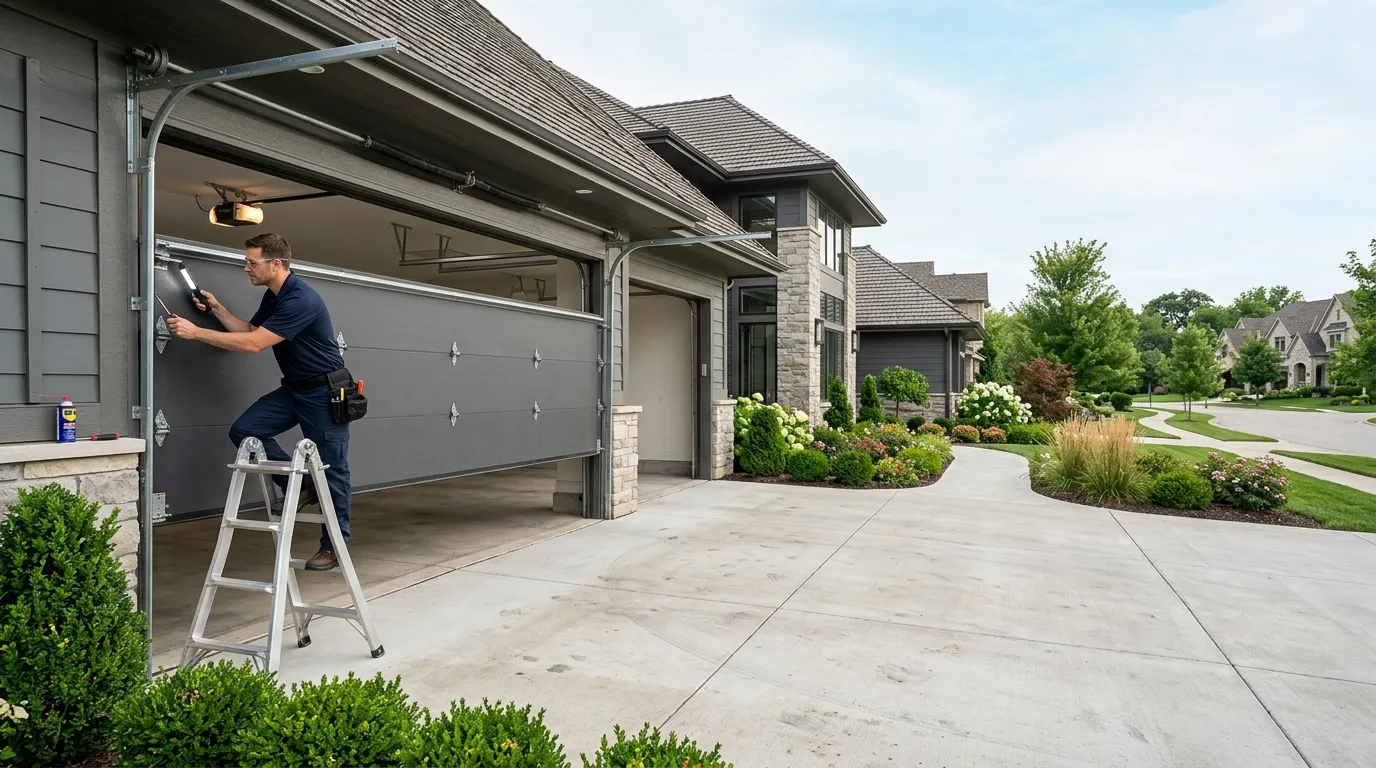
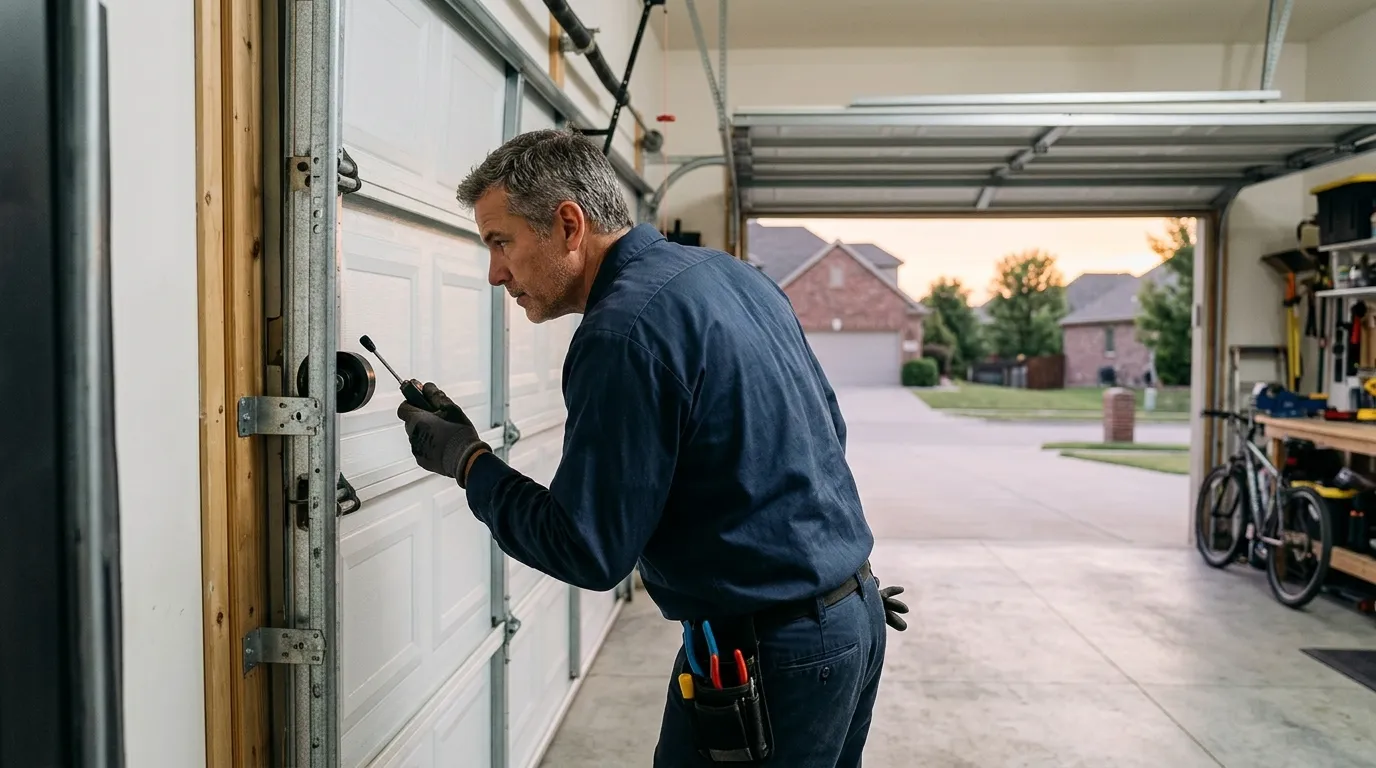
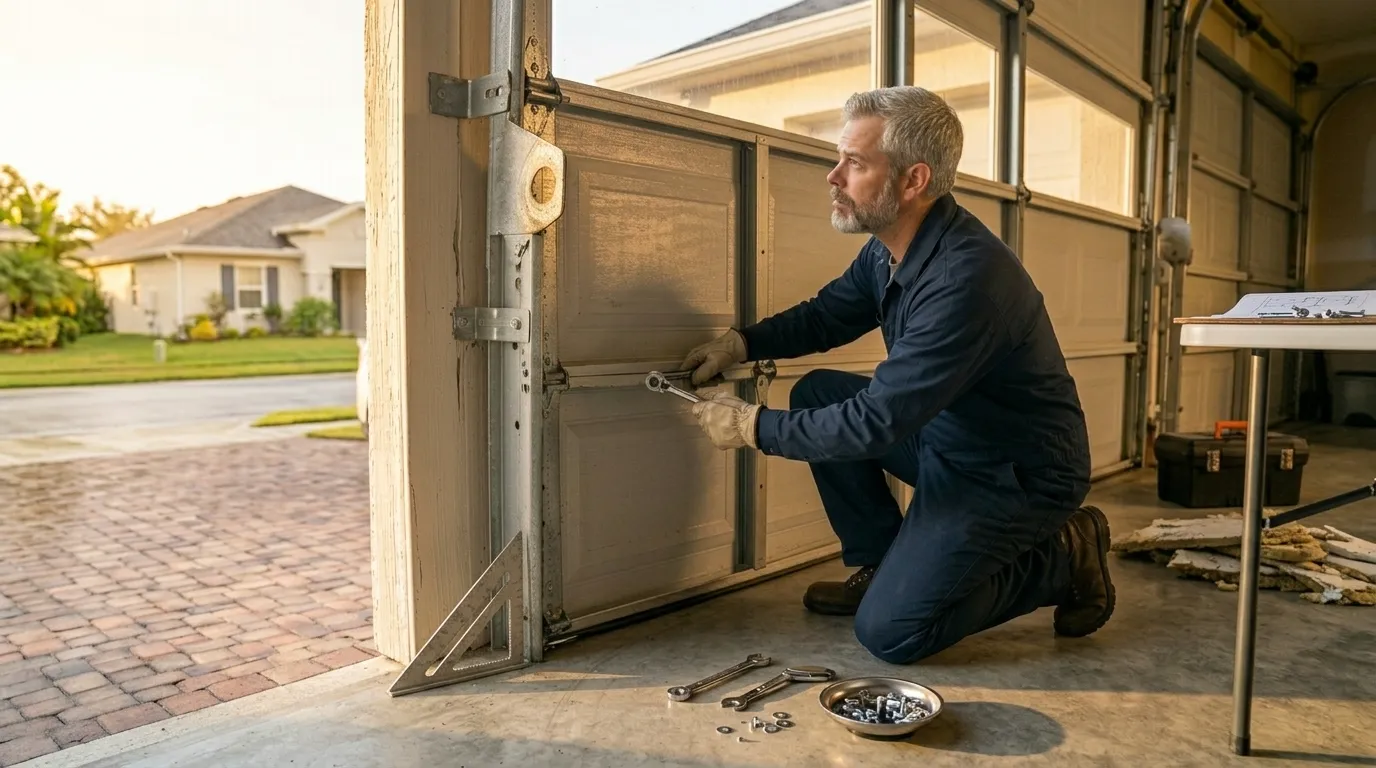
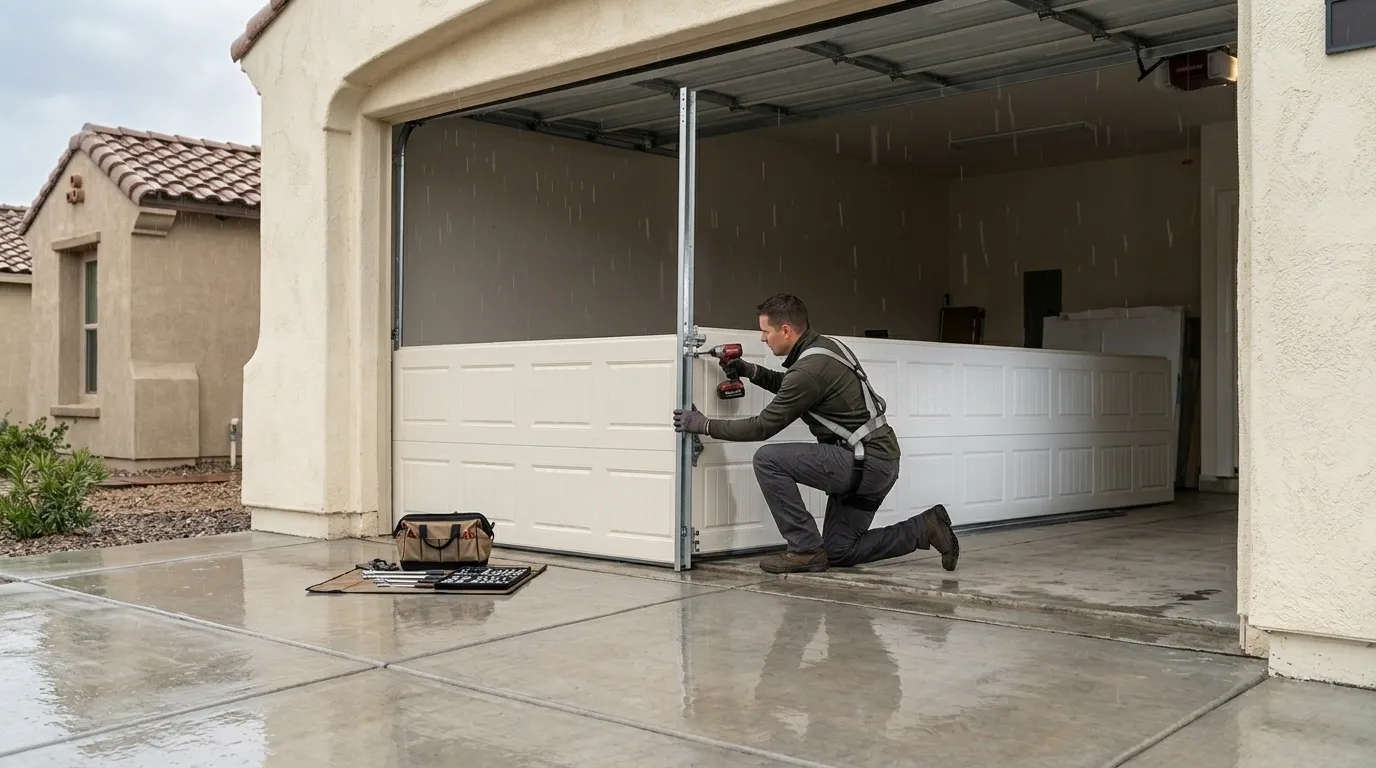
Out in Riverside, the calls we get track pretty closely with the housing age. Torsion springs that finally let go - usually with a bang loud enough to bring someone outside to check what happened. Openers from the 1990s that grind, stutter, or just stop responding to the remote, often because the drive gear inside is worn down to plastic dust. Steel panels on original doors that have surface rust starting at the bottom section, which is common on doors that have been through enough cold-and-damp winters without a repaint.
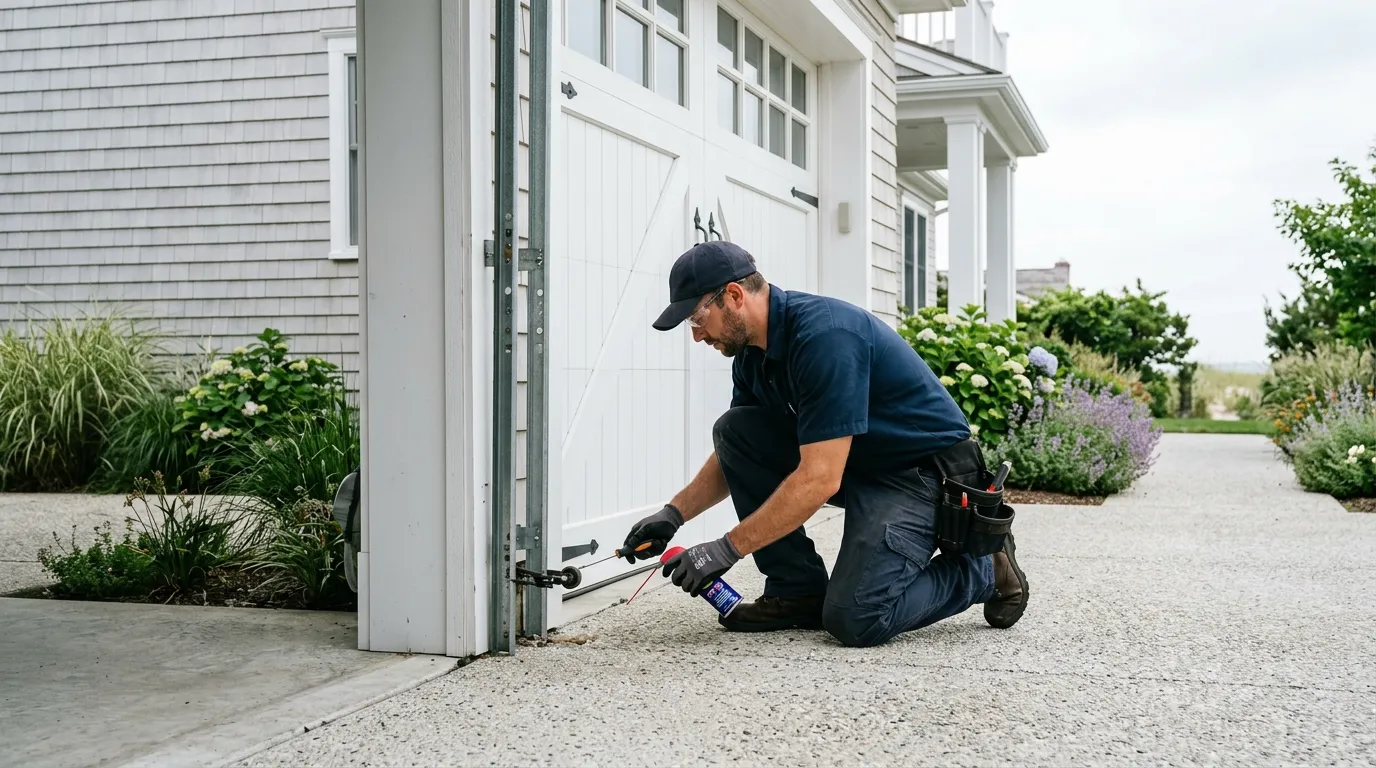
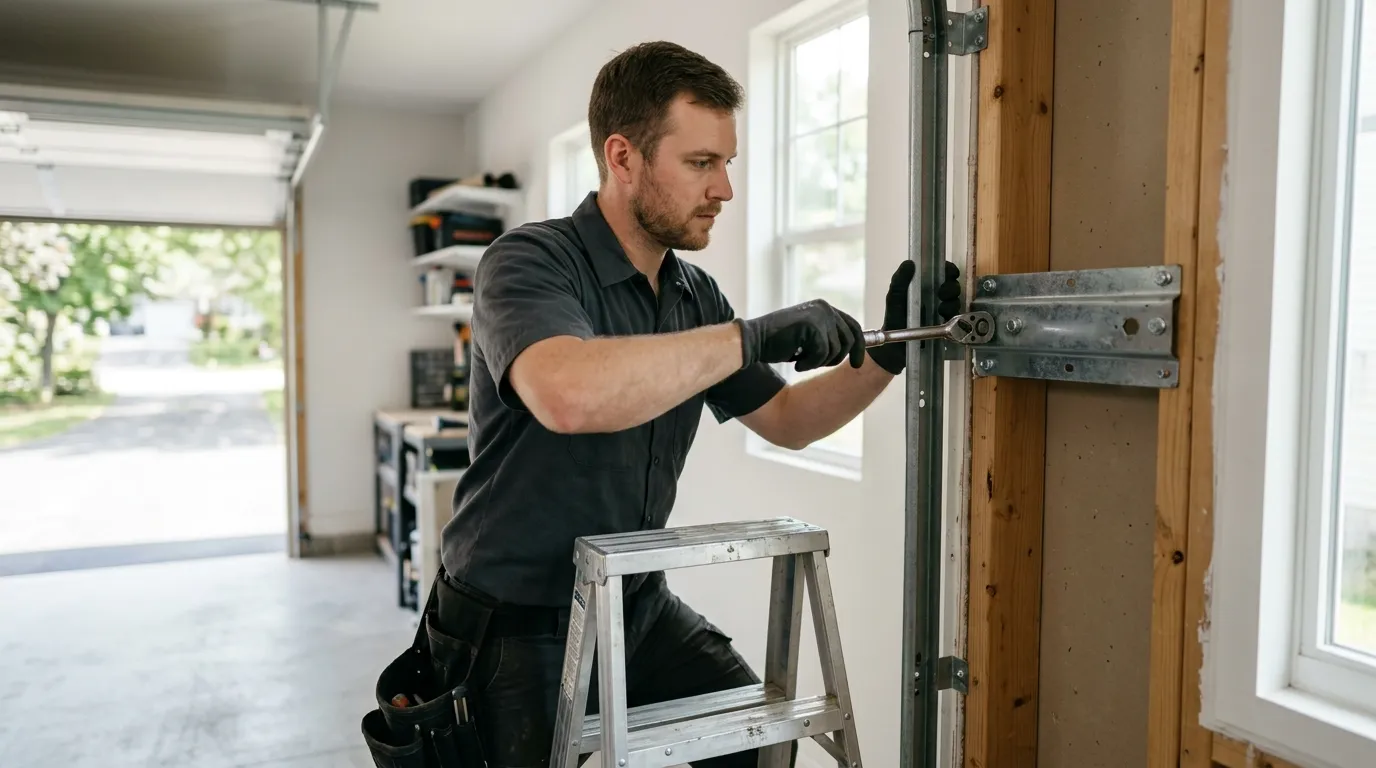
We also get called for tracks that have gone out of alignment on older doors - thirty years of settling and adjustment will do that even without any single dramatic event. On a household budget basis, this is a part of the service area with a median income around $106,000, and most of what we see are owner-occupied houses where people want the door fixed right rather than patched twice. When a repair costs close to half of a new door, we'll say so, because a spring job on a door that's already failing at the seams isn't worth doing twice.