Marysville's cold, damp winters find every gap in a garage door seal. Here's what the area's 1970s-2000s housing stock means for weather seals and draughts.
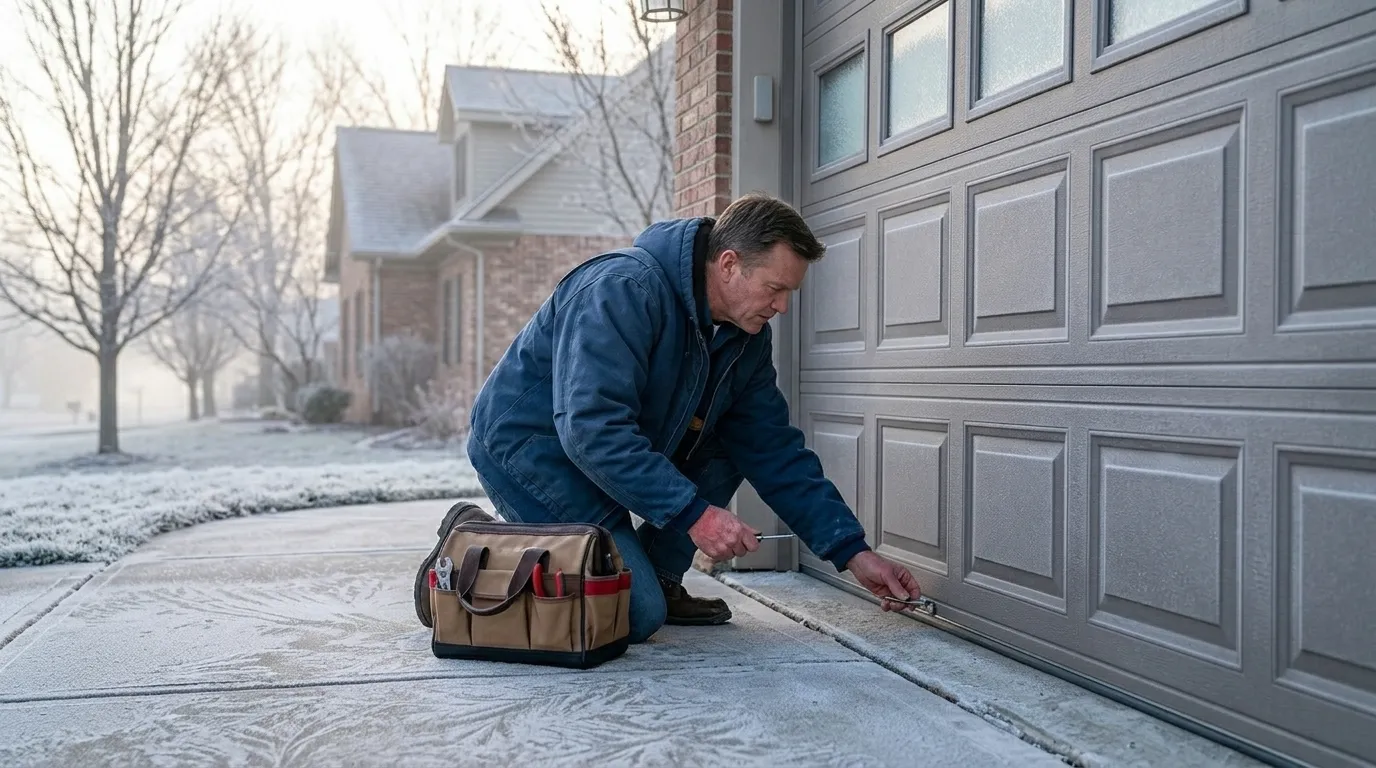
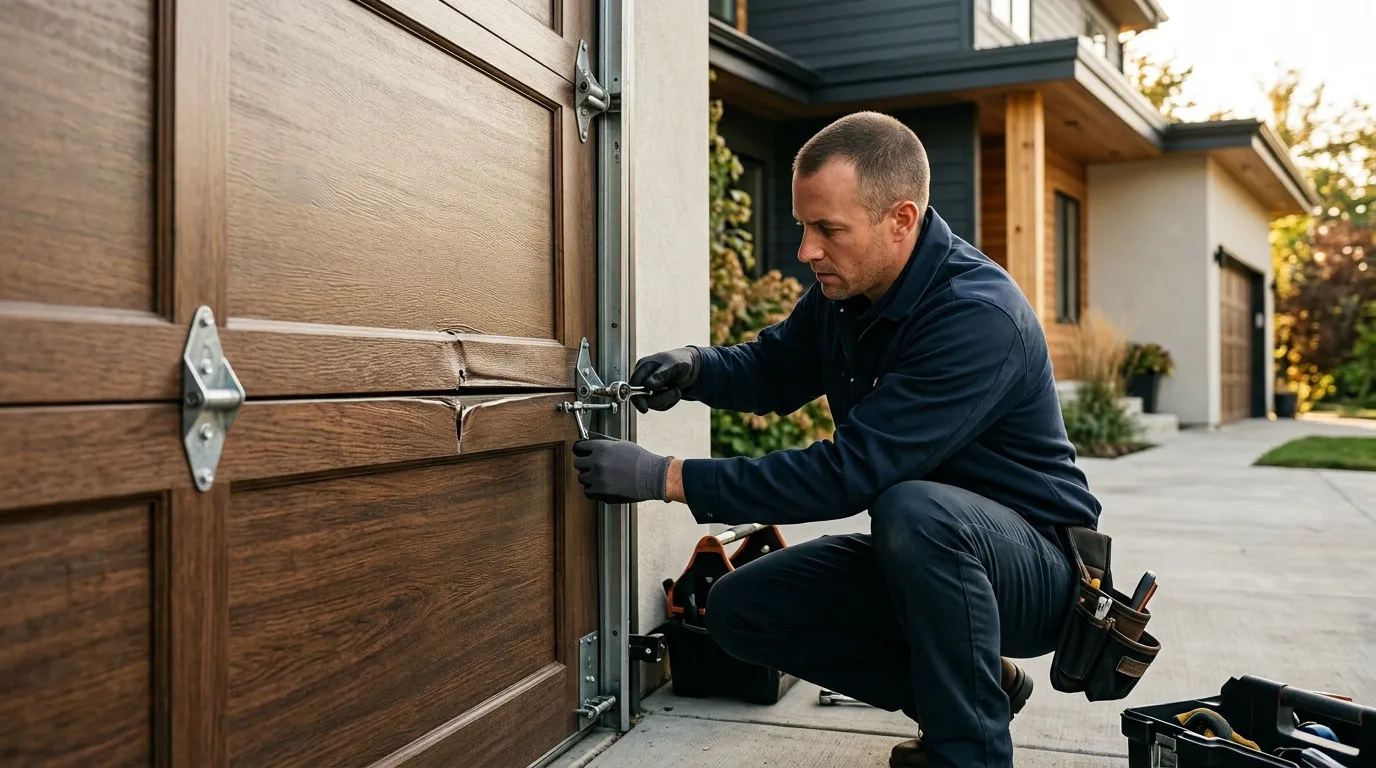
Marysville sits in a cold-moderate climate band, which means the seasonal swing isn't extreme heat versus extreme cold - it's damp and cool most of the year with a real winter cold snap mixed in. That cycle is hard on the bottom seal and the weatherstripping along the sides and top of the frame. Vinyl seals that were flexible in August get stiff by December, and a stiff seal doesn't compress against the slab the way it should. You'll notice it as a strip of daylight under the door, or as a draft that runs along the floor into the garage and, if the garage is attached, into the house itself. This isn't a one-time fix-and-forget item here. The freeze-thaw isn't as brutal as it is inland, but the constant damp works seals loose at the fasteners and pulls the vinyl away from the retainer track faster than it would in a drier climate. If your door still has its original builder-grade seal, that's usually the first thing to check before you assume the draft is a bigger problem.
What You Pay
We don't have a set price to quote you here, and giving you a number without seeing the door would be a guess dressed up as a fact. What we can tell you is what drives the cost either way: whether you need a standard bottom seal swap or a full retainer track replacement, whether the side and top weatherstripping needs doing at the same time, and how much of the original seal has hardened versus just come loose at the fasteners. In an area with median household income around $106,164, most owners we talk to want the job done right the first time rather than a cheap patch that fails again by next winter. That's a fair instinct - a draft that keeps coming back usually means the seal wasn't seated properly, not that the material was wrong.
What Is Going On
Housing across this service area was mostly built between 1972 and 2000, with the bulk of it going up in the 1980s and 90s across the 28 named neighborhoods we work in. That era of construction used garage door seals and frame designs that have since been improved, but more importantly, a lot of those original seals and tracks are now 25 to 45 years old. Vinyl doesn't last that long without hardening, cracking, or pulling loose from the aluminum retainer. If your house falls in that build window and you've never replaced the bottom seal, the draft you're feeling is very likely original equipment finally giving out, not a new problem. The fix is usually straightforward: a new seal in the existing retainer, or a new retainer if the old one has warped. It's rarely the door panel itself.
What Local Conditions Do
The area between Marysville and the nearby communities - Lochsloy, Arlington, Lake Goodwin, and out toward Granite Falls and Stanwood - sees the same damp, cool weather pattern, so the seal wear we describe here isn't unique to one street. What does vary is how exposed a given garage is: a door facing prevailing wind and rain takes more punishment on its seals than one tucked behind a fence or another structure. Across roughly 50,164 owner-occupied houses in this service area, the pattern holds regardless of exact address: doors from the 1980s and 90s building boom are due, or overdue, for a seal check. One limitation worth being upfront about: we can replace and re-seat seals and weatherstripping, but if the door panel itself has warped from years of moisture exposure, no seal will fully solve the draft - that's a replacement conversation, not a seal job.
How it works
From “it’s stuck” to “it’s fixed”
01
Tell us what’s wrong
Describe the symptom - won’t open, loud bang, opener runs but the door won’t move.
02
On-site diagnosis
A technician tests the door under power and by hand and finds what actually failed.
03
Clear, up-front plan
You get the fix that’s needed and what drives the cost - before any work starts.
04
Repaired & tested
The repair is done, the door is set true and tested, and the work area left clean.
Serving Marysville, WA - tell us what your door’s doing and we’ll take it from there.
Why does my garage door let in cold air even though it looks closed all the way?
Most of the time it's the bottom seal, not the door itself. Vinyl seals harden with age and stop compressing fully against the slab, leaving a gap you can feel as a draft even when the door looks shut. Given the age of housing stock in this area, a hardened original seal is the most common cause we see.
How often should weatherstripping be replaced on a garage door around here?
There's no fixed schedule, but if your house was built in the 1980s or 90s and the seal has never been swapped, it's worth checking. The cool, damp climate here works seals loose at the fasteners and dries out the vinyl faster than a drier region would.
Can a draft under the garage door affect the rest of my house?
If the garage is attached, yes - cold air pulled in under the door can migrate into shared walls and any room above or beside the garage. It won't spike your whole heating bill on its own, but paired with other gaps it adds up over a Marysville winter.
Ready to get your garage door sorted?
Tell us what it’s doing and where you are in Marysville - we’ll take it from there.